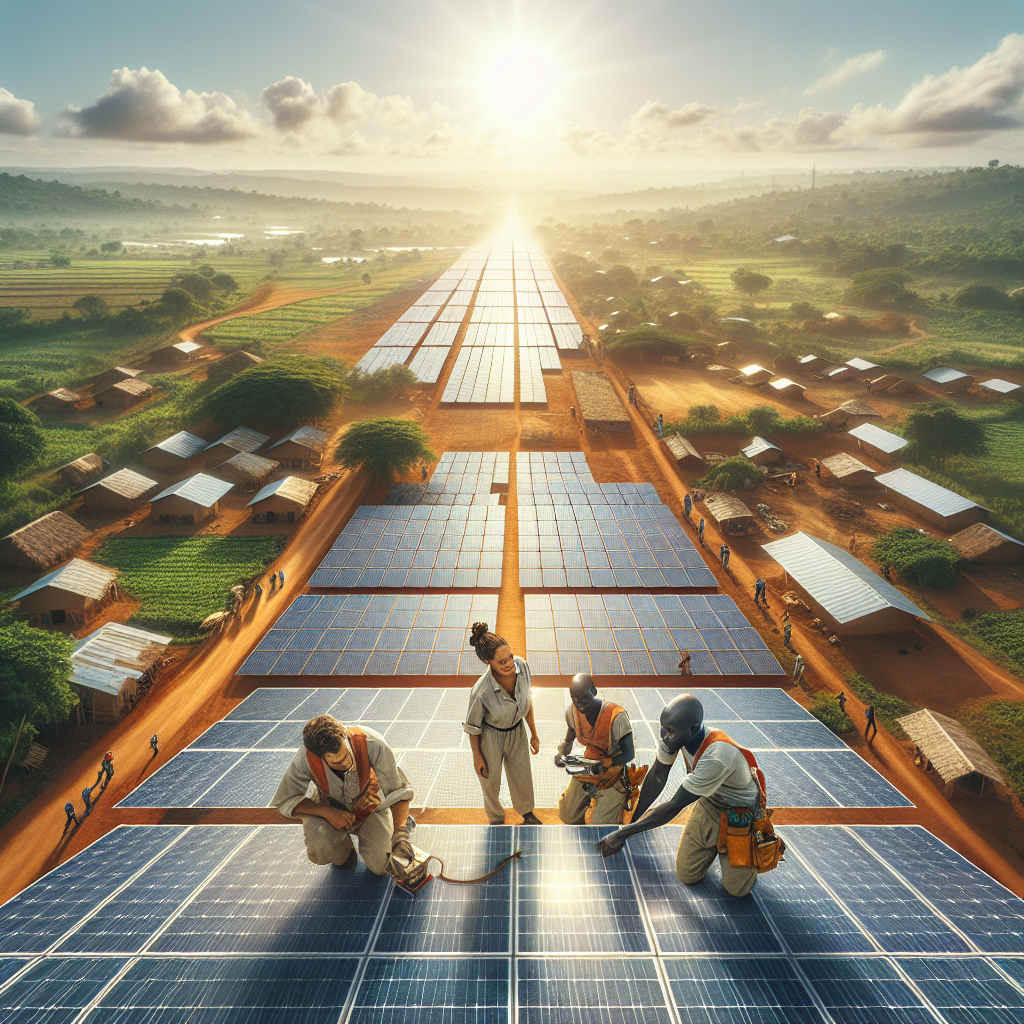
Have you heard about LONGi’s recent activities in Africa? This solar energy giant has been recognized by the United Nations Environment Programme (UNEP) as a sustainable brand case study, showcasing their commitment to renewable energy and sustainable development. In this blog, I’ll delve deeper into the significance of this recognition and what it means for the future of solar energy in Africa.
Table of Contents
- Introduction
- LONGi’s Impact in Africa
- Solar Infrastructure: The African Challenge and Opportunity
- Empowering Communities: Local Partnerships and Skills Development
- Sustainability Initiatives
- Technology & Innovation: LONGi’s Research and Development Focus
- Overcoming Challenges: Barriers to Solar Adoption in Africa
- The Future of Solar Energy in Africa
- Summary
- FAQs
- Sources
Introduction
As the global search for sustainable energy solutions accelerates, Africa is rapidly emerging as one of the world’s most promising frontiers for renewable energy—especially solar. Home to abundant sunshine year-round but grappling with limited access to reliable grid power in many regions, the continent stands at a critical crossroads. Innovative approaches, scalable investments, and long-term commitments will shape Africa’s energy future. Among the frontrunners of this movement, LONGi Green Energy Technology Co., Ltd. has earned international recognition for its transformative approach to renewable power and sustainable progress. Their recognition by the UNEP not only highlights LONGi’s achievements but throws a spotlight on the potential core role of solar power in remaking African energy systems, economies, and communities. In the following sections, let’s explore how LONGi is making waves with high-impact projects, spearheading sustainability in operations and products, and collaborating to build more resilient and equitable energy futures across Africa.
LONGi’s Impact in Africa
LONGi has established a powerful presence on the African continent by focusing on what matters most: reliable access to clean, affordable, and scalable energy. Their high-efficiency monocrystalline solar panels, renowned for superior yields and long-term durability, have proven particularly well matched to Africa’s diverse climates and infrastructure needs.
LONGi’s projects span rural electrification initiatives, urban solar installations, and commercial power plants. According to reports in PV Tech, these efforts have improved access to electricity for millions, reduced communities’ dependence on polluting fossil fuels and expensive diesel generators, and laid the groundwork for local entrepreneurship—not to mention supporting vital infrastructure, schools, clinics, and community centers.
Beyond simply deploying technology, LONGi’s African operations incorporate a community-first philosophy: solutions are co-designed with local needs in mind, promoting both environmental and economic sustainability. By teaming up with governments, NGOs, and local businesses, LONGi ensures that installations are more than a one-off event: they become catalysts for lasting change, providing stable power and enabling further investment in schools, agricultural processing, clean water, and healthcare facilities. This collaborative and adaptive model sets a valuable precedent for future solar rollouts by highlighting that context and community matter as much as hardware or wattage alone.
Solar Infrastructure: The African Challenge and Opportunity
While Africa possesses some of the world’s highest solar potential—with many countries averaging 2,000 to 3,000 hours of sunshine annually—the continent faces immense challenges in providing universal access to electricity. According to the International Energy Agency (IEA), over 570 million people in sub-Saharan Africa lived without reliable power as of 2021, stifling development, education, and economic growth.
Solar is uniquely suited to addressing both on- and off-grid needs due to its scalability and rapid deployment potential. However, successful implementation hinges on more than just sunlight: it demands sustained investment, strong public-private partnerships, and holistic approaches that go beyond panels themselves. LONGi’s impact has been marked by a keen understanding of these realities. By integrating solar plants with battery storage, microgrid technologies, and training programs, LONGi’s projects don’t merely deliver electricity—they deliver energy security, job creation, and capacity building for ongoing local management and expansion.
Empowering Communities: Local Partnerships and Skills Development
LONGi’s African success stories are inextricably linked to the company’s emphasis on local partnerships and human capital development. Each project is shaped in consultation with local governments, utilities, entrepreneurs, and civil society—including women’s groups, youth organizations, and vocational schools. This joint approach fosters community ownership and ensures that solutions are tailored to real-world needs and constraints.
Workforce education and training are central. As solar arrays are installed, LONGi and its partners offer technical workshops and hands-on training, building up a cadre of skilled local technicians and installers. These programs impart valuable skills, foster local employment, and reduce system downtime by developing in-country expertise for ongoing service and maintenance. Many trainees, especially young people and women, are able to leverage this experience into higher-wage jobs or business opportunities, stimulating long-term economic growth and narrowing the gap in both energy and gender equity.
This people-first approach—investing not only in products but in people—has helped LONGi’s projects achieve both high technical performance and strong positive social impact, further cementing their role as a true development partner in Africa’s energy transition.
Sustainability Initiatives
LONGi’s work in Africa is inseparable from its core commitment to sustainability, which extends far beyond the solar modules they supply. The company’s environmental stewardship is visible throughout its value chain, from resource sourcing and manufacturing through to project operations and end-of-life recycling.
At manufacturing sites, LONGi has invested heavily in reducing its carbon footprint, water usage, and solid waste output per megawatt produced. Clean energy powers much of its global production, while rigorous energy management programs and process innovations continuously drive down greenhouse gas and pollutant emissions. The use of advanced, low-damage diamond wire slicing in producing monocrystalline wafers, for example, significantly cuts energy and material usage compared to traditional methods.
LONGi’s comprehensive approach also includes research into circular economy models for solar equipment, including module recycling and the reuse of raw materials once products reach end-of-life—an increasingly important consideration as Africa’s solar capacity expands. Such cradle-to-grave thinking positions LONGi as an agent of positive change across the full solar lifecycle, not just at the point of installation.
This dedication has not gone unnoticed at the international level—with the UNEP’s recognition specifically highlighting LONGi’s holistic sustainability vision as a case study for other global enterprises seeking to align profit with planet and people.
Technology & Innovation: LONGi’s Research and Development Focus
Driving the next wave of solar progress depends not only on scaling up what works today but on pushing the boundaries of what’s possible through innovation. LONGi’s commitment to research and development (R&D) stands at the heart of its strategy for remaining an industry leader and meeting Africa’s unique challenges.
Annual investments in R&D represent a significant share of LONGi’s revenues. Key areas of focus include further increasing the efficiency of monocrystalline cell and module platforms, reducing the Levelized Cost of Energy (LCOE) of solar systems, and improving product durability for extreme heat or dusty conditions common in African settings.
The company has pioneered technologies like passivated emitter and rear cell (PERC) modules, bifacial (two-sided) panels, and advanced anti-reflective coatings—all of which deliver more clean energy per unit while lowering costs over system lifetimes. Solar trackers and Internet of Things (IoT) enhanced monitoring also feature in up-to-date LONGi projects, allowing systems to automatically adjust to shifting sunlight and maximize yield, while providing local operators with real-time performance data for maintenance and management.
LONGi’s R&D-driven innovations, continually adapted for local requirements, are a powerful lever in making solar attractive for households, businesses, and utilities alike—helping Africa leap directly into the energy future rather than replicate legacy energy pathways.
Overcoming Challenges: Barriers to Solar Adoption in Africa
The journey to widespread solar adoption in Africa is not without obstacles. Financing remains a critical challenge: initial capital costs can be prohibitive for small businesses or households even when long-term savings are substantial. In some regions, weak grid infrastructure, limited access to affordable lending, and lack of clear policy support slow down the pace of new projects.
LONGi has responded by working closely with governments, international funders, and private institutions to develop innovative financing models, such as pay-as-you-go systems or micro-leases, which lower the barrier to entry for customers. These models enable families and businesses to tap into clean solar power with minimal upfront investment, paying over time from the savings they generate. Furthermore, by advocating for better policies, clearer standards, and open markets, LONGi and industry partners are encouraging national governments to adopt more solar-friendly regulatory frameworks—making it easier for local developers, citizens, and entrepreneurs to participate in the solar revolution.
On the technical side, LONGi supports workforce training aimed at creating a skilled cohort of local engineers and installers. This mitigates operational bottlenecks and ensures solar systems can be deployed, maintained, and scaled with maximum reliability and local ownership. The result is a more sustainable, locally anchored solar ecosystem that empowers communities to seize the benefits of clean energy for the long haul.
The Future of Solar Energy in Africa
With Africa’s population expected to double by 2050 and its economic ambitions rising, reliable access to clean energy is no longer a luxury—it’s a necessity. Solar power, once on the periphery, is now at the center of African nations’ plans for energy independence, climate resilience, and inclusive prosperity. Technologies, business models, and leadership are converging on a once-in-a-generation opportunity for transformation.
Industry analysis, as highlighted by Marketing Week, suggests the era of siloed corporate strategies is giving way to cross-industry collaboration and social impact partnerships. As climate change and green transition agendas move up political and corporate agendas, companies like LONGi, who prioritize local engagement, innovation, and measurable sustainability, are ideally positioned to thrive—and to help Africa leap over historic barriers to power access.
Carbon-neutral manufacturing, modular microgrids, next-generation battery storage, and fully circular supply chains are fast becoming standard expectations in the solar sector. For Africa, this means that every new project represents an opportunity to set new best practices—creating jobs, safeguarding ecosystems, and unleashing entrepreneurial and educational opportunities across rural villages and megacities alike.
Summary
LONGi’s acknowledgment by the UNEP as a sustainable brand case study is much more than a passing accolade; it’s a recognition of deep-rooted efforts to align global business goals with planetary needs, national priorities, and local aspirations. Their work in Africa demonstrates what’s possible when advanced solar technology meets local expertise, inclusive partnerships, and a relentless commitment to sustainability. Through its projects, investments, and innovations, LONGi is not only helping to resolve Africa’s energy deficits but is also fostering new industries, new skills, and new paths to resilient, equitable growth.
As solar becomes more accessible, affordable, and integral to how the continent powers itself, the synergy between forward-looking enterprises and Africa’s youthful dynamism will be a catalyst for progress. The continent stands on the brink of a solar-powered renaissance—one that, thanks in no small part to players like LONGi, looks brighter and more sustainable than ever before.
Frequently Asked Questions (FAQs)
- What is LONGi’s main focus in Africa?
LONGi’s main focus is providing high-efficiency solar products, fostering local partnerships, and supporting workforce training schemes to enhance energy access and reliability. Projects are designed with community input for sustainable and lasting benefits. - How does LONGi contribute to sustainability?
LONGi implements eco-friendly manufacturing processes, invests in R&D for innovative and higher-efficiency solar technologies, and supports circular economy efforts in module recycling and raw material reuse, helping reduce carbon footprints across the entire product lifecycle. - How does LONGi empower local communities?
By partnering with local governments, NGOs, and training providers, LONGi supports technical education, skills development, and local entrepreneurship, ensuring that installations create jobs and foster local ownership and expertise for long-term operation. - What are the key benefits of solar energy in Africa?
Solar energy directly reduces reliance on fossil fuels and diesel generators, cuts household and business energy expenses, and provides reliable power for schools, health clinics, and startups, driving broad economic and human development across the continent. - What challenges still exist for solar expansion in Africa?
Upfront capital costs, limited grid infrastructure, regulatory uncertainty, and the need for local technical skills remain main barriers. LONGi and partners work to address these through innovative financing and training initiatives.
Sources
- PV Tech (For industry news and LONGi projects)
- HubSpot (For corporate sustainability strategies)
- Marketing Week (For trend and strategy insights in sustainable business and emerging markets)