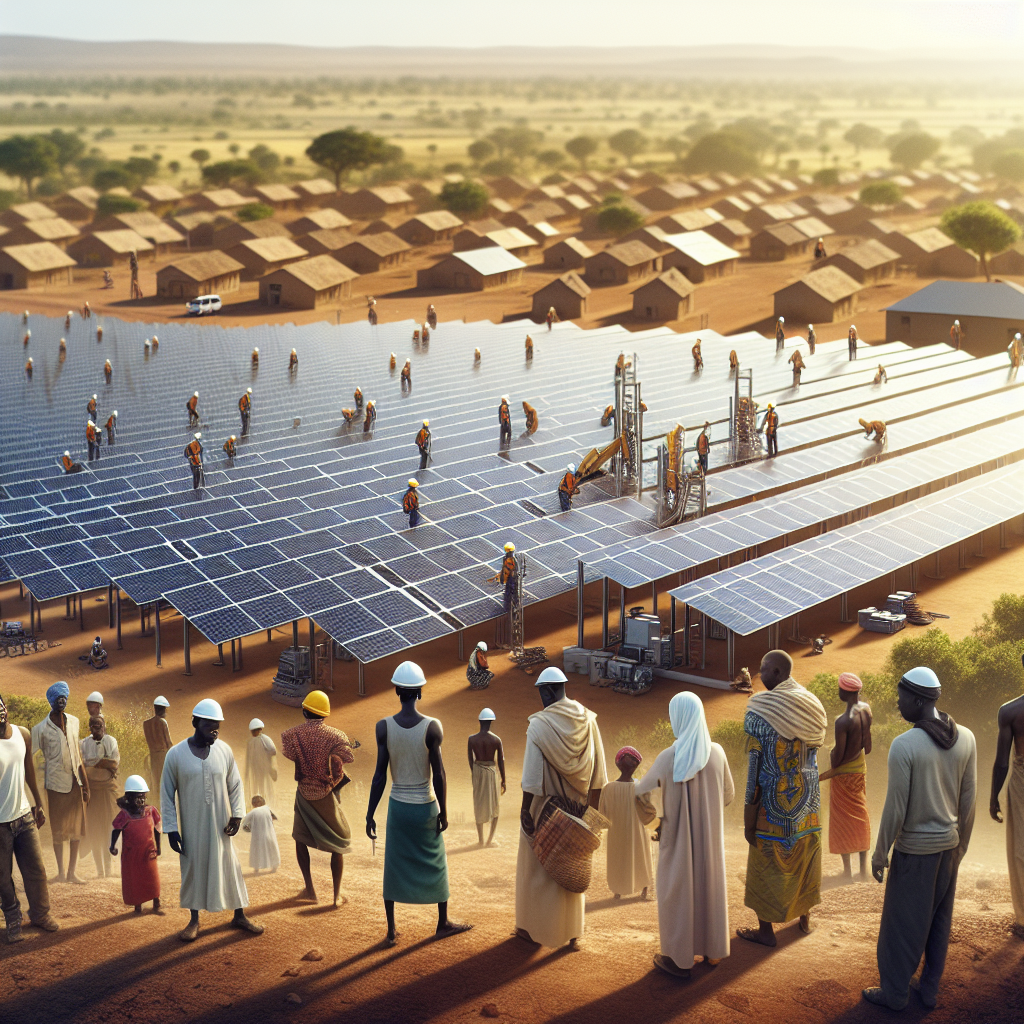
In a world increasingly focused on sustainability, LONGi’s recent recognition by UNEP as a sustainable brand case study in Africa stands out. This accolade not only highlights their commitment to renewable energy but also sets a benchmark for other companies in the region. I find it inspiring to see how businesses can lead the charge towards a more sustainable future, and I believe we can all learn from their approach.
Table of Contents
- Introduction
- LONGi’s Impact in Africa
- Sustainability Practices
- The Importance of Sustainability
- Challenges Faced by LONGi
- Community Engagement and Social Responsibility
- The Global Context: Why Africa Matters
- Actionable Steps for Businesses
- Summary
- FAQs
- Sources
Introduction
As we navigate the complexities of climate change and environmental degradation, the role of companies like LONGi becomes increasingly crucial. Their innovative practices in Africa not only provide clean energy solutions but also contribute to local economies. In this article, I will delve into LONGi’s impact, their sustainability practices, and how other businesses can adopt similar strategies. Along the way, you’ll gain a comprehensive view of how sustainable business models can address real-world, local challenges while shaping the future of our planet.
LONGi’s Impact in Africa
LONGi has made significant strides in Africa, particularly in the field of solar energy production. As demand for affordable, clean energy solutions has increased across the continent, LONGi has risen to the occasion. Their initiatives have led to increased access to clean energy for communities that previously relied on fossil fuels or had limited and unreliable electricity. This transition is critical not only for the health of the environment but also for the social and economic development of these communities.
According to PV Tech, LONGi’s projects have directly created jobs and stimulated local economies by sourcing materials locally when possible and employing residents for the installation and maintenance of solar systems. Furthermore, the reliable power generated has been instrumental in incubating new businesses, maintaining clinics, and extending study hours for students, which contributes to a tangible improvement in quality of life.
For example, in countries like Kenya and South Africa, where sunlight is abundant but energy security remains uneven, LONGi’s investments have had outsized impacts. The story of a rural school in Ghana converting to solar energy—resulting in drastically improved attendance and academic outcomes—illustrates the transformative potential of such projects. These community-level changes point to a broader systemic shift away from dependency on fossil fuels toward localized, renewable energy sources.
Sustainability Practices
LONGi’s approach to sustainability encompasses several key practices, each designed to tackle pressing ecological challenges while maximizing value for stakeholders. First and foremost, they prioritize the use of high-efficiency solar panels. These panels are engineered to capture more sunlight and convert it into usable energy than conventional models, which means less land and fewer resources are needed to generate the same amount of power.
Their commitment doesn’t stop at product innovation. In the production process, LONGi emphasizes reducing water consumption, minimizing waste, and recycling raw materials. Advanced manufacturing techniques, such as closed-loop recycling systems for water and silicon, lower the environmental impact of operations. Any byproducts—like cuttings from silicon wafers—are reused wherever possible, gravitating to a circular economy mindset.
What especially sets LONGi apart is the transparency of their operations. They frequently publish sustainability reports and work with third-party organizations to verify their environmental claims. These efforts are not only good for the planet, but they build trust with customers, governments, and business partners. For more insights, check out HubSpot’s resources on sustainability, which offer general strategies on embedding eco-friendly policies into business models.
LONGi also participates in global initiatives aimed at establishing industry-wide sustainability standards. By collaborating with peer companies, NGOs, and government bodies, they share best practices and advance the collective knowledge base. This willingness to actively improve—rather than simply meeting baseline requirements—reflects a deeper ethos of environmental stewardship.
The Importance of Sustainability
Embracing sustainability is no longer optional; it’s essential for the long-term viability of any business. As natural resources become scarcer and the effects of climate change become more visible, organizations that ignore environmental responsibilities rapidly lose relevance—both in the marketplace and in society as a whole. Companies that prioritize eco-friendly practices often see improved customer loyalty and brand trust.
A report from Marketing Week highlights that consumers are increasingly favoring brands that demonstrate a commitment to sustainability. Eco-labels, third-party accreditations, and transparent reporting are all ways in which companies reassure stakeholders that they are part of the solution, not the problem. This shift in consumer behavior underscores the importance of integrating sustainable practices into business models. Investors, too, are increasingly focusing on Environmental, Social, and Governance (ESG) scores, meaning that sustainability isn’t just a feel-good policy; it’s rapidly becoming a necessity for attracting capital.
Moreover, governments are tightening regulations around emissions, waste disposal, and raw material sourcing. Early adopters of sustainable practices, like LONGi, are better positioned to navigate these changing requirements and to avoid penalties. This proactive approach is crucial in industries where environmental impact is intrinsically linked to core business operations.
Challenges Faced by LONGi
While the positive impacts of LONGi’s work in Africa are significant, achieving such progress isn’t without challenges. Infrastructure limitations—such as inconsistent connectivity, inadequate transport networks, and bureaucratic hurdles—can impede the timely deployment of new solar sites. In addition, supply chain complexities may create gaps between technological potential and practical implementation.
Another sizeable hurdle is market education. Convincing communities, local businesses, and governments to transition from familiar but polluting energy sources to solar is no easy feat. Beyond the costs involved, there are often misconceptions about the reliability and maintenance needs of solar power. LONGi addresses this by working on community engagement, offering hands-on training, and providing after-sales support that ensures systems remain operational long after installation.
Financial constraints and policy shifts also loom large. While many African countries offer incentives for renewable energy, the regulatory environment can be unpredictable. LONGi’s strategy is to foster long-term partnerships with both public entities and private enterprises, increasing resilience in the face of ever-changing circumstances.
Community Engagement and Social Responsibility
Sustainability isn’t just about technology; it’s also deeply connected to people and communities. LONGi recognizes this and incorporates social responsibility into its core business model. In each market, the company identifies local needs and adapts its projects to serve those requirements. For instance, beyond standard installations, solar solutions might be designed to power water purification systems or mobile health clinics, directly addressing unique regional issues.
LONGi also invests in education, running workshops and training sessions both for future solar technicians and for end-users. Initiatives like school partnerships and technical scholarships build a local workforce equipped to maintain and extend clean energy solutions, ensuring the benefits are sustainable well into the future. Such programs foster ownership within the community, boosting the prospects for long-term success.
Gender equality is another cornerstone of their approach. By actively recruiting and training women, LONGi helps to close gender gaps in both employment and energy access—a crucial consideration given women’s critical role in family and community well-being throughout Africa.
The Global Context: Why Africa Matters
Some might ask, why focus so much sustainable business effort on Africa? The answer lies in both the continent’s unique challenges and its unparalleled opportunities for innovation. Africa has the fastest-growing population in the world and, by some predictions, could account for a quarter of the global population by 2050. Meeting the energy needs of such a burgeoning population—without driving up emissions—will be a defining challenge of this century.
Africa is also rich in solar resources. With sunlight intensity and duration higher than many other regions, conditions are ideal for scalable renewable projects. Furthermore, in areas where energy infrastructure is underdeveloped, leaping directly to green solutions (rather than following the fossil-heavy paths of Western industrialization) could set a precedent for sustainable growth worldwide.
LONGi’s work here is therefore both a case study and a roadmap, offering insights for similar initiatives globally. By collaborating with governments, NGOs, and other businesses, they are helping to create a template that can be adapted beyond Africa—wherever clean, decentralized, and reliable energy is most needed.
Actionable Steps for Businesses
If you’re looking to enhance your business’s sustainability efforts, here are some actionable steps that have proven effective for industry leaders like LONGi:
- Assess Your Impact: Conduct a sustainability audit to identify areas for improvement. This could include energy usage, waste generation, sourcing practices, and carbon footprint.
- Set Clear Goals: Establish measurable sustainability goals that align with your business objectives. Whether targeting zero waste, 100% renewable energy, or reduced water usage, make your targets ambitious but achievable.
- Engage Employees: Foster a culture of sustainability within your organization by involving employees in brainstorming, decision-making, and executing green initiatives. Empower eco-champions at every level of your business.
- Collaborate with Experts: Partner with sustainability consultants, NGOs, or industry bodies to enhance your strategies and stay updated on best practices. Outside expertise can illuminate blind spots and suggest cost-effective solutions.
- Communicate Transparently: Share your sustainability efforts—both successes and setbacks—with customers and stakeholders. This builds trust and can even uncover new business opportunities.
- Explore Innovative Financing: Investigate green bonds, impact investments, or public-private partnerships to fund ambitious sustainability projects. Financial innovation is vital for scaling up impact.
- Leverage Technology: Invest in advanced software and analytics tools to track your progress on sustainability KPIs and uncover more efficient practices.
For additional guidance, consider exploring Ad Age’s insights on sustainable marketing or resources from similar sustainability-driven organizations. Remember, the most important step is simply to start, measure progress, and adapt as you go.
Summary
LONGi’s recognition as a sustainable brand in Africa serves as a powerful reminder of the positive impact businesses can have on the environment and local communities. Their approach goes beyond providing reliable solar power—it sets a benchmark for how innovation, environmental responsibility, and community engagement can reinforce one another for lasting success. By adopting similar practices, companies in diverse industries can not only contribute to a greener future but also enhance their reputation, gain market share, and build resilience against the evolving challenges of the global economy.
The journey toward sustainability is an ongoing one. As we move forward, it’s crucial for all businesses to prioritize sustainability—not just as a marketing tool or compliance measure, but as a central pillar of their strategy. The future of our planet hinges on the actions we take today to build more resilient, equitable, and clean systems for all.
FAQs
- What is LONGi’s main focus in Africa? LONGi focuses on scalable, high-impact solar energy production, providing clean and reliable energy solutions to communities that most need them, while fostering economic and educational growth.
- Why is sustainability important for businesses? Sustainability is essential for long-term viability, attracting both discerning consumers and investors, and for building trust. It also helps companies comply with evolving regulations and reduce operational risks.
- How can businesses improve their sustainability practices? Businesses can assess environmental impact, set clear and ambitious goals, engage their workforce, collaborate with expert partners, communicate transparently, and make continuous improvements.
- What challenges do sustainability-focused companies face in Africa? Common challenges include infrastructure limitations, market education, regulatory complexity, supply chain issues, and adapting solutions to diverse community needs.
- How does community engagement strengthen sustainability efforts? By engaging with communities through education, training, and local employment, companies like LONGi ensure that clean energy solutions are embraced, maintained, and scaled, maximizing social and environmental benefits.