As I delve into the world of sustainable brands, I was intrigued to learn about LONGi’s activity in Africa, which has been selected as a case study by the United Nations Environment Programme (UNEP). This recognition highlights the importance of sustainable practices in the renewable energy sector, particularly in regions that are often overlooked. In this article, I will explore the significance of LONGi’s initiatives, the impact on local communities, and actionable steps for other brands to follow suit.
Table of Contents
- Introduction
- LONGi’s Impact in Africa
- Sustainability Practices in Renewable Energy
- Community Engagement and Economic Development
- Overcoming Barriers to Solar Access in Africa
- Innovation and Research Driving Change
- Building Climate Resilience Through Renewable Energy
- Actionable Steps for Brands
- Summary
- FAQs
- Sources
Introduction
In today’s rapidly changing world, sustainability is more than just a buzzword; it’s a necessity. Forward-thinking companies like LONGi are setting a precedent by deeply integrating sustainable practices into every facet of their operations, particularly in parts of the globe where the impact can be truly transformational. By examining their work in Africa, we can gain insights into effective strategies that not only benefit the environment but also empower local communities in lasting and profound ways.
The story of solar energy in Africa is not just one of technology—it’s also about hope, opportunity, innovation, and progress. It’s a unique confluence of global business interests and local needs, where the power of the sun becomes both a symbol and a driver of sustainable development. It’s here, amidst the vast savannahs and growing urban centers, that the true potential of corporate responsibility and renewable energy is revealed.
LONGi’s Impact in Africa
LONGi, a global leader in solar technology and manufacturing, has made significant strides in Africa by providing affordable and scalable solar solutions. Their initiatives align closely with several of the United Nations Sustainable Development Goals (SDGs), especially those concerning clean energy (SDG 7), climate action (SDG 13), and reduced inequalities (SDG 10).
Access to reliable electricity remains a challenge across broad swathes of Sub-Saharan Africa. According to a UNEP report on buildings and construction, investments in renewable energy are not only necessary for decarbonizing power generation but are also vital for meeting growing energy demand as populations swell and economies expand.
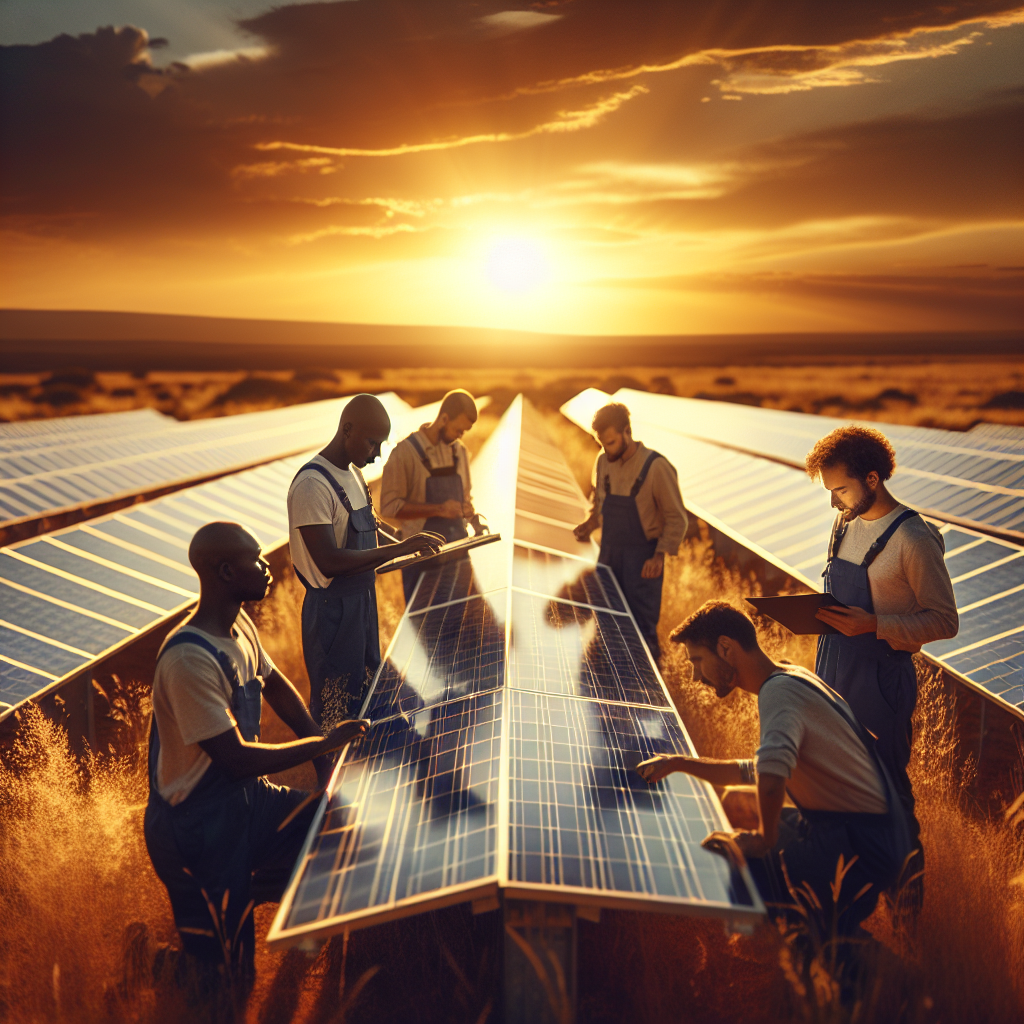
LONGi has taken a multifaceted approach—establishing utility-scale solar farms, rural and peri-urban microgrids, and innovative financing models for off-grid solutions. By partnering with local governments, NGOs, and business leaders, LONGi ensures their technology is accessible and tailored to the unique needs of each community. This full-spectrum strategy has allowed schools to stay open, healthcare clinics to store vaccines, and entrepreneurs to power businesses in ways that were previously impossible due to insufficient grid infrastructure.
As a result, LONGi’s work has expanded electricity access, reduced reliance on costly and polluting diesel generators, and fostered local employment through training and solar panel assembly.
Sustainability Practices in Renewable Energy
LONGi’s approach to sustainability is defined by their commitment to both environmental stewardship and social responsibility, setting an industry benchmark for what a truly sustainable company can look like. A few hallmark practices include:
- High-Efficiency Solar Panels: LONGi continually invests in research to produce panels with ever-greater efficiency, reducing the amount of land and resources required per unit of energy produced.
- Sustainable Sourcing: Through responsible procurement policies, LONGi ensures the materials used in equipment manufacturing (like polysilicon, glass, and aluminum) are sourced ethically, with minimal ecological impact and respect for worker rights.
- Reducing Carbon Footprints: The company’s manufacturing processes are constantly optimized to reduce energy consumption, water use, and emissions. Initiatives such as green supply chains, renewable-powered factories, and local assembly lines within Africa itself cut down on transportation emissions and bolster local economies.
- End-of-Life Panel Recycling: Recognizing that sustainability extends the full lifecycle, LONGi participates in and funds take-back programs and innovations to recycle or repurpose solar panels, keeping valuable materials in use and waste out of landfills.
By combining these technical and ethical advances, LONGi demonstrates a holistic vision of business that reaches far beyond quarterly profits, inspiring both consumers and corporate peers worldwide.
Community Engagement and Economic Development
Rarely is sustainable business possible without genuine community collaboration. LONGi’s projects in Africa are underpinned by profound local engagement—from needs assessment and planning to deployment and ongoing maintenance. This ensures the benefits of solar technology are not fleeting, but woven into the social and economic fabric of each region.
Key aspects of LONGi’s engagement include:
- Capacity Building: Technical training programs equip local residents with the skills needed to install, maintain, and eventually manage solar infrastructure independently. This not only ensures the long-term viability of each solar site but also creates high-quality jobs and new career paths.
- Education Support: LONGi funds or co-sponsors programs in STEM (science, technology, engineering, and mathematics), seeking to ignite a passion for renewable energy among schoolchildren and university students—the next generation of African engineers and climate leaders.
- Women’s Empowerment: In many projects, there is a focus on ensuring women participate equally, whether as trainees, technicians, or community project managers. Given that women often shoulder disproportionate energy burdens in rural settings, this inclusivity has multiplying benefits for family health, education, and well-being.
As highlighted by World Bank research, such investments in people and skills development are not mere add-ons—they are essential for long-term economic growth, social mobility, and poverty reduction.
Overcoming Barriers to Solar Access in Africa
Understanding Africa’s solar revolution also means confronting the obstacles that historically impeded progress. High upfront costs, patchy supply chains, lack of financing, and grid instability have long presented major barriers.
LONGi addresses these in several ways:
- Innovative Financing: By partnering with microfinance institutions, governments, and development agencies, LONGi supports pay-as-you-go and leasing models, meaning families and entrepreneurs can access power with minimal upfront payment.
- Decentralized Solutions: In remote areas, where connecting to the national grid is decades away or prohibitively expensive, LONGi provides solar home systems and mini-grids, giving entire villages modern energy almost overnight.
- Localization of Manufacturing: Investment in African-based assembly reduces the dependency on imports, lowers costs, and shortens timelines for new projects and maintenance.
- Policy Advocacy: LONGi participates in forums and consultative processes with African governments to help craft policies that encourage the growth of renewables, including net metering, tax incentives, and streamlined regulatory approvals.
This multi-pronged approach recognizes that technological solutions must be paired with social, financial, and policy innovation to create real impact.
Innovation and Research Driving Change
Behind every global leader in sustainability lies a commitment to research. LONGi invests heavily in R&D, not just within its own labs but through collaborations with African universities, research institutions, and start-ups.
Examples include:
- Solar-Battery Hybrid Systems: Pilots focused on pairing solar photovoltaics with battery storage increase reliability and support critical infrastructure like hospitals, schools, and cold storage for vaccines and food.
- Agro-Photovoltaics: Integrating solar panels with agriculture (“agri-photovoltaics”) enables farmers to cultivate crops beneath solar arrays, optimizing land use, conserving water, and creating dual streams of income from the same acreage.
- Water Purification and Pumping Solutions: Solar-powered water pumps and desalination projects are transforming access to clean water in drought-prone regions, empowering communities to irrigate their fields and promote better hygiene and health outcomes.
LONGi supports collaborative projects that cross traditional sector boundaries, understanding that the needs of African communities are complex and interconnected.
Building Climate Resilience Through Renewable Energy
The devastating effects of climate change are already being felt across Africa—droughts, floods, and extreme temperatures threaten lives, livelihoods, and fragile ecosystems. By shifting energy systems from fossil fuels to solar, LONGi is helping build climate resilience:
- Mitigating Emissions: Solar power displaces diesel and coal, shrinking carbon footprints and reducing deadly air pollution in cities and villages alike.
- Empowering Disaster Response: Rapidly deployable solar microgrids can power clinics, communication systems, and relief operations during natural disasters, when traditional grid access is often down for days or weeks.
- Supporting Sustainable Agriculture: By powering irrigation, refrigeration, and processing, solar energy helps farmers adapt to unpredictable rainfall and longer dry seasons, bolstering food security.
This climate-smart approach not only addresses Africa’s immediate development needs but also positions communities to face an uncertain climate future with strength and adaptation strategies that are rooted in self-reliance.
Actionable Steps for Brands
If you’re a brand looking to adopt sustainable practices and make a genuine difference, here are some actionable steps to consider based on LONGi’s approach:
- Assess Your Impact: Evaluate your current operations to identify areas where sustainability can be embedded throughout your value chain, not just at the end product.
- Set Clear, Ambitious Goals: Establish measurable sustainability objectives that are aligned with both global benchmarks (such as the SDGs) and local contexts.
- Engage Local Communities: Move beyond top-down solutions and co-create projects with those who will use and benefit from them. Listen deeply to local voices.
- Invest in Skills and Education: Measure success not just by kilowatts generated or tons of CO₂ saved, but by the number of people trained, jobs created, and businesses empowered.
- Innovate for Inclusion: Prioritize solutions that reach women, youth, and marginalized groups, recognizing that energy poverty and opportunity often intersect.
- Monitor, Report, and Adapt: Be transparent about progress and setbacks, engage third-party evaluators, and adjust strategies as needed. Share what you learn with the wider industry.
By following these steps, brands can create lasting value—socially, environmentally, and financially—while fostering a culture of responsibility and innovation that will draw loyal consumers and partners.
Summary
LONGi’s initiatives in Africa serve as a powerful example of how sustainable practices can drive both environmental and economic benefits. By focusing on renewable energy solutions, innovating technologically, and engaging deeply with communities, LONGi is not only addressing urgent energy access needs but also laying the foundation for long-term, equitable development. Their story shows that sustainability and business growth can go hand in hand—and that brands everywhere can play a pivotal role in the world’s clean energy transition.
Other companies, regardless of size or location, should look to LONGi’s holistic approach as a blueprint for responsible leadership in the era of climate change. The benefits of solar energy—lower emissions, job creation, community empowerment, climate resilience—are universal. It is only through genuine, sustained commitment to people and planet that these gains will be shared by all.
FAQs
- What is LONGi’s main focus in Africa?
LONGi primarily focuses on providing widely accessible, affordable solar energy solutions to increase access to renewable power, especially in off-grid and underserved regions. - How does LONGi engage with local communities?
LONGi collaborates deeply with local stakeholders to ensure projects meet community needs, provides technical training and capacity building, and supports educational and women’s empowerment initiatives. - What are some benefits of sustainable practices in the solar sector?
Sustainable practices can lead to reduced environmental impact, economic growth, local job creation, greater community resilience, and improved well-being for millions. - What obstacles to solar energy are most common in Africa?
Major barriers include high upfront cost, limited access to financing, unreliable supply chains, and regulatory hurdles. Collaboration and innovation are key to overcoming these. - How are solar projects building climate resilience?
By enabling clean power for critical services, supporting sustainable agriculture, and reducing vulnerability to fossil fuel price volatility, they empower communities to adapt and thrive.