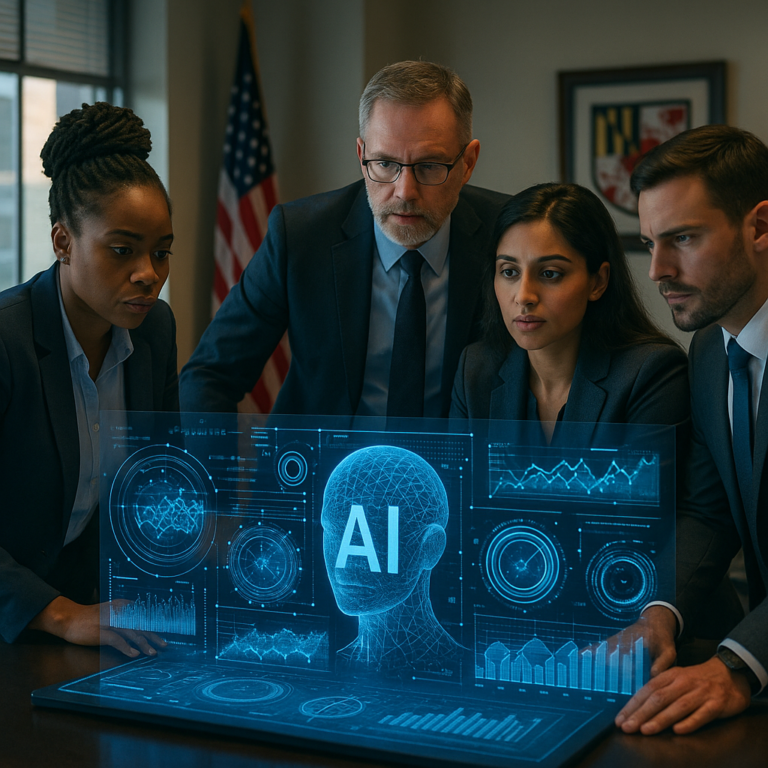
In reflecting on the ever-accelerating advancements in artificial intelligence, North Carolina emerges as a true leader in this technological revolution. The fast pace of change is palpable, especially among college students actively shaping—and being shaped by—these developments. Drawing inspiration from a recent article in Yahoo, we can see that the AI wave is no longer just something on the horizon. It is here, sweeping across campuses and local industries, changing education, career trajectories, and how we approach the future of work itself.
Table of Contents
- Introduction
- AI Innovation in North Carolina
- The AI Academic Frontier: NC’s Top Colleges
- Industry Partnerships Fueling AI Growth
- Student Experiences with AI
- AI and the Job Market: New Opportunities
- The Future of AI in Education
- AI, Ethics, and Society: The Student Perspective
- Summary
- FAQs
- Sources
Introduction
Artificial intelligence (AI) is no longer simply a futuristic concept reserved for tech enthusiasts and sci-fi movies. Today, it sits at the heart of a seismic shift occurring in industries across the globe. From healthcare to finance, manufacturing to logistics, the reach of AI is expanding at a breakneck pace. Nowhere is this momentum felt more profoundly than in the education sector—particularly within North Carolina, a burgeoning hub for innovation and talent development. Across the state, colleges and universities are not just responding to the AI tide; they’re riding at the crest of it. Students are increasingly encountering AI-infused tools in their classrooms and gaining hands-on experience that directly affects their academic journeys and shapes their future career outlooks.
AI Innovation in North Carolina
North Carolina is fast becoming a hotbed for AI innovation, setting itself apart through a blend of dynamic policy, institutional collaboration, and a vibrant tech ecosystem. Cities like Raleigh and Charlotte have positioned themselves at the intersection of research and practical application, attracting significant attention from both established firms and startups. The state’s major universities—including Duke University, North Carolina State University (NCSU), and the University of North Carolina at Chapel Hill—are pouring resources into AI research centers, academic programs, and partnerships with local industries.
North Carolina’s focus on AI is not accidental. According to an influential NIST report, the integration of AI into education and workforce training is crucial for preparing students to thrive in an AI-enabled future. The state has responded through multiple avenues: establishing task forces, rolling out AI-focused degree programs, and encouraging collaborations between academia and the private sector. These moves aim to secure North Carolina a leading position in what is sometimes called the “Fourth Industrial Revolution.”
The AI Academic Frontier: NC’s Top Colleges
North Carolina’s universities are at the vanguard of AI education and research, providing students with avenues for real-world, hands-on engagement. At NCSU, the AI Academy offers undergraduate and graduate-level coursework as well as opportunities for interdisciplinary research in fields ranging from autonomous systems to computational neuroscience. UNC Chapel Hill’s Computer Science department has added AI concentrations and research groups focusing on machine learning, natural language processing, and ethical AI. Duke University, meanwhile, is renowned for its cross-departmental approach, infusing AI into its engineering, medical, and business curricula.
Curriculas often include capstone projects in collaboration with industry, allowing students to solve real business or societal problems using AI. These programs prioritize not only the technical aspects of AI development but also emphasize ethics, bias mitigation, and societal impact—concerns that are vital as AI technologies enter every facet of our lives.
Industry Partnerships Fueling AI Growth
A major driver of North Carolina’s AI momentum comes from strong partnerships with the private sector. Schools routinely team up with major tech employers such as IBM, SAS, Red Hat, and a host of AI startups. Industry partners offer internships, co-op programs, hackathons, and sponsored research—giving students a direct pipeline to the cutting edge of AI. For example, the Triangle region (Raleigh-Durham-Chapel Hill) is now home to several AI incubators and accelerator programs, where students can prototype ideas, pitch to investors, and gain mentorship from experts in the field.
These collaborations widen the pipeline for talent and allow academic research to be rapidly translated into real-world applications. This ecosystem ensures that classroom theory meets industry reality, keeping North Carolina students ahead in a highly competitive field.
Student Experiences with AI
Perhaps the most compelling aspect of North Carolina’s AI boom is the student perspective. On campuses across the state, students regularly experiment with AI technologies as part of their daily learning. Many recount how tools like language models and intelligent tutoring systems provide personalized feedback and pacing, making complex subjects more accessible than ever before.
Take Ava, an undergraduate at UNC, who describes her experience with AI-driven language apps for Spanish class: “Instead of generic quizzes, I get tailored exercises that focus on my weak spots. The AI tracks my progress and suggests new learning paths, so I’m always building on a solid foundation.” For computer science majors like Malik at NCSU, platforms like Hugging Face allow for hands-on experimentation with powerful machine learning models. Instead of simply reviewing code in a textbook, students are deploying and refining algorithms to solve actual problems—ranging from image recognition apps to sentiment analysis for local nonprofits.
Beyond coursework, AI is also a central part of extracurricular experiences. Student tech societies, AI clubs, and coding bootcamps host frequent AI hackathons and coding competitions. The impact extends to research—students routinely publish work with professors on everything from AI-driven climate modeling to ethical considerations in predictive policing. These activities are not only academically enriching but also enhance students’ resumes and professional networks.
AI and the Job Market: New Opportunities
The impact of North Carolina’s AI focus isn’t limited to education—it is setting students up for success in a fast-changing job market. National estimates suggest that AI roles—such as machine learning engineers, data scientists, and AI ethicists—are among the most in-demand STEM careers today. North Carolina’s proactive stance benefits its own residents: employers actively recruit from local universities for internships and jobs, especially in the Research Triangle and the Charlotte banking corridor.
Importantly, the reach of AI extends well beyond “techie” fields. Healthcare is one industry experiencing massive change: Duke University Medical Center has incorporated predictive analytics and AI-powered diagnostic tools, resulting in research and job openings for graduates interested in both medicine and artificial intelligence. Local startups working on agricultural technology use AI to monitor crops and optimize yields, requiring a new breed of talent with expertise in both data science and biology. Liberal arts students are not left out either—the growing emphasis on AI ethics and policy ensures opportunities in law, consulting, and public administration.
The Future of AI in Education
The role of AI in North Carolina’s educational sector will only intensify. Advanced AI-driven tools are being developed to further personalize education, as highlighted in OpenAI research and other initiatives. Adaptive platforms can assess individual student progress, identify gaps, and deliver customized learning modules—all at a scale that would be impossible for human instructors alone. Virtual labs and simulators bring rare or expensive experiences (like DNA sequencing or advanced robotics) to more students than traditional settings could ever allow.
Institutions are investing in campus-wide digital infrastructure to support this future, with faculty training programs, AI literacy courses for non-technical majors, and new digital privacy policies. The convergence of AI and education is predicted to lead not only to higher student achievement and engagement but also to increased access for historically underrepresented groups in STEM fields.
AI, Ethics, and Society: The Student Perspective
While the technological and economic potential of AI is enormous, students and educators alike are keenly aware of the need to address AI’s ethical dilemmas. North Carolina’s colleges are deeply engaged in conversations about fairness, privacy, bias, and the social impact of deploying AI systems at scale. Ethics is now a core part of most AI curricula, and student organizations routinely host panels on the responsible use of new digital technologies.
For many students, this is personal: AI can reflect and even amplify biases present in training data, leading to unfair outcomes if not properly checked. Students like Jayla, studying public policy at Duke, emphasizes, “If we’re going to build and use these technologies, we must ensure they work for everyone—especially those most vulnerable to discrimination or oversight.” Courses on ethical AI design, algorithmic transparency, and social responsibility prepare graduates not just to build systems, but to make thoughtful decisions in their deployment.
Outside the classroom, this sense of responsibility leads to real-world activism: North Carolina students organize advocacy campaigns for transparency in university partnerships with tech firms, and participate in legislative hearings on emerging technologies. By grappling with these issues now, they are preparing to take on leadership roles in shaping both the how and the why of AI’s future.
Summary
North Carolina has solidified its reputation as a leader in AI innovation, particularly in educational and economic realms. The state’s colleges have established rich academic programs, forged robust industry partnerships, and empowered students to engage with AI in ways that are practical, ethical, and future-focused. As the integration of AI in education deepens, we can only expect even more transformative outcomes for students, faculty, and the wider community. The emphasis on hands-on experience, interdisciplinary learning, and ethical considerations ensures North Carolina will remain a source of talent, leadership, and vision as the AI revolution continues to unfold. For college students discovering AI’s possibilities (and challenges) firsthand, there has never been a more exciting time to learn, create, and lead.
FAQs
- What is the impact of AI on college education in North Carolina?
AI is revolutionizing how students learn by making personalized education widely available. It adapts to individual learning styles, offers targeted feedback, and enables access to resources and experiences (like virtual labs or intelligent tutoring) that previously would have been out of reach. - How are North Carolina students using AI?
Students leverage AI for everything from academic research and coursework to startup ventures and internships. Many are developing and testing machine learning models, collaborating with industry on real-world solutions, or applying AI in emerging fields like digital humanities or agricultural technology. - What does the future hold for AI in education?
The future is bright—and accelerating. We can expect more universities to incorporate AI literacy for all students, new educational platforms powered by advanced AI, and exciting opportunities for innovation, access, and lifelong learning. - Are there concerns about the ethical use of AI in North Carolina colleges?
Absolutely. Colleges are increasingly focused on teaching students the ethical considerations of AI. This includes addressing bias, ensuring privacy, promoting transparency, and engaging with the broader societal implications of automation and decision-making by machines. - How does North Carolina’s AI-driven education benefit the local and national economy?
By cultivating a well-trained, tech-savvy workforce, North Carolina attracts investment from employers seeking to capitalize on AI. Local startups, regional industry leaders, and multinational corporations all benefit from the state’s AI pipeline, strengthening both the economy and its global competitiveness.