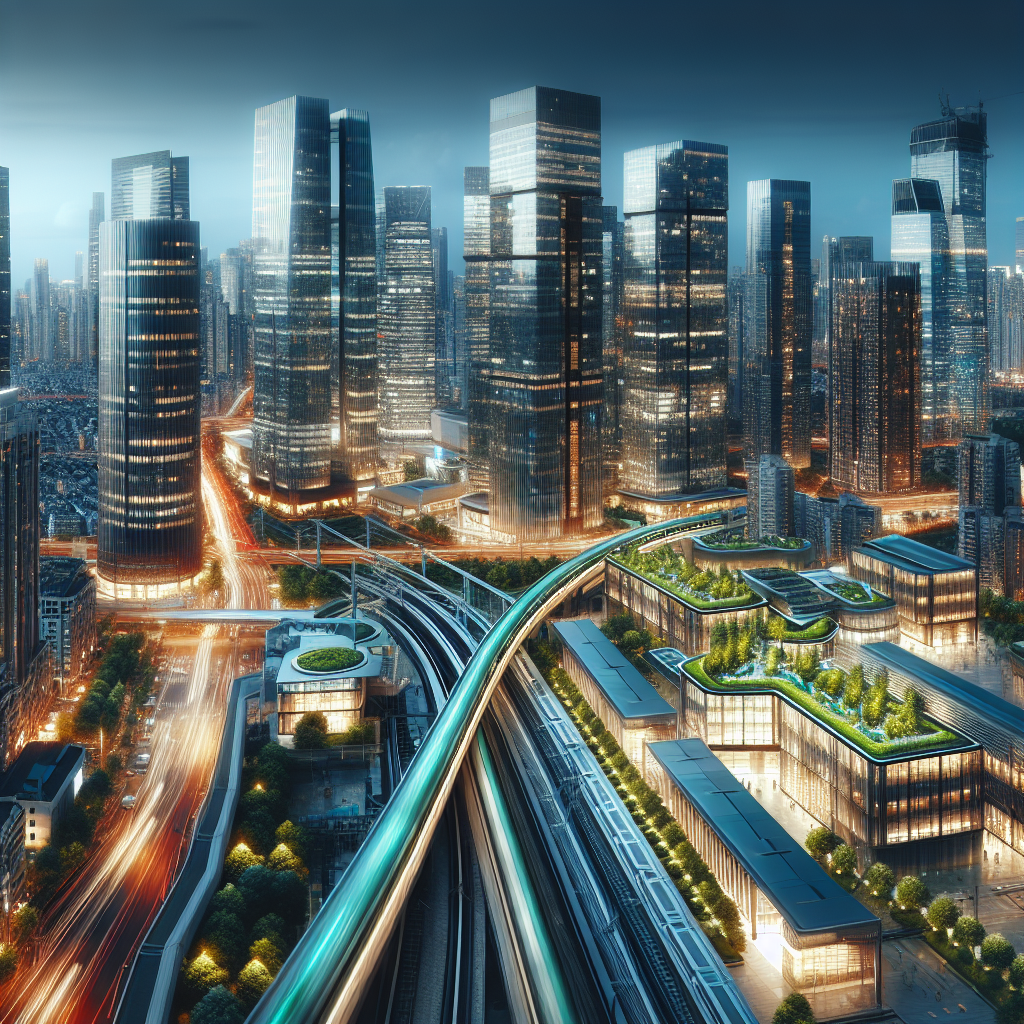
As I explore the evolving landscape of global business tourism, one destination stands out: China. With its rapid advancements in renewable energy and artificial intelligence, China is not only a major player in business tourism but also a significant host for global events. In this in-depth article, I’ll delve into why China is becoming a preferred destination for business tourism and how it’s driving innovation in these critical sectors. Drawing from first-hand experiences, interviews, and research, let’s examine the factors behind China’s ascent and unpack the opportunities it offers for global professionals.
Table of Contents
- Business Tourism in China
- China’s Economic Backdrop
- Renewable Energy Initiatives
- Innovation Hubs and Green Showcases
- AI Innovation in China
- Cross-Sector Collaboration and Talent
- Impact on Global Installers
- China Business Tourism: Forum Experiences
- Cultural Richness and Modern Infrastructure
- Summary
- FAQs
- Sources
Business Tourism in China
China’s business tourism sector has witnessed remarkable growth over the past decade. The nation’s ability to combine its deep-rooted culture with modern amenities has made it a magnet for international business events, summits, and expos. According to the United Nations World Tourism Organization (UNWTO), China consistently ranks among the world’s top destinations for business travel, reflecting both its economic stature and infrastructure development.
As someone who has visited cities like Beijing, Shanghai, and Shenzhen for conferences, I’ve seen firsthand the scale and sophistication of Chinese event venues. Massive convention centers are equipped with the latest digital amenities, translation services, and eco-friendly features. The accessibility provided by China’s extensive high-speed rail network makes it easy to city-hop for back-to-back meetings or industrial visits.
This growth is no accident. The Chinese government has prioritized the meetings, incentives, conferences, and exhibitions (MICE) sector in its national economic strategies. Cities compete to host international summits, rolling out incentives for organizers including financial subsidies, fast-track visa applications, and seamless support services. As a result, China routinely hosts pivotal gatherings such as the China Import and Export Fair (Canton Fair), the World Artificial Intelligence Conference, and the International Green Energy Expo.
China’s Economic Backdrop
To truly understand China’s appeal as a business tourism hub, one must examine its economic engine. China’s transformation over the last 40 years — from a manufacturing powerhouse to an innovator’s haven — has created a business environment teeming with opportunities. Foreign investment and technology transfer are cornerstones of its ongoing economic strategies, and China continues to build connections with companies and governments worldwide.
Today, China is not only a source of consumer demand but also a wellspring of new technologies, disruptive business models, and forward-thinking regulatory frameworks. For global executives, engaging with the Chinese market means gaining access to a wealth of collaborators, funding options, and suppliers. A business trip to China isn’t just about meetings; it’s about immersing oneself in a thriving ecosystem — where government, academia, entrepreneurs, and multinational corporations interact daily.
Renewable Energy Initiatives
One of the most remarkable aspects of China’s rise is its pivot toward sustainability and clean energy. While it is true that the country still relies significantly on coal, the scale and ambition of its renewable energy initiatives dwarf those of most other nations. The government has set forth a roadmap to achieve carbon neutrality by 2060, underpinned by massive investments in solar, wind, hydropower, and increasingly, green hydrogen.
Consider the following:
- Solar Power: China manufactures over two-thirds of the world’s solar panels. The massive Gobi Desert solar farms and urban rooftop initiatives are examples of projects that showcase both scale and innovation.
- Wind Energy: China’s onshore and offshore wind capacity leads globally. Companies are deploying ever-larger turbines and experimenting with floating wind installations at sea.
- Hydropower: Long considered a key to the nation’s energy strategy, mega-dams on the Yangtze and Yellow Rivers power cities and support grid stability.
- Energy Storage and Hydrogen: China is rapidly scaling its battery production (notably, lithium-ion) and emerging as an early adopter of hydrogen fuel technology in city buses and heavy industry.
For the business traveler and global installer, these renewable initiatives aren’t just abstract projects; they’re real, operating assets that can be toured and studied. Such site visits are often integrated into conference agendas, giving international participants unique insight into large-scale renewable deployments.
Innovation Hubs and Green Showcases
China’s commitment to sustainability is also visible in its high-tech parks and eco-cities. Take, for example, the Suzhou Industrial Park, once farmland, now a vibrant area hosting scores of R&D centers, multinational company headquarters, and green manufacturing facilities. Cities like Shenzhen – dubbed “the Silicon Valley of China” – are pioneering waste recycling, smart transport, and electric vehicle fleets at a scale that rivals anywhere in the world.
Participation in events like the International Green Energy Expo allows installers and business delegates to witness demonstrations of world-leading clean tech. These events frequently showcase:
- AI-powered energy management systems
- Integrated urban design for energy efficiency
- Low-carbon supply chain solutions
- Public-private partnership models for sustainability
China’s major urban centers have made it their mission to serve as models for high-density, low-impact development — demonstrating what might be possible in other rapidly urbanizing regions around the globe.
AI Innovation in China
No discussion of modern China is complete without touching on artificial intelligence (AI). The government has outlined an explicit goal: become the global leader in AI by 2030. To this end, billions have been poured into AI R&D, start-up incubators, and world-class education in STEM fields. Top universities in Beijing, Shanghai, and other cities push out large cohorts of AI specialists every year, feeding a vibrant and competitive job market.
Some observations from the AI scene in China:
- Use Cases: AI is leveraged in manufacturing, logistics, retail, finance, and (increasingly) the renewable energy sector for predictive maintenance and grid management.
- Leading Companies: Firms like Baidu, Tencent, and Alibaba have developed AI centers focusing on autonomous vehicles, natural language processing, medical imaging, and e-commerce personalization.
- Events and Networking: Conferences such as the China Artificial Intelligence Conference gather global experts to discuss breakthroughs.
- Local Governments: City authorities actively support AI sandbox zones, providing regulatory flexibility to pilot innovative solutions.
Visiting industry parks, incubators, or attending an AI conference in China gives global professionals access to pilots, prototypes, and thought leaders who are shaping the next generation of digital society.
Cross-Sector Collaboration and Talent
One of the hallmarks of China’s innovation drive is its openness to global collaboration. Businesses are eager for partnerships, technology licensing, and joint ventures with international firms. In AI and renewables, Chinese entities frequently invite global experts to participate in symposia, set up research labs, and co-develop smart city solutions.
Talent, meanwhile, flows in both directions. Chinese students and young professionals are educated at leading institutions worldwide, bringing back skills and a global mindset. Multinational companies, for their part, are establishing China R&D centers to tap local expertise, often in partnership with universities or public labs.
This cross-pollination contributes to a dynamic business culture where diverse perspectives are welcomed and integrated rapidly into local innovation networks.
Impact on Global Installers
The convergence of business tourism, renewables, and AI innovation in China has a tangible effect on global installers. Here’s how:
- Market Access: Engaging in Chinese expos and trade forums enables global installers to showcase their solutions to a vast and receptive audience. This often results in new distribution deals, pilot projects, and even government procurement.
- Technology Transfer: By seeing China’s large-scale renewable installations up close, global visitors acquire valuable technical knowledge and best practice insights that can be adapted for their home markets.
- Networking & Partnerships: Business tourists can forge crucial connections with Chinese firms, suppliers, and policymakers—laying the foundation for transnational collaborations in implementation, R&D, and financing.
- Competitive Benchmarking: Exposure to China’s speed in project delivery and deployment raises the bar for efficiency and innovation among international firms.
China Business Tourism: Forum Experiences
Ask anyone who’s attended a major industry gathering in China, and they’ll describe a whirlwind of activity: morning panel discussions, afternoon factory site visits, gala networking events, and hands-on technology demos. Organizers go above and beyond to integrate local culture—think tea ceremonies, calligraphy demonstrations, or even Tai Chi breaks between sessions. This hospitality fosters an environment of open exchange, making it easy to build relationships that last beyond the event itself.
Furthermore, China’s business forums often blend sectors. At a smart city or renewable energy expo, you’ll find not just engineers and executives, but also urban planners, regulators, academics, and startup founders. This cross-disciplinary approach allows participants to tackle challenges from multiple angles, fostering truly innovative solutions.
Cultural Richness and Modern Infrastructure
Beyond its skyscrapers and conference halls, China seduces visitors with a cultural heritage that spans millennia. Cities offer a juxtaposition of ancient temples and avant-garde architecture, bustling markets and serene gardens. For business tourists, these cultural experiences serve as more than sightseeing—they’re a gateway to understanding local consumer psychology, business etiquette, and communication styles.
Modern infrastructure is another pillar of China’s appeal:
- High-Speed Transportation: Bullet trains slash travel times between major urban centers, making multi-city trips effortless.
- Smart Hotels: International brands and domestic chains alike offer business travelers all the digital amenities they expect—separate workspaces, multilingual services, and secure digital connectivity.
- Digital Payments: Cashless transactions via QR codes, Alipay, or WeChat Pay are ubiquitous—even in small street stalls.
- Language: While English is not as widespread as some destinations, conference venues, airport staff, and business hotels are increasingly equipped with translation services or bilingual staff.
This seamless blend of old and new ensures that business travelers are both inspired and productive during their stay.
Summary
China is rapidly solidifying its position as a global nexus for business tourism and innovation, particularly in renewable energy and artificial intelligence. The country’s commitment to sustainability, smart technology, and cross-sector partnerships has transformed it into more than just a business destination—it’s a living laboratory for the future. Global installers, executives, and entrepreneurs have much to gain by engaging directly with Chinese counterparts, witnessing high-impact projects firsthand, and absorbing the lessons from a system built on speed, scale, and strategic vision.
Ultimately, China’s allure lies not only in its economic opportunity, but also in its invitation to participate in a world of ideas, experimentation, and solution-making—qualities that will define the future of global business and sustainability.
FAQs
- What are the main attractions for business tourism in China? China offers extensive modern infrastructure, a dynamic and robust economy, and a deep cultural heritage. Top attractions for business tourism include large-scale expos, international forums, high-profile summits, and leading-edge R&D parks across cities like Shanghai, Beijing, Shenzhen, and Guangzhou.
- How is China leading in renewable energy? China is the world’s largest producer and installer of solar panels and has invested heavily in wind, hydropower, and emerging sectors like battery storage and green hydrogen. State and municipal governments incentivize innovation and rapid scale-up to meet carbon neutrality goals.
- What opportunities exist for global installers in China? Installers can engage in knowledge exchange, seek local partnerships, discover new project finance models, and attend industry expos to present their technology to a global audience. Many learn from China’s scale and speed of renewable integration into urban planning and smart cities.
- How can I participate in AI events in China? Business travelers can register for industry-leading events such as the China Artificial Intelligence Conference and sector-specific symposia. These gatherings offer networking sessions, pitch competitions, keynote lectures, and interactive showcases with access to both established companies and startups.
- Are there challenges to doing business in China? Yes. While opportunities abound, challenges include navigating regulatory frameworks, protecting IP, and bridging language or cultural differences. Engaging a local partner or agent, and participating in industry associations, can help ease the learning curve.
- Which sectors besides renewables and AI are strong in China? Other major innovation sectors include biotechnology, advanced manufacturing, smart mobility (including electric vehicles), telecommunications, and fintech.
Sources
- UNWTO – United Nations World Tourism Organization
- China Artificial Intelligence Conference
- NIST – National Institute of Standards and Technology
- Reuters – Trusted news source for global events