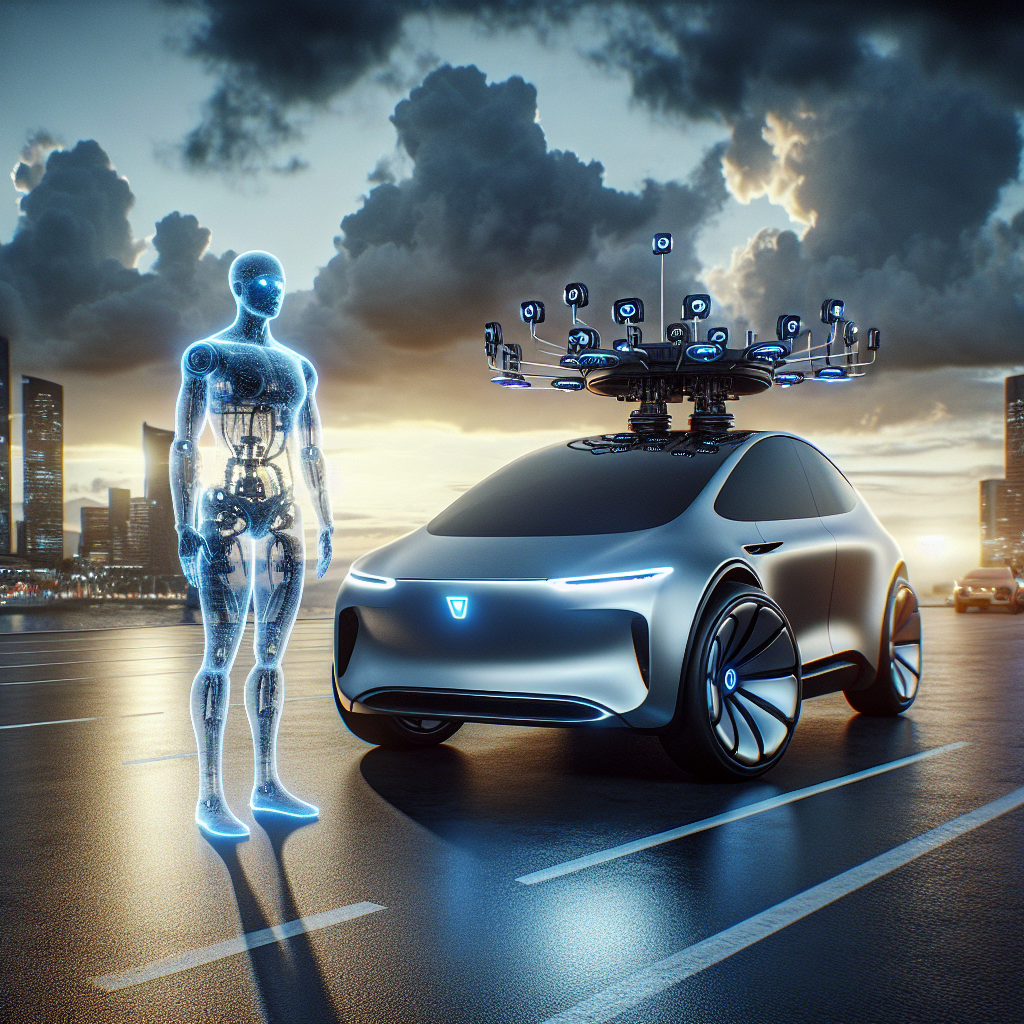
Elon Musk has set an ambitious deadline for 2026, aiming for significant breakthroughs in Tesla’s AI technology, particularly in Full Self-Driving (FSD) and the Optimus humanoid robot. This announcement has sparked intense interest—and spirited debate—about the timeline and viability of such game-changing advances. As someone who closely follows advancements in technology, I find this development both exciting and critical for the evolution of AI. In this article, I’ll explore exactly what Musk’s 2026 goal means for Tesla, the automotive industry, and consumers worldwide.
Table of Contents
- Introduction
- Tesla’s AI Innovations
- Challenges and Obstacles
- Importance of AI in the Automotive Industry
- The Future of Optimus: Tesla’s Humanoid Robot
- Societal Impact & Ethical Considerations
- Actionable Steps for Consumers
- Summary
- FAQs
- Sources
Introduction
Elon Musk’s recent, headline-grabbing declaration that major AI milestones will be reached by Tesla by 2026 is more than just a bold statement—it’s a defining challenge for an entire industry. The stakes are huge, especially given Tesla’s central role in modernizing automotive technology and revolutionizing transportation. Musk’s deadline is also a pressure test for the actual delivery of technologies like FSD and the humanoid Optimus. Understanding what’s at stake is crucial for enthusiasts, investors, tech professionals, and consumers who want to be prepared for a dramatic reshaping of everyday mobility and work.
Tesla’s AI Innovations
To grasp the scale of Musk’s challenge, we need a clear picture of what Tesla’s AI innovations entail:
- Full Self-Driving (FSD): Tesla’s FSD system is designed to eventually allow cars to operate entirely without human intervention. This is not just about highway lane-keeping, but navigating city streets, handling traffic lights, construction zones, and even responding to unpredictable events. The system combines deep neural networks, sensor fusion, and high-performance onboard supercomputing (the ‘Dojo’ chip) to process and interpret real-time driving data.
- Neural Network Training: Unlike traditional automakers, Tesla constantly updates its AI through millions of miles driven by owners’ vehicles. The company’s fleet essentially forms one massive, distributed network of rolling sensors, sending data back to Tesla’s servers for training and improvement. This approach has led to rapid iteration—though critics point out that real-world driving, with all its complexity, remains an enormous AI challenge.
- Autopilot and Safety: Tesla’s Autopilot already offers features like adaptive cruise control and automatic lane keeping. FSD will expand significantly on these, moving closer to full Level 4 or 5 autonomy by 2026 if Musk’s projections are realized.
- Dojo Supercomputer: Dojo enables Tesla to handle exponentially more video and sensory data than rival systems, allowing for the continuous refinement and expansion of its AI capabilities. This plays a central role in accelerating neural network training—critical for Musk’s 2026 timeline.
For more insight on these advances, the WebProNews article provides a concise summary.
Challenges and Obstacles
Of course, such a radical timeline does not come without significant hurdles:
- Technical Barriers: Achieving true FSD requires solving countless edge cases—scenarios that are rare but dangerous, like an object suddenly falling from a truck in front of the car, or a child darting into the street. Training an AI to recognize and react to every possible situation is a formidable task.
- Regulatory Hurdles: Even if Tesla perfects FSD, regulatory approval is likely to trail technical innovation. Local, state, and federal laws differ widely, and regulators will need convincing safety data before allowing autonomous vehicles to operate without constraints.
- Public Trust: High-profile accidents involving advanced driver-assist systems have made the public wary of fully self-driving vehicles. Building trust is necessary for broad adoption, and every misstep erodes confidence.
- Economic and Logistical Issues: Scaling up production of both safe, autonomous vehicles and robots like Optimus involves solving supply chain, materials, and manufacturing problems—especially amidst ongoing global disruptions.
Importance of AI in the Automotive Industry
The implications of successfully deploying advanced automotive AI are significant and far-reaching. Here’s how AI is already transforming the industry, and how Tesla’s progress could amplify these changes:
- Enhanced Safety: AI-powered technologies have already begun to save lives by powering features such as emergency braking, collision warnings, and lane-keeping assist. If Tesla succeeds in delivering robust FSD, accident rates could plummet, saving thousands of lives annually.
- Efficiency and Sustainability: Smart route optimization reduces traffic congestion and emissions. AI-driven energy management can maximize battery lifespan and optimize power usage in electric vehicles.
- Improved Accessibility: FSD could make driving possible for people who are unable to drive due to age, disability, or other factors, thereby increasing personal mobility and improving quality of life.
- Economic Disruption: Self-driving technology will impact the labor market, potentially displacing millions of driving-related jobs but also creating opportunities in AI development, robotics maintenance, and new mobility services.
A Reuters report outlines the accelerating integration of AI in the sector, from manufacturing to in-car experiences.
The Future of Optimus: Tesla’s Humanoid Robot
Perhaps even more ambitious than FSD is the Optimus humanoid robot. Musk has repeatedly touted Optimus as a key piece of Tesla’s future, envisioning a world where robots handle dangerous, repetitive, or mundane tasks, freeing up humans for more creative pursuits.
Key points about Optimus:
- Design and Capabilities: Optimus is intended to look and move like a human, standing about 5’8” tall and weighing around 125 pounds. It will leverage Tesla’s expertise in AI, vision systems, and battery technology.
- Applications: Optimus is slated for use in factories, warehouses, and other industrial settings initially. Eventually, some envision these robots migrating into homes or public spaces, performing everything from caregiving to service roles.
- Societal Transformation: If realized, humanoid robots could profoundly reshape labor markets, elder care, logistics, and even the way we conceptualize household chores or personal assistance.
- 2026 Feasibility: While Tesla has demonstrated engineering prowess, deploying useful, affordable humanoid robots within two years remains one of Musk’s boldest predictions—and most would agree, among his most uncertain.
Societal Impact & Ethical Considerations
Tesla’s AI ambitions also raise important ethical and societal questions:
- Job Displacement vs. Job Creation: Automation of driving and manual labor jobs will displace many workers. Policymakers must figure out how to assist those affected while harnessing the benefits of a more efficient economy.
- Fair and Safe Deployment: Ensuring equity in deployment is crucial. Will these technologies be affordable and available beyond early adopters or high-income consumers? Furthermore, who is responsible if an AI-driven car or robot causes harm?
- Privacy: With fleets of AI-equipped vehicles and robots collecting data constantly, robust safeguards must be in place to protect individuals’ privacy and prevent misuse of personal information.
- AI Bias and Transparency: AI systems can inherit biases from flawed data or insufficient testing. Transparent processes, third-party audits, and clear accountability are needed as these systems become more embedded in daily life.
Debates over responsible AI development are intensifying as real-world deployment approaches, especially in high-stakes sectors like transportation and health.
Actionable Steps for Consumers
Given the pace of change, what should consumers do to prepare for and benefit from Tesla’s (and the broader industry’s) AI breakthroughs?
- Stay Updated: Regularly follow Tesla’s official announcements, notable technology publications, and robust industry analysis. Information is power when making decisions about investing in, using, or depending on new technology.
- Engage with the Community: Join forums and social media groups focused on Tesla, electric vehicles, or AI in transportation. Discussions with other enthusiasts, early adopters, and experts can provide valuable perspectives, tips, and warnings.
- Evaluate Safety and Security Features: Before purchasing a vehicle or product promising advanced AI, investigate its track record, user reviews, and regulatory status. Practical considerations about privacy, reliability, and ongoing updates are as important as cutting-edge features.
- Consider Your Needs: If you may benefit from features like partial automation—such as advanced driver-assist for commuting, autopark, or safety alerts—determine whether they’re ready for your environment. For others, waiting for further maturity or regulatory clarity may be prudent.
- Participate in Local Debates: As new technologies roll out, policymakers and companies solicit public input. Be engaged—whether you’re concerned about safety, enthusiastic about innovation, or simply curious about driverless zones and autonomous delivery services.
Summary
Elon Musk’s 2026 deadline for AI breakthroughs is a clarion call for Tesla and the entire technology sector. Achieving full self-driving vehicles and a practical humanoid robot by that time would be a revolutionary leap. Whether or not Musk’s timeline proves realistic, the pursuit of these goals is accelerating advances in neural networks, computer vision, robotics, and high-performance computing. The ripple effects will transform automotive safety, labor markets, urban infrastructure, and more.
For consumers and observers, the key is to remain informed, cautious, and engaged. By understanding the technological, economic, and ethical ramifications, we can better participate in a rapidly changing world where AI is no longer a futuristic aspiration, but an everyday reality in our cars, streets, and—soon—our homes and workplaces.
FAQs
- What is Tesla’s FSD? Full Self-Driving (FSD) is Tesla’s advanced driver-assistance system with the long-term aim of enabling cars to drive completely autonomously through any environment or traffic scenario.
- How will AI impact the automotive industry? AI will enhance vehicle safety, reduce congestion, enable new supports for accessibility, and facilitate the rise of smart infrastructure and alternative mobility services, while also raising complex ethical, regulatory, and labor questions.
- How realistic is Musk’s 2026 deadline? While Tesla has achieved rapid innovation, many industry experts view the 2026 timeline for full autonomy and humanoid robots as aggressive. Progress is likely to be substantial, but reaching fully realized, regulatory-approved deployment may require more time, especially given technical, societal, and legal hurdles.
- What can consumers do to prepare for these changes? Stay informed, evaluate product features and safety track records, engage in community and policy discussions, and be proactive about understanding the impacts of automation.
- Will Optimus replace human labor? While Optimus could automate some manual tasks, most analysts expect robots to supplement rather than entirely replace human labor in the short term—especially for complex, creative, or interpersonal work.