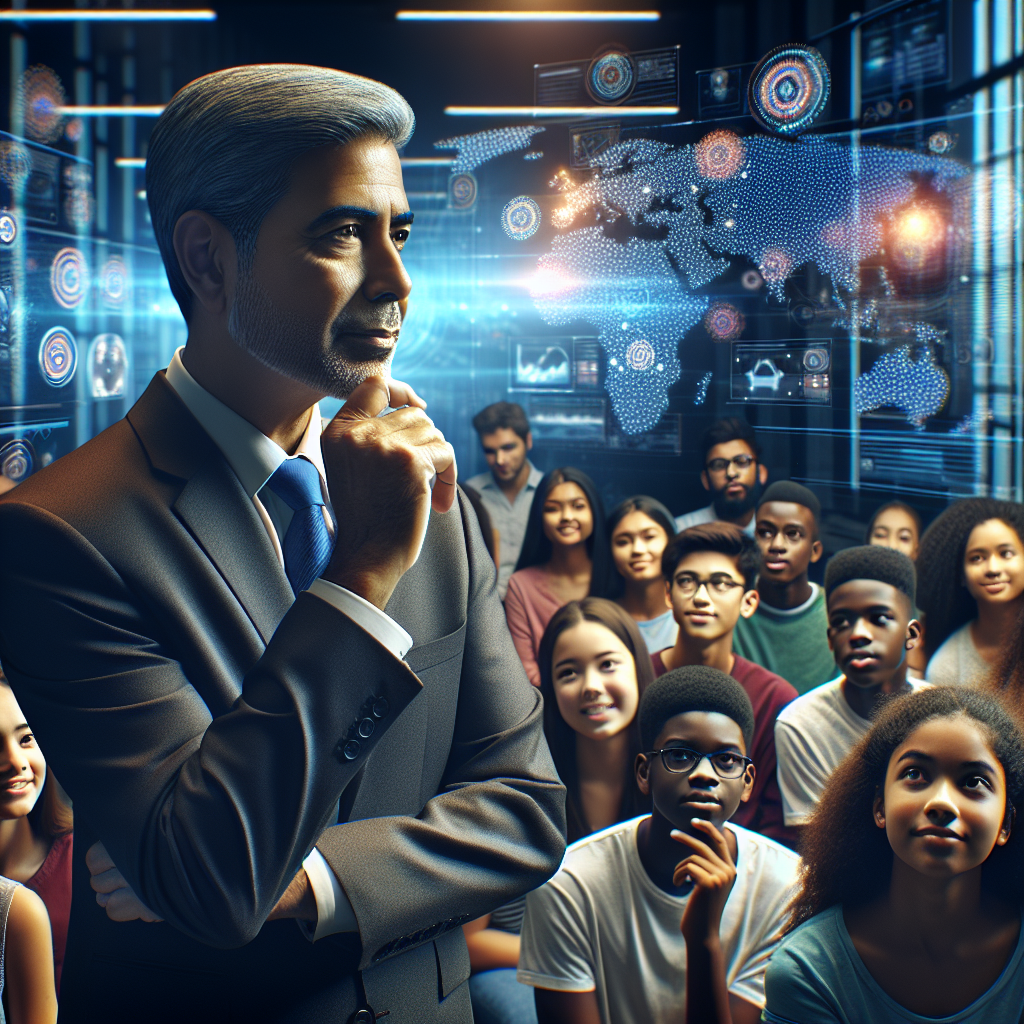
In his widely anticipated 131st edition of Mann Ki Baat, Prime Minister Narendra Modi turned the nation’s attention towards the waves of change being driven by Artificial Intelligence (AI). This episode ventured beyond just technology—PM Modi paid a poignant tribute to the formidable Jayalalithaa and issued an inspiring message to the country’s youth, particularly students who will help shape India’s future trajectory. Through his words, the Prime Minister not only underscored a government focus on innovation but also issued a personal invitation for every Indian to actively participate in building a brighter, tech-enabled tomorrow. This blend of encouragement, appreciation of leadership, and optimism about technology makes the 131st Mann Ki Baat a truly notable episode.
Table of Contents
- AI Innovation: A Game Changer
- AI in India Today: Breakthroughs and Barriers
- Leadership and Vision: A Mark of Progress
- Students as Builders: Innovating for India’s Future
- Tribute to Jayalalithaa: Remembering a Trailblazer
- Summary
- FAQs
- Sources
AI Innovation: A Game Changer
Artificial Intelligence, commonly abbreviated as AI, is not merely a buzzword—it’s a revolution in progress. PM Modi highlighted how AI holds the promise to fundamentally transform the way we live, work, and interact. Across every sector—agriculture, manufacturing, banking, health care, education, governance—AI innovation acts as both catalyst and disruptor.
AI’s transformative impact is evident in daily life. From voice-activated personal assistants to smart traffic management systems and customized digital healthcare, AI is already all around us. This technology isn’t only about creating new tools; it’s about building smarter systems that can self-improve, learn from vast data, and help people and businesses make better decisions—and even support government policy and service delivery.
PM Modi’s address emphasized the ongoing and future changes AI can make, especially in a country as vast and diverse as India. By automating repetitive work, AI can empower workers to focus on more meaningful activities. In agriculture, predictive AI models can anticipate crop failures and improve yield. For financial services, AI-driven credit scoring and fraud detection are revolutionizing customer experience. By integrating AI into public service delivery, governance becomes more transparent and efficient. In the medical field, AI-driven diagnostics can spot ailments sooner, often in regions where specialized doctors are in short supply. Such benefits underline why the government and private sector alike continue to invest in AI research and implementation.
It’s important to keep up with AI’s rapid evolution. For those interested in diving deeper into AI and machine learning, arXiv offers free access to cutting-edge academic papers, and OpenAI gives accessible articles and frameworks to explore the latest research. India, with its growing pool of tech talent, is poised to not just adopt but also lead in AI research and application worldwide.
AI in India Today: Breakthroughs and Barriers
India is in a unique place on the global AI map. The past decade has seen significant progress, from the blossoming of innovative AI startups to large-scale adoption in government programs and private industry. Examples include AI-assisted soil monitoring for farmers, disease prediction tools in tertiary hospitals, and AI-powered chatbots providing government services.
Yet, the journey isn’t without challenges. India faces issues like: inadequate AI-related curricula in schools, insufficient infrastructure in rural areas, privacy concerns, and the risk of job displacement. However, with policy interventions such as the National Strategy for Artificial Intelligence (AI for All), there’s a concerted push to bridge digital divides, invest in relevant education, and include ethical frameworks for AI development. PM Modi’s call to action in Mann Ki Baat, therefore, is both timely and urgently needed.
Leadership and Vision: A Mark of Progress
A significant thread woven throughout the episode was the importance of national vision and dynamic leadership. By spotlighting AI during a national broadcast, PM Modi underscored how governments have a crucial role in steering new technologies toward inclusive and responsible growth. Policy-makers must ensure that technological progress lifts every stratum of society.
For those seeking to understand how leadership adapts with technology, the Prime Minister’s speech is a valuable resource. He has previously elaborated on platforms that strengthen technology-driven governance, aiming for both growth and transparency. India’s leadership on the global AI stage is steadily strengthening through international collaborations, research exchanges, and the nurturing of homegrown innovation hubs. The goal is not just to catch up, but to compete globally—and ultimately, to lead.
Students as Builders: Innovating for India’s Future
One of the warmest and most motivating moments of the 131st Mann Ki Baat was PM Modi’s direct address to students. Today’s youth will build the India of tomorrow, he noted—and technology is squarely at the heart of that future. The Prime Minister invited students to learn, experiment, and ultimately create solutions using AI and other cutting-edge tools.
Young people, imbued with curiosity, creativity, and drive, are best placed to harness the power of AI. By working on AI projects—ranging from developing simple chatbots to innovative solutions like remote disease detection or personalized learning platforms—students can not only bolster their career prospects but also contribute to solving societal issues.
For hands-on learning, platforms like Hugging Face, which offers open-source AI models, and Papers with Code are invaluable. These communities let students and enthusiasts access world-class resources, build projects, and even share their creations globally. With AI becoming more accessible, all that’s required is curiosity and persistence.
Many Indian universities and colleges are now running AI bootcamps, hackathons, and innovation challenges. Engaging in these events can foster a practical understanding of how algorithms work, introduce real-world datasets, and build collaboration skills. By taking up such opportunities, students can become both consumers and creators of AI-powered change.
PM Modi’s emphasis on ethical and responsible technology use is especially vital. He advised students to balance ambition with a sense of responsibility towards society—a principle as crucial in technology deployment as it is elsewhere in life.
Tribute to Jayalalithaa: Remembering a Trailblazer
Amid the excitement around technological innovation, PM Modi did not forget to pay a touching tribute to the late Jayalalithaa: the esteemed former Chief Minister of Tamil Nadu. His words were a reminder that progress is a tapestry woven not just from new inventions but also from the enduring legacies of visionary leaders.
Jayalalithaa was, and remains, a symbol of resilience, charisma, and transformative governance. For millions, her life story—marked by dramatic turns and hard-won victories—offers inspiration. She was among the first female leaders to break the glass ceiling in Indian politics, showing women nationwide that leadership is attainable. Her no-nonsense approach, pioneering welfare schemes, and magnetic leadership remain reference points in Indian political history.
Those looking to explore her journey should consult reliable sources such as Reuters or dedicated biographies for balanced perspectives on both her contributions and controversies. For today’s youth, Jayalalithaa’s story is more than history—it is a call not to be daunted by obstacles, but to chart bold new paths.
Summary: Building on Inspiration and Innovation
The Prime Minister’s 131st Mann Ki Baat is more than a radio address—it’s a call to action for every citizen. By spotlighting AI and technological innovation, honoring a legacy of leadership, and encouraging the nation’s students to become shapers of the future, PM Modi offered both practical advice and inspiration.
To summarize the episode’s key lessons:
- AI innovation is already transforming major industries and daily life. India can and should lead this revolution through education, investment, and creative application.
- Leadership—as exemplified by Jayalalithaa—remains crucial for progress. Vision, resolve, and inclusiveness should guide both politics and innovation.
- Students and youth must seize technology’s promise, not just as consumers but as innovators. Accessible resources, open platforms, and state support mean India’s young people can make global contributions.
- Technological progress must serve society, guided by ethics and a commitment to equity and inclusion.
Embracing these messages empowers every Indian to contribute to a more prosperous, innovative, and just society. The episode stands as a guiding light for those who wish to see India soar as a global leader in the upcoming tech age.
FAQs
- What is Mann Ki Baat?
Mann Ki Baat is Prime Minister Modi’s monthly radio address to the nation, in which he addresses social, developmental, and technological issues, and shares inspirational stories from across India. - How can I learn more about AI?
Online courses as well as open research repositories are excellent starting points. Platforms like arXiv provide research papers, while OpenAI and Hugging Face offer practical frameworks and tutorials. Conferences like ICML (International Conference on Machine Learning) and sites such as Papers with Code are great for staying updated. - Why is Jayalalithaa significant?
Jayalalithaa was one of the most influential politicians in South India. Rising from the world of cinema to the Chief Minister’s office, she led Tamil Nadu for years, initiating welfare schemes and challenging gender stereotypes in politics. - What are the key benefits of AI for students?
AI skills can unlock top career opportunities, support entrepreneurial dreams, and help students develop innovative solutions to real-world problems in society, education, environment, and healthcare. - How does the government support AI in India?
The Indian government has launched policies, funding programs, and educational initiatives to foster AI research and implementation—from the National AI Portal to various hackathons and scholarships for students interested in technology.