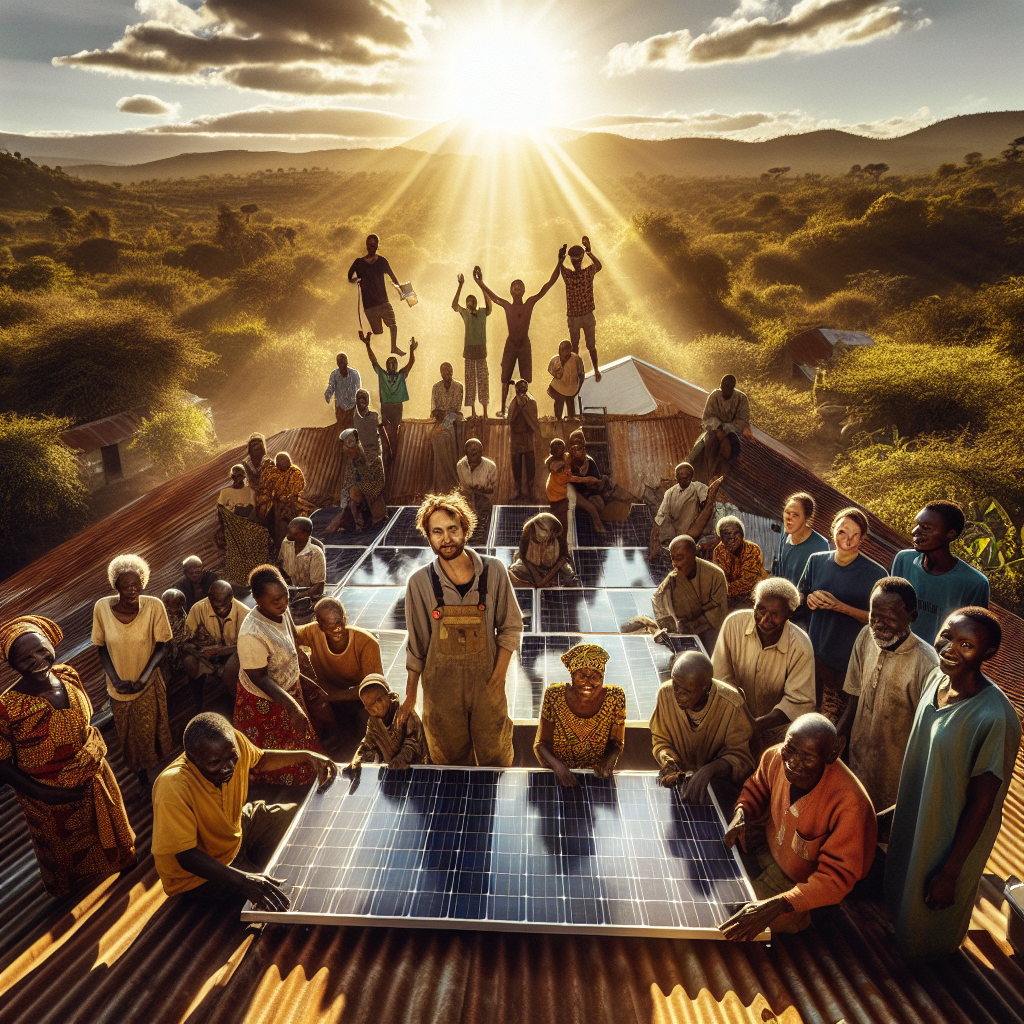
In today’s rapidly evolving world, the concept of sustainability is no longer relegated to environmental circles or niche activists—it’s a global imperative. Every sector, from energy to fashion to consumer packaged goods, is now accountable for its impact on people and the planet. Among the many companies embracing this new paradigm, LONGi stands out for its work in Africa, where it has catalyzed progress both environmentally and socially. Recognized by the United Nations Environment Programme (UNEP) as a sustainable brand case, LONGi’s efforts offer meaningful lessons not just for solar businesses, but for every company intent on making a positive difference.
This post takes a comprehensive look at LONGi in Africa—tracing its projects, the broader context of sustainability in business, and practical advice for brands wanting to follow a similar path. Sustainability isn’t just about complying with regulations; it’s about crafting a legacy that benefits both current and future generations. Let’s see how LONGi is doing just that, and what actionable insights we can draw from its journey.
Table of Contents
- Introduction
- LONGi’s Activities in Africa
- The Broader Benefits to Africa
- The Importance of Sustainability in Today’s Business Landscape
- Actionable Steps for Brands
- Summary
- FAQs
- Sources
Introduction
When we reflect on the challenges facing humanity—climate change, resource depletion, inequity, and energy poverty—the scale and complexity can seem overwhelming. And yet, within this daunting landscape, there are beacons of hope. I am continually inspired by how businesses—motivated by both ethical imperatives and practical realities—are adopting sustainable frameworks. LONGi’s recognition by UNEP as a sustainable brand active in Africa is more than a badge of honor; it’s a blueprint for what can be achieved when innovation, dedication, and community focus converge. This story demonstrates sustainability in action and offers a sense of optimism for brands everywhere. I invite you to journey with me as we break down LONGi’s impact, the lessons it offers, and the steps we can all take towards a greener future.
LONGi’s Activities in Africa
LONGi Green Energy Technology Co., Ltd., widely regarded as a global leader in solar technology and solar panel manufacturing, has turned its attention to Africa’s unique energy and development challenges. Their approach is not a one-size-fits-all solution; instead, LONGi tailors its efforts to the local context, combining leading-edge technology with partnership-driven implementation. In regions where energy access remains a persistent hurdle—where nearly 600 million people still lack reliable electricity (according to the International Energy Agency)—LONGi has helped bridge the gap by providing affordable, efficient, and scalable solar solutions.
Key Activities Include:
- Partnerships with Local Entities: LONGi collaborates with governments, NGOs, and local companies to develop solar power installations that meet the specific needs of each community. This coalition approach ensures that projects are not just imported solutions, but are owned and maintained by locals.
- Off-Grid and Mini-Grid Installations: Many rural and peri-urban areas are far from national grids. LONGi has designed and delivered off-grid and mini-grid solar systems, which power homes, schools, clinics, and small industries. These systems dramatically improve livelihoods and create growth platforms for micro-businesses.
- Job Creation and Skills Training: LONGi’s activities integrate workforce development, training local technicians in solar system installation, maintenance, and management. These new skill sets uplift entire communities by providing employment and igniting local economies.
- Innovation Hubs and Market Expansion: By establishing innovation hubs and demonstration projects, LONGi has introduced new technologies such as high-efficiency PV modules adapted for high-temperature African climates, and energy storage solutions critical for solar reliability.
- Educational and Awareness Initiatives: The company supports education around renewable energy and environmental stewardship for young people and local leaders, aligning its business growth with the continent’s long-term sustainability goals.
These efforts did not go unnoticed. The UNEP recognized LONGi as an exemplar in sustainable business, underscoring how innovative private sector players can jumpstart economic and social transformation. Imagine a remote village, previously constrained by kerosene lamps and limited economic activity, now illuminated by clean, inexhaustible energy—this is the tangible change LONGi is helping create.
The Broader Benefits to Africa
LONGi’s focus is not merely environmental—it’s deeply socio-economic. Solar energy adoption on the continent yields broad, multi-dimensional benefits:
- Energy Access and Affordability: Reliable energy unlocks opportunities for education, healthcare, and business. No longer do children need to study by candlelight, health clinics can refrigerate vaccines, and entrepreneurs can operate machinery—activities that were previously constrained by unreliable or unaffordable power sources.
- Economic Empowerment: Job creation goes well beyond the formal sector; it supports informal enterprises too. Women, often responsible for home energy, benefit from new microfinance opportunities, and entire communities are energized, quite literally, for prosperity.
- Health and Safety: Transitioning from kerosene and diesel to solar drastically reduces indoor air pollution, lowering respiratory illnesses and fire risks. Cleaner energy also means a smaller carbon footprint at household, village, and national levels.
- Environmental Protection: Every solar installation displaces fossil fuels, cutting greenhouse gas emissions and reducing deforestation for firewood—a leading cause of habitat loss and land degradation across much of Africa.
It’s not simply that LONGi is selling solar panels—it’s that it’s helping to rewrite the narrative for what sustainable, inclusive development looks like. Community-led, locally maintained, and proven to deliver results.
The Importance of Sustainability in Today’s Business Landscape
Why has sustainability become such a driver for business? The answer lies at the intersection of risk management, consumer preference, regulatory shifts, and ethical obligation.
First and foremost, the Intergovernmental Panel on Climate Change (IPCC) and virtually every credible scientific body agree that a rapid pivot away from fossil fuels is needed to limit catastrophic global warming. Solar power is a linchpin in this transition. By investing in solar and other renewables, companies can shrink their carbon footprint while preparing for a world where emissions are regulated and fossil energy is increasingly costly.
But sustainability also makes business sense. Numerous studies show that consumers—especially Millennials and Gen Z—prioritize brands with strong environmental and social records. According to a Nielsen study, 81% of global respondents feel strongly that companies should help improve the environment. That translates into purchasing decisions, brand loyalty, and advocacy. In addition, sustainable brands are often more attractive to investors and talent, further increasing their resilience and long-term profitability.
Finally, transparency and accountability are no longer optional; with new standards, reporting regimes, and public scrutiny—including via social media—companies must walk their talk. Those that embed sustainability into their operations, governance, and value chains are best positioned to thrive in an era of rising expectations.
The Special Case for Solar in Africa
Africa possesses some of the world’s richest solar resources, yet the lowest rates of electrification. Solar energy isn’t simply green—it’s pragmatic, often cheaper and more reliable than conventional alternatives. For companies like LONGi, the stakes are clear: by bringing solar to scale, you contribute directly to sustainable development goals, create value for local communities, and build a brand rooted in authentic responsibility.
Actionable Steps for Brands
So what can your organization learn from LONGi’s approach, regardless of your sector or market?
- Conduct a Sustainability Audit — Take a holistic look at your operations: Where are the energy inefficiencies, the waste streams, the supply chain vulnerabilities? A comprehensive audit will reveal not just risks but also hidden opportunities for innovation, savings, and impact.
- Set Clear and Ambitious Goals — Make commitments that are specific, measurable, and time-bound. Aim to reduce emissions by a certain percentage, source 100% renewable electricity, or ensure that every product is recyclable or biodegradable by a certain year. Public goals drive accountability and inspire engagement inside and outside your company.
- Engage All Stakeholders — Sustainability only works as a team effort. This means involving your employees (from factory floor to C-suite), your suppliers (ensuring they uphold the same standards), your customers (educating and motivating them to participate), and your communities. Such engagement unlocks innovation and shared ownership.
- Invest in Renewables and Efficiency — Whether through direct installation (like rooftop solar), purchasing green power, or investing in energy-saving technologies, prioritize renewables and efficiency across your operations. Even small steps add up and signal your seriousness to stakeholders.
- Embed Sustainability into Your Brand Story — Don’t treat sustainability as an afterthought. Make it central to your branding, marketing, and communications strategy—sharing your wins, setbacks, and lessons learned.
- Partner for Impact — Collaboration amplifies results. Partner with governments, NGOs, academic institutions, or even competitors on sustainability initiatives that benefit entire industries or regions. LONGi’s success in Africa, for example, owes a great deal to such partnerships.
- Report and Improve — Transparency breeds trust. Regularly disclose your progress through sustainability reports or public dashboards. Be honest about challenges and outline how you’re improving. The learning process never truly ends.
Summary
LONGi’s initiatives in Africa are proof that sustainability is not just good for the environment—it can be the key to unlocking economic growth, social progress, and long-lasting brand value. Their approach demonstrates what’s possible when companies move from rhetoric to action, and from charity to empowerment. And as the UNEP recognition shows, these efforts can raise the bar for industries worldwide.
You don’t need to be a global solar leader to make a difference. Any brand, regardless of its stage, can begin the sustainability journey—auditing its impacts, setting bolder goals, collaborating with stakeholders, and striving for transparency and improvement. The rewards—lower costs, loyal customers, proud employees, and a healthier planet—are well worth the investment. Imagine a future where every business follows a similar trajectory: that’s not just sustainable; it’s transformational.
FAQs
- What is LONGi’s main focus in Africa?
LONGi is deeply invested in expanding access to affordable, reliable, and sustainable solar energy in underserved African communities. Their focus includes solar panel installation, the creation of mini-grid systems, skills trainings, and the fostering of local partnerships to create solutions that last. - Why is sustainability important for brands?
Sustainability is critical because it reduces environmental impact, attracts and retains conscious consumers, mitigates regulatory and market risks, and supports long-term business viability. Truly sustainable brands often enjoy greater trust, advocacy, and resilience in a competitive global economy. - How can brands start their sustainability journey?
Brands should start by understanding their environmental and social impacts, then set concrete goals for improvement. Engaging employees, customers, and partners in these goals creates buy-in and spreads awareness. By investing in energy efficiency, renewable energy, and responsible sourcing, even small brands can drive change. Clear reporting and storytelling allow brands to share progress and inspire others. - What makes LONGi’s approach stand out from other solar companies?
LONGi distinguishes itself through holistic partnerships, skill development, local empowerment, and a recognition that solar is about more than technology—it’s about transforming whole communities. Their UNEP recognition highlights this integrated, measurable, and inclusive approach as a best practice for the industry. - Can small and medium-sized businesses apply these lessons?
Absolutely. While SMEs might operate at a different scale, the principles remain universal: assess impacts, set goals, involve stakeholders, and transparently communicate progress. Progress, not perfection, is the key.