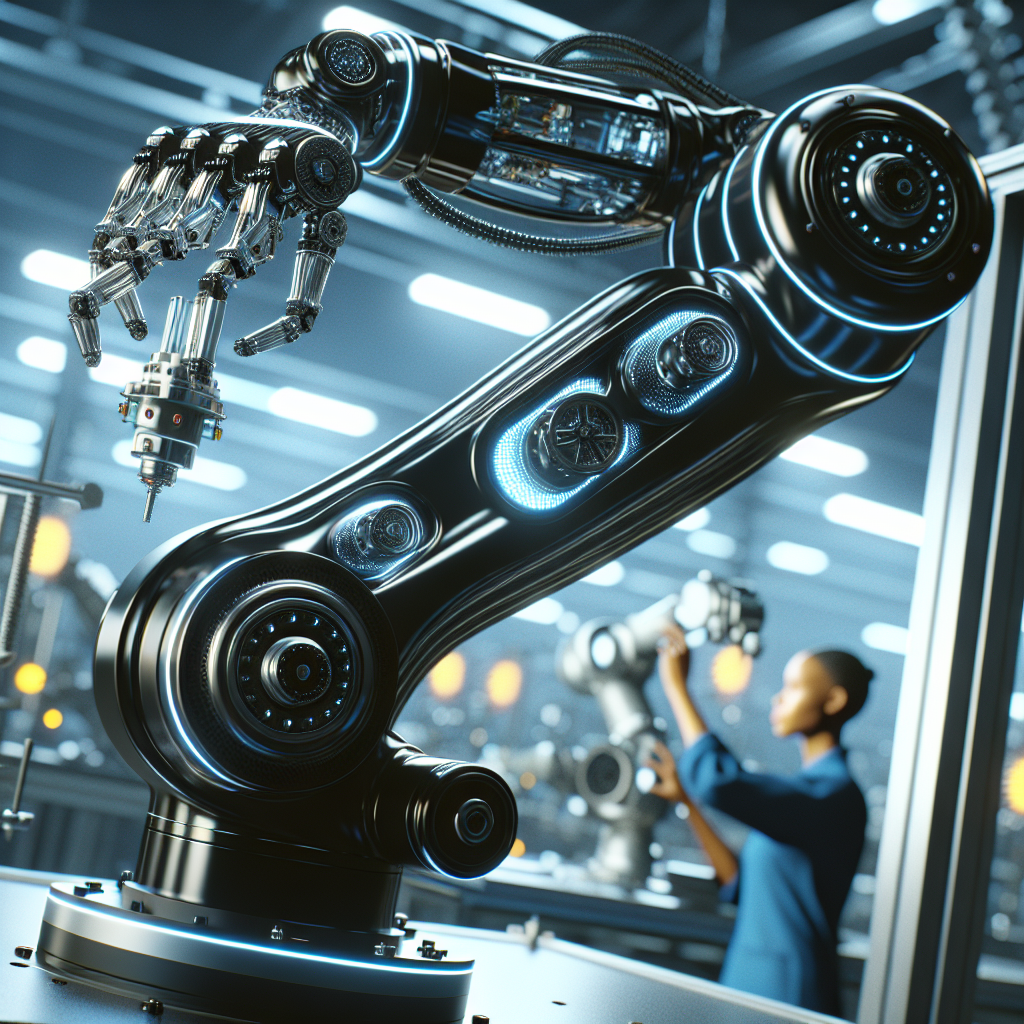
As industries evolve under the twin pressures of increasing global demand and a growing emphasis on worker safety, automation continues to play a pivotal role in transforming the business landscape. One of the most exciting recent developments in this area is the unveiling of Comau’s innovative collaborative robots, which mark a significant advancement in industrial automation.
Table of Contents
- Introduction
- What Are Collaborative Robots?
- Importance of Collaborative Robots in Industry
- Expanding Applications of Collaborative Robots
- Features of Comau’s Collaborative Robots
- Human-Robot Collaboration in Practice
- Challenges and Considerations
- Implementing Collaborative Robots in Your Operations
- The Future of Collaborative Robots: Trends and Innovations
- Summary
- FAQs
- Sources
Introduction
In the fast-paced, ever-changing world of industrial automation, success depends on a company’s ability to adopt cutting-edge technology swiftly and strategically. In this context, Comau’s latest family of collaborative robots—robotic arms equipped with powerful AI, advanced sensors, and enhanced safety protocols—emerges as a potential game changer for small and large manufacturers alike. Far from replacing human workers, these robots are engineered to work alongside operators, amplifying productivity, reducing risks, and catalyzing the next era of smart manufacturing. In this guide, I will explore the world of collaborative robots, their growing importance, real-world applications, and how you can harness their potential in your own operations.
What Are Collaborative Robots?
Collaborative robots—often called “cobots”—are a new breed of industrial robots with a core difference: instead of being caged away behind fences and safety barriers, cobots are purposely designed to operate directly alongside humans on the factory or warehouse floor. Thanks to a suite of cutting-edge sensors, force-limiting joints, and real-time path planning algorithms, cobots can sense the presence of humans and adapt their actions and speed accordingly. This enables a new paradigm of flexible, safe automation where man and machine work almost hand-in-hand for tasks such as materials handling, packing, quality inspection, assembly, and more.
The primary advantage of cobots is their ability to collaborate, not just coexist, with human operators. Designed for ease of use, they are typically smaller, lighter, and more intuitive to program than their larger industrial counterparts. This makes cobots suitable even for companies with minimal robotics experience, and opens the door for fast retooling as production needs and product lines evolve.
Importance of Collaborative Robots in Industry
The workplace landscape is changing steadily, marked by a shift from mass production towards greater product variety, smaller batch sizes, and rapidly changing consumer expectations. In this new environment, flexibility and agility are paramount. Collaborative robots are meeting these demands by allowing manufacturers to:
- Increase Productivity: By handling repetitive or ergonomically challenging tasks, cobots free human operators to focus on higher value work such as creative problem-solving, system monitoring, and complex assembly. According to Automation.com, cobot integration can result in up to a 30% boost in productivity.
- Enhance Workplace Safety: Cobots help reduce the risk of injuries caused by repetitive strain, heavy lifting, or exposure to hazardous materials. Their built-in safety features—including force sensing and emergency-stop mechanisms—ensure safe, reliable cooperation with humans.
- Maximize Return on Investment: Because cobots are easy to deploy for multiple applications and can be reprogrammed with minimal downtime, the payback period is often under one year, making them accessible even for small and medium-sized enterprises (SMEs).
- Bridge Labor Gaps: With many industries experiencing skills shortages or high turnover, cobots help maintain consistent operations while reducing the training burden on new staff.
Expanding Applications of Collaborative Robots
While early cobots were mostly used for simple tasks such as picking, placing, or screwing, the latest generation—like those developed by Comau—can undertake far more complex duties. Today, cobots can be found:
- In Electronics: Assisting with the delicate assembly of printed circuit boards.
- In Automotive: Supporting multi-step processes such as welding, painting, or component inspection, often in tandem with skilled technicians.
- In Logistics: Packing and sorting products for shipment, aligning with humans in collaborative warehouse environments.
- In Medical Manufacturing: Handling sterile or hazardous materials, increasing reliability, and minimizing contamination risks.
- For Quality Control: Using high-resolution cameras and sensors for fast, objective inspection of parts or products.
The versatility of cobots is further enhanced by their growing array of end-effectors (grippers, welders, screwdrivers, etc.) and integration with vision systems, allowing rapid adaptation to new tasks with only minimal hardware changes.
Features of Comau’s Collaborative Robots
Comau’s latest collaborative robots stand out in an increasingly crowded market due to several advanced features:
- Intelligent Vision Systems: Comau cobots include advanced cameras and AI-powered image analysis, allowing them to recognize, classify, and process objects dynamically without predefined paths. This boosts both flexibility and accuracy in uncertain environments.
- User-Friendly Programming: Their robots are designed for easy drag-and-drop or guided programming, often using graphical interfaces on tablets or smartphones. This radically lowers the technical barrier for deployment, enabling quick adaptation to changing work requirements.
- Small Footprint: Thanks to compact, lightweight designs, Comau cobots can be mounted on tables, walls, machine tools, or mobile carts, fitting effortlessly into established workflows in even the most space-constrained environments.
- Safety at the Core: Every Comau cobot incorporates industry-leading safety measures, from force and speed limiting to sensitive collision detection and automatic path correction. These features comply with the latest ISO 10218 and ISO/TS 15066 safety standards.
- Connectivity and Compatibility: Robust integration with existing factory systems through Ethernet, wireless, and real-time bus standards ensures smooth data flow, process monitoring, and centralized fleet management capabilities.
For a detailed breakdown of models, payload capacity, and reach, visit the Comau official website.
Human-Robot Collaboration in Practice
True collaboration is more than just safe coexistence. In real-world applications, Comau cobots are empowering operators to achieve more in less time, often blending the strengths of both human intuition and robotic precision:
- Guided Assembly: Operators and cobots alternate tasks on a shared workstation, with the robot performing torque-critical screwdriving while a technician inserts delicate parts by hand.
- Quality Pairing: A cobot inspects parts using a high-definition camera before handing them off to a human for final approval—a seamless blend of speed and judgment.
- Dynamic Order Fulfillment: In warehouses, cobots rapidly fetch bins or totes before human workers complete final packaging and labeling, dramatically accelerating order throughput.
In such cases, the value isn’t just in efficiency, but in creating jobs that are safer, less repetitive, and more engaging for employees.
Challenges and Considerations
Despite their many advantages, implementing collaborative robots poses unique challenges that must be addressed to ensure success:
- Change Management: Employees may worry about job security or reorganization. Clear communication and retraining programs are essential during rollouts.
- Initial Integration: Cobots may require physical adjustments to shop floor layouts, workstation design, and workflow optimization.
- Ongoing Maintenance: Regular calibration—especially of vision systems and force sensors—is crucial to maintaining accuracy and safe operation.
- Cybersecurity: As cobots gain IoT connectivity, robust digital security practices are needed to prevent unauthorized access or data breaches.
Fortunately, leading vendors like Comau offer integrated support and training packages to ensure a smooth transition.
Implementing Collaborative Robots in Your Operations
Organizations interested in the transformative potential of collaborative robots should consider the following roadmap for successful deployment:
- Assess Your Needs: Begin with a detailed analysis of your production workflow. Identify pain points, bottlenecks, or repetitive tasks that could most benefit from automation. Consider both quantitative (cycle time, error rate) and qualitative (ergonomics, safety) factors.
- Secure Stakeholder Buy-in: Bring together cross-functional teams (management, operators, IT, and safety personnel) to ensure alignment on project objectives.
- Evaluate and Choose the Right Cobot: Assess available cobots for payload, reach, compatibility with tools/end-effectors, and ease of integration with current machinery or ERP systems. Consult with automation integrators or directly with vendors for site assessments.
- Plan and Train: Invest in thorough staff training—not just for robot programmers, but also for operators and maintenance technicians. Training should cover hardware, software, safety, and best practices for man-machine teamwork.
- Pilot and Refine: Start with a limited trial on one or two tasks. Monitor performance data, gather operator feedback, and optimize task allocation or programming as needed.
- Scale Up: Once proven, replicate cobot deployment across multiple workstations, product lines, or even across different sites. Establish continuous improvement cycles to adapt as business and technology evolve.
For more case studies and expert advice on automation readiness, see resources at TechCrunch.
The Future of Collaborative Robots: Trends and Innovations
As artificial intelligence, sensor fusion, and edge computing continue to advance, the capabilities of collaborative robots are expected to expand dramatically in the coming years. Key trends to watch include:
- Greater Autonomy: Machine learning will enable cobots to make more dynamic decisions in unstructured environments, handling new products, processes, or exceptions with minimal reprogramming.
- Voice and Gesture Interfaces: Next-generation user interfaces will enable operators to direct cobots using natural language or hand movements, further lowering barriers for non-technical teams.
- Deeper Human-Robot Synergy: Enhanced cognitive modeling and ergonomic design will foster even closer cooperation, allowing robots and humans to anticipate each other’s actions and preferences.
- Mobile and Modular Platforms: From mobile cobot carts to swarming micro-robots, the boundaries of collaborative automation are rapidly dissolving. This will soon enable adaptive, just-in-time production with never-before-seen agility.
- Sustainability and Green Manufacturing: Cobots will help companies optimize resource use, reduce waste, and support the transition to circular economies by enabling easy product disassembly and recycling.
As these trends accelerate, organizations that actively invest in and adapt to collaborative automation will enjoy significant competitive advantages, both in operational efficiency and in their ability to attract and retain skilled workers.
Summary
Comau’s launch of its innovative collaborative robots points to a future in which industrial automation is not just about replacing human labor, but rather elevating it. Through advanced safety features, intuitive programming, and seamless integration with both physical and digital infrastructure, these cobots are positioned to boost productivity, improve workplace safety, and enable rapid adaptation to shifting business needs. By understanding the features and real-world applications of collaborative robots, businesses of all sizes can position themselves at the forefront of the next industrial revolution. As the pace of technological development accelerates, embracing these advancements will be essential for long-term competitiveness and sustainability.
FAQs
- What tasks can collaborative robots perform? Collaborative robots can handle a broad spectrum of tasks, including repetitive motion tasks (e.g., pick-and-place, assembly, and packaging), quality control (visual inspection and measurement), machine tending, material loading, gluing or soldering, and even some forms of machine vision-guided adjustment or decision making.
- Are collaborative robots safe to work with? Yes. Cobots are explicitly designed with a host of safety features, including real-time force limitation, sensitive collision detection, and speed reduction when operating in close proximity to humans. These ensure safe operation and compliance with global safety standards.
- How much do collaborative robots cost? The cost of a collaborative robot can vary widely—from approximately $20,000 for basic models to $100,000 or more for advanced, fully integrated solutions with AI vision systems and multi-axis capabilities. Additional considerations include installation, programming, training, and any required safety certification.
- What industries benefit most from collaborative robots? Virtually every industry can benefit, but early adopters include automotive, electronics, pharmaceuticals, consumer packaged goods, medical device manufacturing, aerospace, and logistics/warehousing.
- How long does it take to deploy a collaborative robot? Thanks to user-friendly interfaces and minimal safety fencing, cobot deployment is much faster than traditional automation. Many deployments can be completed in a few days to a few weeks, depending on the application and complexity.