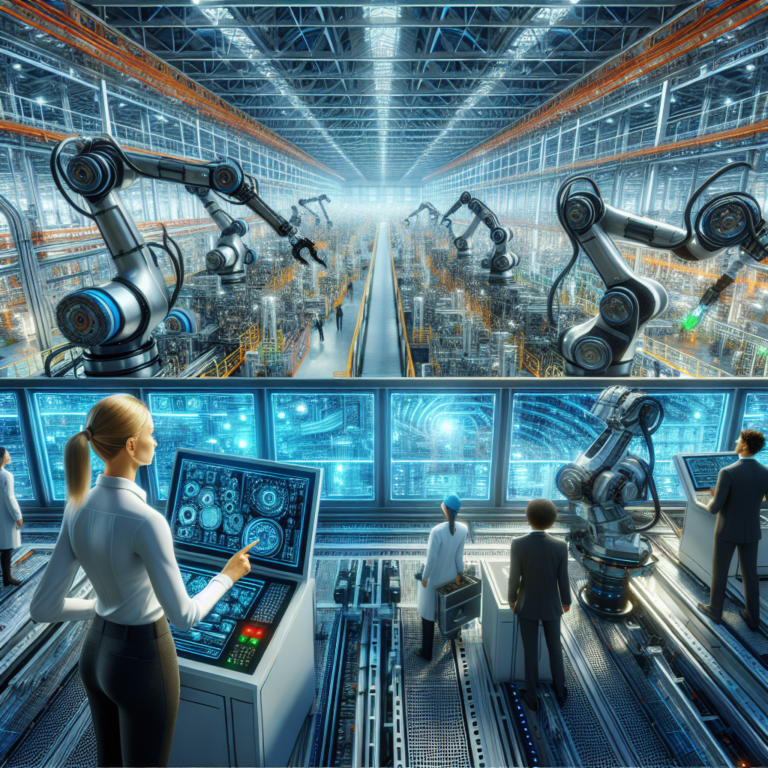
In a groundbreaking move for industrial automation, Hybrid Power Solutions has announced a proof of concept agreement with Reliable Robots to explore innovative solutions in industrial automation at their Etobicoke facility. This partnership is set to pave the way for significant advancements in how industries operate, and I’m excited to delve into what this means for the future of automation.
Table of Contents
- Introduction
- The Agreement
- Importance of Automation
- Challenges Faced in Industrial Automation
- Cutting-Edge Trends in Automation
- The Future of Industrial Automation
- Potential Benefits of the Partnership
- Summary
- FAQs
- Sources
Introduction
As industries evolve, the integration of automation technologies becomes increasingly crucial. Over the past decade, businesses have undergone massive changes as they strive to modernize production, assembly, and distribution processes. Today, automation is no longer confined to a select few high-tech factories; it is becoming the norm across a broad range of industries such as automotive, food production, logistics, utilities, and manufacturing.
The recent announcement from Hybrid Power Solutions highlights the potential of combining advanced robotics with innovative power delivery and storage technologies. This collaboration not only aims to enhance operational efficiency but also tackles the growing demand for sustainability and resilience in industrial settings. Understanding the story behind this partnership offers a window into the challenges and opportunities characterizing the next generation of industrial automation.
The Agreement
The proof of concept agreement between Hybrid Power Solutions and Reliable Robots is more than a simple business deal; it’s a strategic alliance with the potential to influence industry-wide standards and practices. The agreement represents a mutual commitment to explore, test, and refine integrated automated systems. Drawing upon the expertise of each company—Hybrid Power Solutions in modular power infrastructure and Reliable Robots in autonomous systems—the partnership seeks to introduce a new caliber of smart automation adaptable to a variety of industrial landscapes.
This collaborative venture is set to unfold at Hybrid Power Solutions’ Etobicoke facility, where both companies will deploy prototypes and pilot projects to stress-test their technology in real-world conditions. By focusing on practical applications, such as automated material handling, predictive maintenance, and remote operations, they aim to demonstrate dependable improvements in productivity while lowering energy consumption and manual intervention.
Importance of Automation
Automation is not just a buzzword—it is the backbone of competitiveness in the modern industrial world. Today’s factories and warehouses operate at a speed, scale, and complexity that would be impossible with manual labor alone. Automated systems can perform repetitive tasks with greater speed and consistency than humans, allowing employees to focus on higher-value work, such as system oversight, quality control, and process optimization.
Research cited by Automation.com points out that businesses adopting automation solutions benefit from significant improvements in yield, reliability, and safety. Automation plays a crucial role in minimizing human error, reducing downtime, improving workplace safety, and cutting costs in the long term. As industrial operations become increasingly data-driven, automation also enables more sophisticated analytics and agility in responding to changing market demands.
Furthermore, with a global workforce facing both skills shortages and demographic shifts, automation helps companies deal with hiring challenges. Robots, autonomous vehicles, and AI-powered monitoring systems are available around the clock, enabling operations to continue seamlessly with minimal supervision.
Challenges Faced in Industrial Automation
Despite the obvious benefits, transitioning to automation is not without its challenges. Many businesses—especially smaller enterprises or those operating in legacy industries—face hurdles related to cost, system interoperability, workforce retraining, and cybersecurity.
- Upfront Investment: Implementing automation technologies typically requires significant capital outlay. The initial costs of robotics hardware, control systems, and integration can be daunting for organizations with narrow margins or limited access to financing. However, companies like Hybrid Power Solutions and Reliable Robots are working to create more modular, scalable solutions that can be deployed progressively and with less disruption.
- Integration Complexity: Legacy systems and older infrastructure may not be compatible with modern automated platforms. Bridging this gap often requires custom interfaces and specialized engineering, raising both costs and complexity. Partnerships like this one are crucial for developing standardized solutions and best practices.
- Workforce Adaptation: Automation inevitably shifts job requirements, creating a strong need for re-skilling and up-skilling workers. Employers must invest in training their workforce to manage, maintain, and program automated systems.
- Cybersecurity: As industrial networks become more connected, they also become more vulnerable. Safeguarding automated systems in critical infrastructure settings is now a top concern.
- Sustainability Concerns: While automation can reduce energy use per unit produced, it also risks increasing total consumption unless managed wisely. Integrating smart power solutions, as Hybrid Power Solutions aims to do, is essential to ensure that increased automation does not come at an unsustainable environmental cost.
Cutting-Edge Trends in Automation
What was once the stuff of science fiction—robots thinking for themselves and working seamlessly alongside humans—is quickly becoming reality. Several major trends are now shaping the future of industrial automation:
- Artificial Intelligence and Machine Learning: Using real-time data, modern AI-driven systems can optimize processes, predict failures before they occur, and even orchestrate large fleets of robots, reducing downtime and maintenance costs. With AI, robotics are no longer restricted to a fixed set of instructions; they can learn, adapt, and even collaborate dynamically.
- Collaborative Robots (Cobots): Unlike traditional robotic arms confined to cages for safety, cobots are engineered with sensors and programming that make them safe for direct human interaction. These affordable and flexible robots are being adopted even by small and mid-sized manufacturers, broadening the reach of automation.
- Remote Monitoring and Digital Twins: Cloud-centric platforms enable real-time control, diagnostics, and continuous improvement—regardless of physical location. Digital twins further allow for virtual simulations and stress-testing before physical assets are deployed, improving reliability and reducing waste.
- Advanced Power Solutions: The partnership’s focus on hybrid and renewable energy systems is crucial. Battery storage, microgrids, and energy management software are being integrated to power automation with minimal carbon footprint, ensuring that gains in efficiency aren’t offset by environmental damage.
- Edge Computing and 5G Connectivity: Faster and more reliable data transmission allows for decentralized, real-time decision-making on the shop floor, making automation smarter and more responsive.
The Future of Industrial Automation
The momentum behind automation shows no signs of slowing. According to GlobeNewswire, the robotic process automation (RPA) market could reach $28.6 billion by 2031, highlighting unprecedented levels of investment. This explosive growth is driven by multiple factors:
- Integration of Advanced AI: Generative AI and deep learning are making robots more capable than ever before, enabling smarter decision-making, greater flexibility, and continual improvement. This means robots can take on more complex roles, including quality assurance, predictive maintenance, and workflow optimization—jobs that were once thought to require human oversight.
- Workforce Demographics: As experienced technicians retire and labor shortages worsen in many parts of the world, automation fills the gap with newer, often safer jobs in engineering, maintenance, and data analytics.
- Resilience and Flexibility: Automation makes supply chains and factories more resilient to disruptions—whether they are global pandemics, political unrest, or natural disasters. Robotics can adapt to changing product demands quickly, and smart systems allow for dynamic reallocation of resources.
- Focus on Sustainability: With growing awareness of environmental impact, more companies are demanding solutions that balance productivity with sustainability goals. Advanced power infrastructure—using hybrid and renewables—is key for the new automated world.
Reliable Robots and Hybrid Power Solutions are well positioned to ride these waves of change, especially as they co-develop scalable prototypes and solutions that can be deployed in real-world, high-demand settings. For industry observers, the Etobicoke pilot facility is likely to be a hotbed of innovation worth watching.
Potential Benefits of the Partnership
What sets this project apart is the synergy between power infrastructure and robotics automation:
- Energy Efficiency: Integrating advanced battery storage and smart energy management with automated robotics can cut utility bills and carbon footprints at the same time.
- Reliability: Autonomous systems equipped with redundant power and advanced diagnostics can stay online even in the event of grid fluctuations or outages. This reduces costly downtime and enhances business continuity.
- Customization and Scalability: Modular platforms mean industries no longer have to implement automation all at once. Solutions can be tailored to individual sites and scaled up gradually, reducing financial risk and disruption.
- Data-Driven Operations: With robotics gathering data from every step of the process, managers can glean actionable insights, optimize workflows, and identify issues before they escalate—all based on real-time information.
- Enhanced Safety: Removing humans from hazardous conditions is an immediate and tangible benefit. Smart robots can perform dangerous tasks such as chemical handling, working at heights, or operations in hazardous environments, reducing injury rates and insurance costs.
These improvements don’t just boost the bottom line; they also help organizations adapt faster to new challenges, comply with regulations, and meet the demands of increasingly sustainability-focused customers and investors.
Summary
The collaboration between Hybrid Power Solutions and Reliable Robots marks an exciting development in industrial automation. By marrying next-gen power delivery systems with cutting-edge robotics and AI, they seek to unlock a future of smarter, safer, and more sustainable industrial operations. As this partnership unfolds, it promises to shape trends and best practices across the sector, serving as an example of how technological collaboration can drive growth and resiliency. Automation is much more than a trend; it is an essential foundation for any business looking to thrive in the high-tech, competitive landscape of tomorrow.
FAQs
- What is the purpose of the agreement between Hybrid Power Solutions and Reliable Robots?
The agreement is designed to explore, test, and develop automated solutions for improving the way industries operate—specifically focusing on enhancing productivity, efficiency, and sustainability through the fusion of robotics and advanced power management at a dedicated pilot facility. - Why is automation important in today’s industries?
Automation streamlines complex processes, reduces human error, improves productivity, minimizes downtime, and allows businesses to reallocate their human workforce to more valuable, creative, or supervisory tasks. - What challenges do businesses face when implementing automation?
Some major obstacles include high upfront investment, integration with outdated infrastructure, workforce adaptation, cybersecurity, and sustainability concerns. - What is the projected market size of robotic process automation by 2031?
According to GlobeNewswire, the RPA market is projected to reach $28.6 billion by 2031, reflecting strong industry adoption worldwide. - What role does Artificial Intelligence play in modern automation?
AI powers smart decision-making, predictive analytics, self-optimization, and even collaboration between robots and humans, enabling automation systems to handle more complex, dynamic tasks than ever before. - Where can I learn more about the latest automation technologies?
Trusted resources include Automation.com, TechCrunch, Wired, and GlobeNewswire for breaking news, trend reports, and in-depth industry analysis.