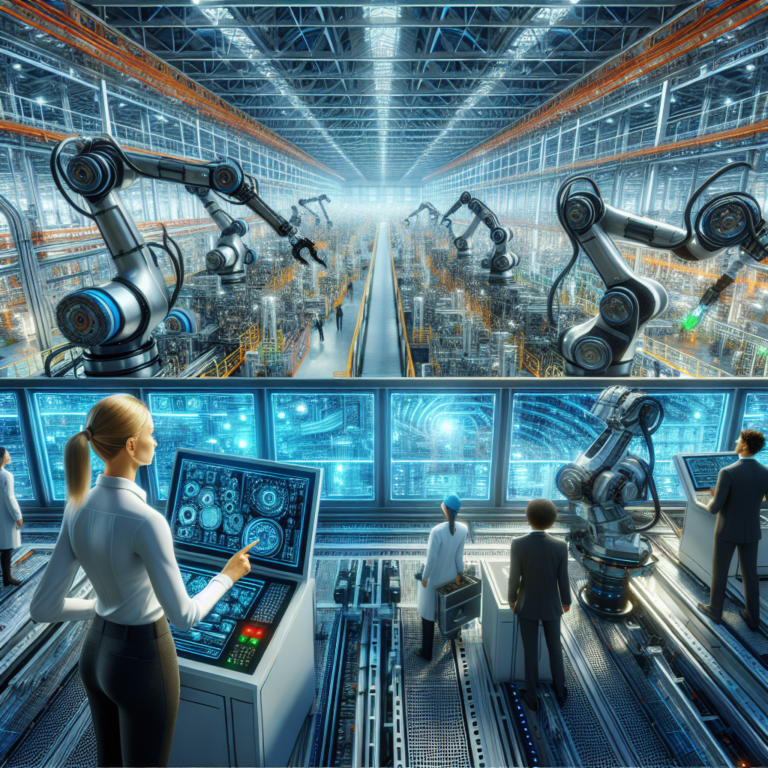
As technology continues to evolve at a breathtaking pace, the world of industrial automation is experiencing a profound transformation. Gone are the days of fully fenced-off robotic arms and isolated assembly lines—today’s manufacturing floors are in the midst of a collaborative revolution. Spearheading this movement is Comau, an Italian robotics and automation giant, which has unveiled an exciting new line of collaborative robots (cobots) designed to work seamlessly alongside human operators. In this article, I’ll dive deep into the significance of these advancements and what Comau’s innovative technology signals for the future of manufacturing as we know it.
Table of Contents
- Introduction
- What Are Collaborative Robots?
- A Brief Evolution of Industrial Automation
- Importance of Collaborative Robots in Industry
- Comau’s Innovations in Collaborative Robotics
- Benefits and Opportunities
- Addressing Implementation Challenges
- Actionable Steps for Implementing Collaborative Robots
- Real-World Case Studies
- Impacts on the Workforce
- The Future of Human-Robot Collaboration
- Summary
- FAQs
- Sources
Introduction
The introduction of collaborative robots (or cobots) marks more than just a shift in manufacturing technology—it represents a philosophical realignment in how we view automation, human labor, and productivity. Unlike traditional industrial robots, which often operate inside safety cages and require highly skilled technicians for programming and maintenance, cobots are engineered to be intuitive, flexible, and, above all, safe to work side-by-side with humans. These robots are ushering in a new era where the strengths of humans—creativity, adaptability, complex decision-making—are enhanced by the precision, consistency, and tirelessness of machines.
Comau is at the forefront of this transformation, combining robust robotics heritage with cutting-edge software, artificial intelligence, and user-centric design. In the following sections, we’ll explore how collaborative robotics are changing industry norms, showcase actionable strategies for implementation, and help you envision a future where humans and robots truly work in harmony.
What Are Collaborative Robots?
Collaborative robots are, at their core, machines built to work safely in the same physical spaces as humans. They are equipped with advanced sensors, intelligent software, and force-limiting features that enable them to detect and respond to human presence almost instantaneously—pausing, slowing down, or stopping entirely if a person gets too close. This open approach to automation removes the need for extensive safety fencing and complex programming, unlocking a host of new applications that were previously off-limits to robots.
According to Automation.com, cobots are designed for flexibility above all. Lightweight, mobile, and easy to reprogram, they can be redeployed for different tasks as production demands change. Applications range from basic pick-and-place and part inspection to sophisticated assembly operations, material handling, machine tending, and even light packaging. Thanks to user-friendly interfaces and drag-and-drop programming, operators with minimal technical background can get cobots up and running in a matter of hours, not weeks.
What truly distinguishes cobots, however, is their approach to safety. Built-in compliance, force monitoring sensors, and vision systems work together to continuously monitor speed, force, and trajectory. This ensures cobots can detect even a gentle touch or unexpected obstacle and react accordingly—an essential feature for collaborative, dynamic workspaces.
A Brief Evolution of Industrial Automation
To appreciate the leap forward that collaborative robots represent, it’s useful to look back at how industrial automation has evolved. In the 1960s and 1970s, robots found their first major applications in automotive factories, performing welding or painting tasks that were dangerous, dirty, or highly repetitive. These early machines were fast and powerful—but rigid and unsafe to be around while operating.
Through the 1980s and 1990s, the proliferation of programmable robot arms led to greater flexibility but often came with a “caged” mindset: industrial robots worked inside enclosures, away from humans. It’s only in the 21st century—with advances in sensor technology, faster computing, artificial intelligence, and forward-thinking design—that collaborative robots became a commercial reality. Today, cobots are revolutionizing not just automotive assembly but also electronics, aerospace, consumer goods, pharmaceuticals, food processing, and many other industries.
Importance of Collaborative Robots in Industry
The relevance of collaborative robots in today’s industrial landscape cannot be overstated. For manufacturers facing skills shortages, rising labor costs, and constantly changing product demands, cobots fill a unique and vital role by making automation accessible, affordable, and adaptable. According to TechCrunch, cobots are driving a convergence between the best of both worlds: robotic efficiency and human ingenuity.
Some of the key reasons cobots are growing in importance include:
- Accessibility: Small and midsized companies, which once struggled to justify the cost or complexity of traditional robots, can now benefit from automation without major infrastructure changes.
- Flexibility: With plug-and-play interfaces and quick reprogramming, cobots can adapt to new products, shifted workflows, or seasonal peaks at a fraction of the traditional downtime.
- Safety: Collaborative robots often eliminate the need for caged-off work zones, making it possible to integrate automation directly onto existing shop floors, close to human teams.
- Quality and Consistency: Cobots excel at repetitive, precision-driven tasks, reducing error rates and boosting overall quality control.
- Augmenting Human Skills: Rather than replacing jobs, collaborative robots often take over strenuous or monotonous tasks, enabling human workers to focus on troubleshooting, customization, and problem-solving.
The upshot? Companies adopting cobot technologies are seeing not just incremental gains in productivity, but transformative shifts in how people and machines collaborate across their organizations.
Comau’s Innovations in Collaborative Robotics
Comau has a storied history in industrial automation, and their push into collaborative robotics is both ambitious and refreshingly user-focused. Their latest range of cobots is engineered to facilitate close-quarters cooperation while maximizing ease of deployment and operational safety. Highlights of Comau’s approach include:
- Enhanced Safety Features: State-of-the-art sensor arrays and force-limiting actuators create a responsive zone of protection around each robot.
- User-Friendly Programming: Intuitive interfaces—often featuring tablet-based, graphical programming—allow operators to teach tasks by demonstration, not just code.
- Modular Hardware: Comau’s cobots can be tailored with different grippers, vision cameras, and end-effectors depending on the task, further boosting flexibility.
- AI-Powered Adaptability: Machine learning algorithms help cobots refine their movements or adapt to changing conditions in real-time, enhancing productivity and process quality.
- Scalability: Whether deployed in a single station or integrated across an entire production line, Comau emphasizes interoperability—making it easier to expand robotics investments as business needs grow.
For more insight, BBC has extensively covered these and other industrial automation trends, emphasizing how the next generation of robots will transform both small shops and major manufacturers alike.
Benefits and Opportunities
The embrace of collaborative robots offers a wealth of advantages for manufacturers across sectors:
- Productivity Gains: Cobots can work 24/7, handling tasks such as loading and unloading machines, assembling product kits, or performing inspections at a consistent pace.
- Improved Safety: By addressing high-risk, repetitive, or ergonomically poor jobs, cobots help reduce workplace accidents and repetitive strain injuries.
- Shorter Lead Times: Rapid set-up and reconfiguration mean factories can launch new products more quickly and react to shifting customer demand nimbly.
- Data-Driven Improvement: Many of today’s cobots collect rich data on cycle times, errors, and throughput, enabling analytics and continuous improvement programs.
- Workforce Empowerment: Rather than displacing workers, collaborative automation can upskill staff, create new jobs in programming and maintenance, and improve employee satisfaction by removing dull or hazardous duties.
Addressing Implementation Challenges
Despite their promise, implementing cobots is not without hurdles. Common challenges include:
- Integration with Legacy Systems: Ensuring cobots can communicate with existing machinery, conveyors, and enterprise software.
- Change Management: Addressing worker concerns about job impact, safety protocols, and the need for retraining.
- Return on Investment (ROI): Measuring and justifying costs in situations where process variability or complex tasks may not fit the strengths of cobots.
- Regulatory and Compliance Matters: Adhering to evolving safety standards and documentation for collaborative work zones.
Success here depends on a thoughtful deployment strategy—one that includes upfront needs assessment, cross-functional stakeholder buy-in, robust worker training, and ongoing support from technology partners like Comau.
Actionable Steps for Implementing Collaborative Robots
If you’re considering integrating collaborative robots into your operations, here are some actionable steps to get started:
- Assess Your Needs: Identify processes with high ergonomics risk, repetitive workload, or bottlenecks. Prioritize areas where cobots can offer the most value.
- Choose the Right Cobot: Research different models and configurations. Factor in payload, reach, speed, and interoperability with your existing setup.
- Conduct a Risk Assessment: Thoroughly evaluate the intended collaborative workspace. Map out risk points and develop comprehensive safety protocols aligned with regulatory requirements.
- Pilot and Test: Deploy cobots initially in small-scale or pilot projects. Use this phase to tweak programming, optimize workflows, and gather employee feedback.
- Train Your Team: Provide hands-on training in cobot operation, safety features, and troubleshooting. Empower operators to take ownership of day-to-day cobot management.
- Monitor and Optimize: Continuously gather performance data. Use insights to improve cycle times, increase uptime, and drive further process improvements.
Real-World Case Studies
Let’s look at a few examples that illustrate how collaborative robots are making a tangible impact:
- Automotive: A tier-one supplier deployed Comau cobots on engine assembly lines. By handling intricate bolt tightening, the cobots improved throughput by 20%, while employees took on quality assurance and test procedures.
- Food and Beverage: A large bakery implemented cobots for delicate packaging of baked goods. The robots, with vision-guided grippers, reduced product damage and cut packaging errors in half.
- Electronics: A contract manufacturer utilized cobots to feed small components into high-speed SMT machines. Rapid, tool-free reconfiguration enabled the plant to adjust quickly for new product launches.
These examples underscore how cobots, when paired with thoughtful integration, can produce measurable gains in productivity, quality, and employee satisfaction across diverse industries.
Impacts on the Workforce
The impact of collaborative robots on the workforce is often misunderstood. Far from signaling mass job loss, most studies and real-world reports show that cobots tend to shift, not eliminate, many jobs. By freeing workers from tedious, dangerous, or monotonous tasks, cobots allow humans to step into new roles—supervising robotic lines, focusing on process optimization, or managing quality control. Retraining and upskilling become key aspects of a successful cobot implementation strategy, and many manufacturers find that employee morale and retention improve when dull or hazardous jobs are automated.
By collaborating closely with workers from the outset—soliciting their input, providing them with training, and communicating the value of new technology—manufacturers can foster a culture of innovation that benefits both business objectives and employee development.
The Future of Human-Robot Collaboration
Looking ahead, the horizon for collaborative robotics is bright. Experts predict exponential growth as AI and machine vision improve, 5G connectivity enables smarter factory coordination, and the cost of cobot hardware continues to drop. Future developments may include robots capable of more natural, intuitive communication—responding to voice, gestures, and even facial expressions. In the next decade, human-robot “teams” could become the norm, not the exception, in fields as varied as healthcare, logistics, agriculture, and construction.
Companies investing in collaborative automation today are not just boosting their current productivity. They are laying the groundwork for an adaptable, resilient, and inclusive future of work—one where humans and robots together tackle the complex problems and unprecedented opportunities of tomorrow’s economy.
Summary
In conclusion, the introduction of collaborative robots by Comau and other industry leaders represents a watershed moment for industrial automation. These machines are not only enhancing productivity, consistency, and safety but are also making automation accessible to a broader range of businesses. The key to successful integration is not simply choosing the right technology but fostering a workplace culture that values collaboration, continuous learning, and shared human-machine achievement. As manufacturing and other industries continue to evolve, embracing collaborative robots—and the new ways of working they enable—will be nothing short of essential for staying competitive in the years ahead.
FAQs
- What is a collaborative robot? Collaborative robots, or cobots, are sophisticated machines engineered to work safely and efficiently alongside humans, often outside of traditional robot cages.
- What are the main benefits of cobots? Cobots bring a range of benefits, including improved safety, greater flexibility, enhanced productivity, reduced risk of workplace injuries, and new opportunities for workforce upskilling.
- Do cobots replace human workers? Most often, cobots supplement human labor by taking over repetitive, ergonomically challenging, or hazardous tasks—allowing employees to focus on higher-value, more creative work.
- How do I implement cobots in my business? Start with a thorough audit of your processes, choose the right technology, train your staff, pilot the application, and use collected data to refine performance and broaden cobot applications.
- Are cobots safe? Modern collaborative robots are designed with advanced safety features complying with strict industry standards. As with all machinery, safety depends on thoughtful deployment and ongoing training.