In today’s fast-paced industrial landscape, technologies like AI, ML, and 5G are not just buzzwords; they are reshaping the conversation around industrial automation. As I dive into this topic, I hope to clarify how these technologies are interlinked and what that means for industries moving forward.
Table of Contents
- Introduction
- AI, ML, and 5G in Industrial Automation
- Importance of Integration
- Actionable Steps for Implementation
- Case Studies & Real-World Examples
- Challenges and Barriers
- The Future of Industrial Automation
- Summary
- FAQs
- Sources
Introduction
As industries strive to boost productivity, reduce manual errors, and respond to market changes with agility, the integration of new digital technologies has emerged as a key enabler. Among the most transformative are Artificial Intelligence (AI), Machine Learning (ML), and the latest generation of wireless connectivity, 5G. These technologies work in conjunction to push the limits of what’s possible within industrial automation, leading to what some are calling the Fourth Industrial Revolution, or Industry 4.0.
But how exactly do these distinct technologies work together in industrial contexts? What practical steps can organizations take to adopt these advancements, and what are the results, opportunities, and challenges they present? This article provides an in-depth look into how AI, ML, and 5G are converging to create smarter, more responsive, and cost-effective industrial systems.
AI, ML, and 5G in Industrial Automation
AI (Artificial Intelligence) allows machines to mimic human cognitive processes such as problem-solving, learning, and decision-making. Machine Learning (ML), a subset of AI, gives systems the ability to learn and improve automatically from experience without explicit instructions. In industrial environments, AI and ML enable predictive maintenance, quality assurance, supply chain optimization, anomaly detection, and adaptive control of machinery.
What sets the current revolution apart from previous digital advances is the advent of 5G wireless communication. Unlike previous networking generations, 5G offers ultra-high bandwidth, low latency, and the ability to connect thousands of devices simultaneously — all with robust reliability. In industrial settings, this facilitates the instant flow of vast amounts of data between edge devices, centralized control rooms, the cloud, and even other machines (machine-to-machine or M2M communication).
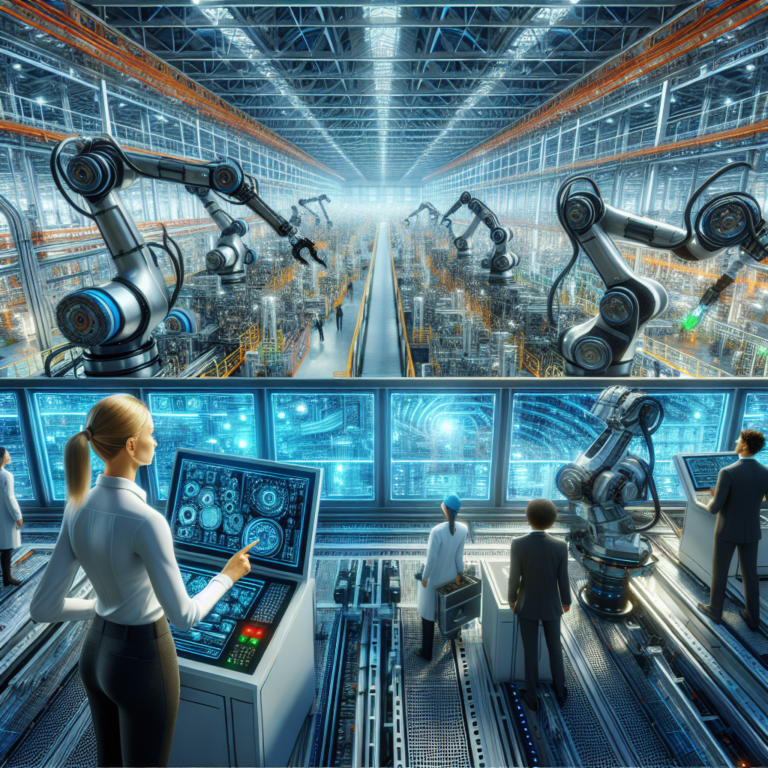
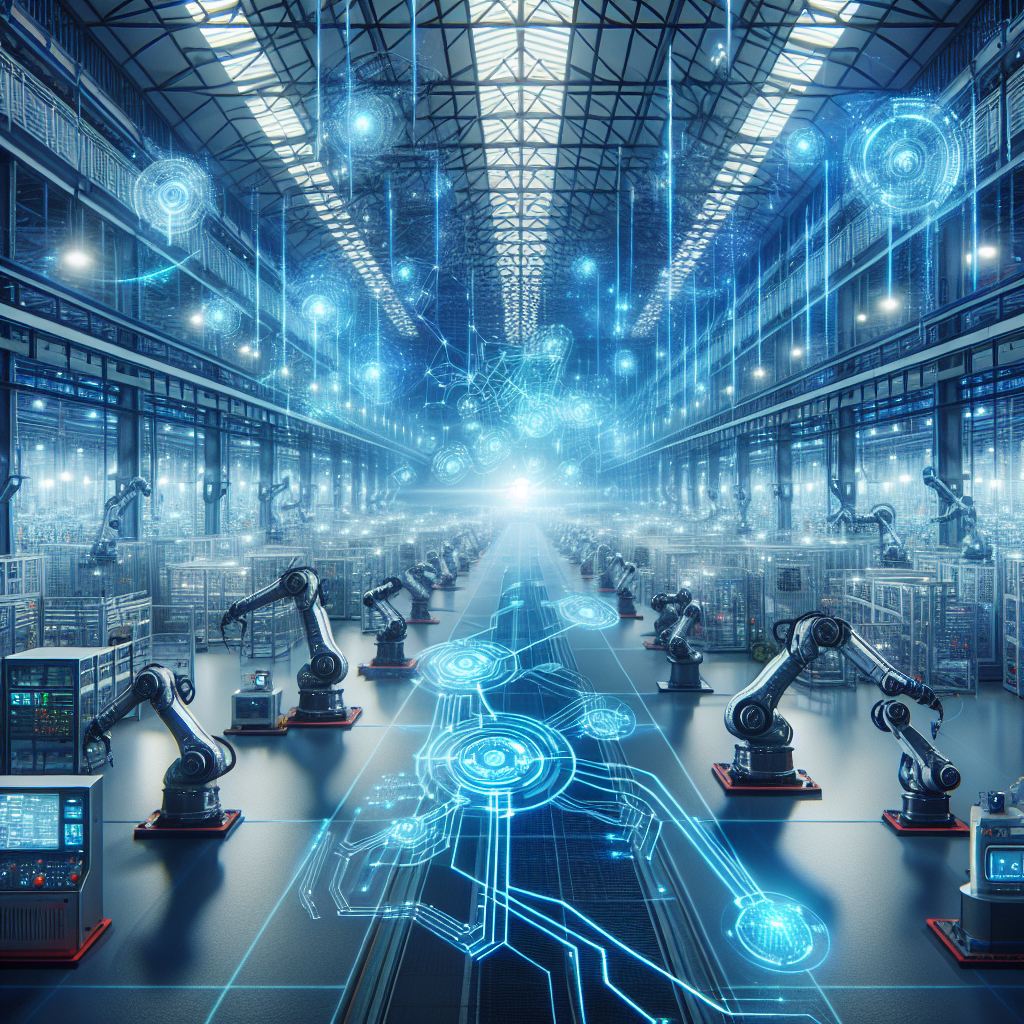
Imagine a smart factory where hundreds of sensors on each assembly line transmit real-time data — temperatures, vibrations, energy usage, sound levels, and even images — to an AI-powered analytics engine. The engine uses ML algorithms to flag subtle anomalies well before a human could notice them, preventing costly breakdowns. With 5G connectivity, these insights can be acted upon immediately: machines can be slowed, recalibrated, or shut down remotely, often autonomously. This level of responsiveness was not possible with previous wireless technologies due to network delays, bottlenecks, or unreliable communications.
According to Automation.com, the compounding effect of AI/ML’s predictive powers and 5G’s real-time communications is revolutionizing industrial production, logistics, remote monitoring, and asset tracking, creating factories that are more resilient, flexible, and efficient than ever before.
Importance of Integration
The integration of AI, ML, and 5G is important for several core reasons that go beyond the sum of their individual benefits:
- Enhanced Data-Driven Decision-Making: The real world is unpredictable. AI and ML thrive on data, extracting actionable intelligence from complex patterns that would be invisible to traditional analysis. 5G ensures this data is delivered instantly and reliably from every point in a system, making predictive and prescriptive analytics a real-time capability, not just an after-the-fact report.
- Enabling Smart Automation and Autonomy: Smart robots and autonomous vehicles are increasingly part of industrial workflows. Whether it’s a collaborative robot arm (cobot) on the assembly line or a fleet of AGVs (Automated Guided Vehicles) on the warehouse floor, AI-powered autonomy requires not just onboard intelligence but also lightning-fast responses from centralized servers and the cloud. 5G’s low latency makes mission-critical and fail-safe applications viable, since decisions can be made and acted on in milliseconds.
- Continuous Process Optimization: With round-the-clock data streaming over 5G, ML algorithms constantly refine production variables to improve yield, reduce defects, and minimize energy usage — all in real time. Adapting to fluctuating supply and demand becomes feasible, as does personalizing products on the fly.
- Cost Savings and New Revenue Streams: As reported by TechCrunch, organizations investing in these digital tools are seeing reductions in downtime, waste, and overstock — savings of up to 30% in some verticals. For many, the move toward data-driven automation also opens doors for customized products and predictive services, forging new revenue streams.
From predictive maintenance to flexible supply networks and energy management, companies are not just cutting costs but also fostering innovation that sets them apart from competitors. A key motivator is that these savings often create a virtuous cycle, freeing up capital to invest in even more advanced tools and processes.
Actionable Steps for Implementation
For industrial organizations considering how to harness the combined potential of AI, ML, and 5G, the journey can seem daunting, but there’s a logical pathway to follow:
- Assess Current Infrastructure: Map out your equipment, control systems, sensors, and networks to determine which assets are already digitized, which can be upgraded, and where entirely new deployments are required for full connectivity and data gathering.
- Define Business Priorities and Use Cases: Determine where efficiencies, productivity gains, or new capabilities will have the most impact. Common starting points include predictive maintenance for critical equipment, AI-powered quality inspection, or real-time inventory tracking.
- Invest in Training and Upskilling: Digital transformation isn’t just technical—it’s cultural. Workers must be trained in everything from basic digital literacy to advanced data science. Workshops, partnerships with universities, and online certification programs can accelerate this process and quell resistance to change.
- Pilot and Prove Technology: Rather than risking a full-scale rollout, start with contained pilots. This allows you to prove the value of a technology in a controlled setting, fine-tune your implementation, and build a business case for expansion.
- Foster Partnerships with Experts: The landscape of AI, ML, and 5G vendors is vast and evolving. Collaborate with specialized technology providers to ensure access to cutting-edge expertise, robust support, and ongoing innovation.
- Prioritize Security and Compliance: As systems become more interconnected, cybersecurity becomes an even greater concern. Incorporate rigorous security assessments, regular updates, and regulatory compliance from the outset.
Each of these steps is iterative; as your organization learns and matures, infrastructure and processes can be adjusted for continued improvements.
Case Studies & Real-World Examples
The convergence of AI, ML, and 5G is not just theoretical. Here are a few real-world examples highlighting their impact:
- Automotive Manufacturing: A leading automaker leveraged 5G networks in its main assembly plant. Hundreds of connected torque wrenches, robotic arms, and inspection cameras were embedded with AI-enabled sensors. ML models processed real-time torque, temperature, and alignment data, optimizing every fastening and flagging faulty parts. Downtime from equipment failure was cut by 40%, and product quality improved in a matter of months.
- Food and Beverage: An international bottling company integrated 5G and ML-powered vision systems on its production lines, enabling advanced defect detection and automatic sorting. With rapid video streams, AI algorithms identified micro-cracks and foreign material that would have previously gone unnoticed, reducing waste and recalls.
- Warehouse & Logistics: In a flagship distribution center, autonomous forklifts and drones communicate and coordinate over a private 5G network. AI tracks package location, predicts traffic jams, and dynamically reroutes vehicles. This digital twin environment reduced picking errors and improved on-time delivery by over 20%.
These cases reflect not just isolated success but a growing trend across sectors, from mining and chemicals to textiles and pharmaceuticals.
Challenges and Barriers
While the promise of transformation is huge, the journey isn’t always smooth. Key challenges include:
- Upfront Investment: Deploying 5G networks, retrofitting legacy equipment, and implementing edge AI solutions require significant capital and careful planning.
- Data Security: With more data moving between devices and the cloud, cyber threats multiply. Ensuring data integrity, privacy, and compliance is a continuous battle.
- Integration Complexity: Legacy equipment may not easily interface with modern digital platforms, demanding custom protocols and, at times, replacement of equipment.
- Skills Gaps: There is often a shortage of skilled workers familiar with AI/ML techniques, advanced analytics, and 5G networking. Bridging this gap requires sustained investment in people, not just technology.
- Reliability and Standardization: Technology standards, especially for industrial 5G, are still maturing, creating uncertainty around long-term planning and compatibility.
Despite these hurdles, the competitive imperative for automation is so pressing that most organizations judge the risks worth taking, provided they move deliberately and strategically. Over time, costs are declining, standards are converging, and both internal and external expertise are expanding.
The Future of Industrial Automation
Looking ahead, the trajectory of AI, ML, and 5G in industrial automation points toward even broader adoption and deeper integration. Here are several trends likely to define the next decade:
- Edge AI: Increasingly, intelligence will move closer to where data is generated, with edge devices processing information locally for lightning-fast responses while minimizing the need to send all data to the cloud. 5G acts as a powerful enabler for distributed AI and ML models across a facility.
- Digital Twins: Factories and entire supply chains will be simulated digitally, allowing operators to test scenarios, optimize algorithms, and pre-empt issues in a risk-free virtual space. As 5G proliferates, the fidelity of digital twins will only improve, making virtual commissioning and real-time model updates the norm.
- Human-Machine Collaboration: While machines will continue to automate routine and hazardous tasks, the role of humans will shift to system oversight, higher-level decision-making, creativity, and troubleshooting, supported by AI-powered insights and intuitive interfaces such as AR/VR.
- Resilient and Green Manufacturing: Data-driven optimization will make it possible to better forecast and mitigate disruptions (pandemics, geopolitical events, climate). Efficiency improvements will also help reduce energy usage and waste, fulfilling sustainability goals and regulatory requirements.
The ongoing evolution points to a world where near-instant connectivity, boundless machine intelligence, and seamless collaboration create agile, future-proof industries. Those who adapt early will help shape this new era.
Summary
AI, ML, and 5G are not only individual breakthroughs but, together, essential foundations for modern industrial automation. Their synergy delivers improvements in efficiency, safety, cost savings, and operational resilience. Success requires more than technology adoption; it demands smart strategy, upskilling, robust partnerships, and a readiness to overcome the growing pains of digital transformation.
Industries that embrace these shifts will be positioned to outperform competitors in an increasingly volatile and opportunity-rich global market. For organizations at any stage of automation, the message is clear: the time to explore and invest in AI, ML, and 5G is now.
FAQs
- What industries can benefit from AI and 5G integration?
Almost all industries can benefit, including manufacturing, logistics, food and beverage, energy, mining, oil and gas, pharmaceuticals, and healthcare. - How quickly can I expect to see results?
Results can vary depending on scope, but many organizations realize significant improvements (like cost savings or reduced downtime) within 6–12 months of implementation, especially when starting with well-defined pilot projects. - Are there risks involved in adopting these technologies?
Yes, risks include cybersecurity threats, upfront capital costs, and integration complexity. However, with robust security protocols, proper training, and staged rollouts, these risks are manageable. - What is the difference between AI and ML?
AI is the broader concept of machines carrying out tasks in a smart way, mimicking human intelligence, whereas ML is a subset of AI focused on systems that learn from data to improve over time without being explicitly programmed for every scenario. - What role does 5G play in automation that previous wireless standards (like 4G or Wi-Fi) could not?
5G offers ultra-low latency and massive connectivity, making it possible to stream and act on data from thousands of sensors and devices instantaneously, enabling real-time control, remote maintenance, and advanced automation that was previously impossible.