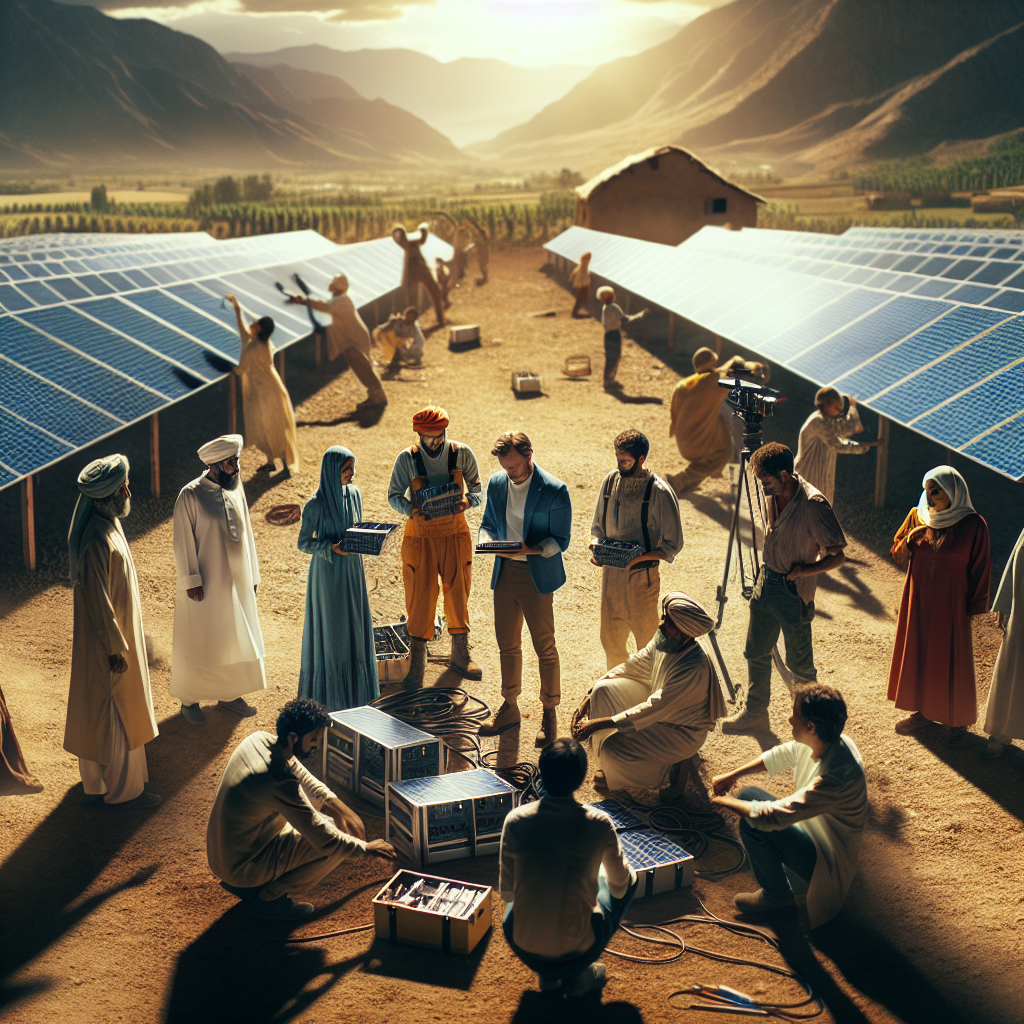
In recent news, LONGi’s activities in Africa have been recognized as a sustainable brand case study by the UNEP. This recognition highlights the importance of sustainable practices in the solar energy sector and how they can positively impact communities. I find it inspiring to see companies like LONGi leading the way in sustainability, and it prompts us to consider how we can all contribute to a greener future.
Table of Contents
- Introduction
- LONGi’s Impact in Africa
- The Importance of Sustainability
- Africa’s Energy Challenge
- Solar’s Growth on the Continent
- Local Community Benefits
- Corporate Social Responsibility in Action
- Challenges and Future Hurdles
- Actionable Steps for Businesses
- Summary
- FAQs
- Sources
Introduction
As we face the multidimensional challenges of climate change, resource depletion, and economic uncertainty, the emphasis on sustainable business practices has never been more urgent. Leading firms across the globe are embracing the call to integrate sustainability into their core missions. LONGi, a global solar technology giant, stands out in this field, with its African projects gaining recognition from stakeholders such as the United Nations Environment Programme (UNEP). This acknowledgment is not just a notch in LONGi’s belt; it is a wake-up call for businesses everywhere to take real, measurable action toward a cleaner, more resilient future.
In this comprehensive case study, I will explore LONGi’s sustainability efforts in Africa, the real and immediate importance of sustainable strategies, the particular challenges and opportunities inherent to the African context, and the actionable strategies any business can adopt to follow suit. I will also analyze the socioeconomic nuances at play and offer a nuanced perspective on how renewable energy investments can transform entire communities and economies.
LONGi’s Impact in Africa
LONGi has rapidly expanded its footprint across Africa through the delivery of innovative, reliable, and affordable solar solutions. The company’s contributions go far beyond technology—they encompass economic empowerment, education, and environmental stewardship. LONGi’s core mission, to “make the best of solar energy to build a green world,” resonates strongly in regions where energy poverty is a daily reality and sustainability is no longer optional.
Among LONGi’s most impactful initiatives has been the deployment of high-efficiency photovoltaic (PV) modules in off-grid and grid-tied projects across sub-Saharan Africa. In countries such as Kenya, Nigeria, Ethiopia, and South Africa, LONGi’s partnerships with governments, non-governmental organizations (NGOs), and private enterprises have contributed to significant reductions in emissions while increasing the reliability and affordability of energy—often with immediate, life-changing results for local populations.
For instance, according to the International Renewable Energy Agency, decentralized solar solutions can bring about seismic economic changes in developing economies. Electrifying rural health clinics, schools, and agro-processing centers has knock-on effects in health, education, and job creation. Through training programs and collaboration with local universities, LONGi is also supporting workforce development and technical empowerment—ensuring that the benefits of the solar boom are shared equitably.
The Importance of Sustainability
Sustainability is no longer just a feel-good phrase for quarterly reports; it’s a foundational business imperative. Companies that prioritize environmental, social, and governance (ESG) practices are increasingly seen not just as responsible, but as competitive and forward-thinking. According to a recent Marketing Week analysis, modern consumers—especially millennials and Gen Z—are making purchasing decisions with a keen eye for authenticity and planetary stewardship.
But it is not just a matter of branding. On the operational side, sustainable practices drive real cost advantages. By reducing energy consumption, minimizing waste, and leveraging renewable resources, companies can realize substantial savings and resiliency. In regions with volatile energy markets or unreliable grid infrastructure, such as parts of Africa, investing in sustainability is a matter of survival as much as ethics.
The 2021 EY Global Institutional Investor Survey found that 90% of investors now factor a company’s sustainability performance into their investment decisions. This shift illustrates that sustainability is central to attracting capital and maintaining market relevance.
Africa’s Energy Challenge
Sub-Saharan Africa faces a daunting energy deficit, with over 600 million people still lacking access to reliable electricity. This has severe consequences for education, health, industry, and overall human development. Grid extension alone is often prohibitively expensive, especially in vast rural areas. Here, distributed renewable energy becomes a powerful, scalable solution.
The Price of Energy Poverty: When electricity is scarce, households rely on polluting alternatives such as diesel generators, kerosene lamps, or firewood. These not only degrade public health and local environments but also perpetuate cycles of poverty. According to the World Health Organization, millions of premature deaths each year in Africa are linked to indoor air pollution from such fuels.
The Renewable Opportunity: Africa enjoys some of the highest solar irradiation levels on the planet. Harnessing even a small fraction of this resource could transform economies at a fundamental level. In this context, companies like LONGi are not simply offering new products—they are helping to rewrite the continent’s growth playbook by placing clean, affordable energy at the foundation of future development.
Solar’s Growth on the Continent
Solar energy capacity across Africa has grown rapidly in recent years, but remains far below its technical potential. According to the International Energy Agency, solar could provide up to 20% of Africa’s electricity by 2040 if adequately supported by investment, policy, and training. LONGi’s investments aim squarely at overcoming barriers such as lack of access to finance, insufficient technical capacity, and fragmented supply chains.
Innovative Financing Models: LONGi is an advocate for innovative financing arrangements such as third-party ownership, pay-as-you-go (PAYG) systems, and multi-stakeholder development funds. These strategies are vital in overcoming the up-front costs that have long hampered solar adoption for low-income households.
Supporting Local Supply Chains: By working with local businesses, engineers, and installers, LONGi supports the creation of indigenous supply networks. This not only ensures local economic multipliers but builds technical self-reliance, a key for sustainable long-term impact.
High-Efficiency Modules: LONGi’s bifacial PV modules and advanced cell technologies have been successfully deployed in large-scale projects throughout Africa, delivering robust yields even in harsh environments. Their commitment to R&D has set industry benchmarks for longevity, reliability, and efficiency in extreme climates—a major advantage for Africa’s varied geographies.
Local Community Benefits
While discussions of energy transition often focus on abstract metrics, the real measure of impact comes down to people: individuals, families, and communities.
- Energy Access and Education: Electrification enables schools to stay open after dark, gives students access to digital tools, and powers better classroom environments. Several LONGi-enabled projects have targeted schools, with teachers reporting dramatic increases in student engagement and performance.
- Healthcare: Refrigeration for vaccines, reliable lighting for night-time procedures, and the operation of medical equipment save lives. In rural clinics across Nigeria and Malawi, partnership projects using LONGi panels have increased patient safety and health outcomes.
- Economic Empowerment: Access to reliable power opens up whole new avenues for small business, from welding workshops to grain-milling. Micro-entrepreneurs cited in IRENA case studies report doubling their taxable income simply by extending their business hours or automating manual tasks.
- Women’s Empowerment: Sustainable electrification often disproportionately benefits women and girls. It reduces time spent on chores such as water collection (as solar pumps replace hand-pumping) and allows for participation in home-based enterprises and evening studies.
LONGi’s collaborative approach also includes capacity-building training, especially for local women and youth, ensuring that the solar transition is inclusive and generational.
Corporate Social Responsibility in Action
LONGi has embedded corporate social responsibility (CSR) into its African business model. Rather than simply selling solar panels, the company works with governments and NGOs to align projects with local development priorities. Examples include:
- Donating PV Modules: For clinics, schools, and disaster relief projects following extreme weather events.
- Capacity Building: Providing scholarships, vocational training, and curriculum support for African technical institutes, ensuring stronger local supply chains and entrepreneurship.
- Environmental Stewardship: Committing to supply chain decarbonization, recycling, and the responsible sourcing of raw materials wherever possible.
- Research Partnerships: Participating in joint research projects with African universities to advance knowledge on solar adaptation to specific local climates and grid conditions.
In this way, LONGi’s impact stretches far beyond its immediate customers, helping set new industry norms for transparency, accountability, and value-sharing.
Challenges and Future Hurdles
No sustainability journey is without obstacles. The following challenges remain significant in Africa’s solar transition:
- Policy Uncertainty: Shifting regulations, lack of incentives, or unclear grid access protocols can dampen investible enthusiasm. Industry groups are pushing for stronger, more stable policy frameworks.
- Grid Integration: Incorporating vast amounts of variable solar power challenges old utility models. Investment in storage, grid upgrades, and flexible solutions is vital.
- Affordability: Even if long-term solar costs are low, the initial capital requirements can be a barrier for many users. Continued innovation in payment models will be needed.
- Workforce Skills: Rapid solar expansion can stretch local technical capacity. Ongoing investment in training and education is required to avoid skill gaps that could slow or undermine progress.
Despite these hurdles, the momentum behind Africa’s solar revolution is unmistakable. Public–private partnerships, better policy alignment, and global attention are helping address these bottlenecks every year.
Actionable Steps for Businesses
So, how can your business—regardless of its size or sector—follow in LONGi’s sustainable footsteps? Here are practical strategies:
- Conduct a Sustainability Audit: Start by identifying sources of waste, emissions, and inefficiency in your operations. This forms the basis for meaningful, targeted action.
- Invest in Renewables: Whether through on-site solar, corporate power purchase agreements (PPAs), or carbon offset programs, clean energy is increasingly affordable and effective.
- Embed Sustainability in Culture: Create green team initiatives, reward ideas for efficiency, and encourage employee-driven eco-projects.
- Set Public, Measurable Goals: Transparency is key—set science-based targets for reducing environmental impact and report progress regularly.
- Prioritize Inclusive Partnerships: Work with suppliers and partners who align with your sustainability standards to drive positive impact across your value chain.
- Support Local Communities: Invest in community benefit projects, support local hiring, and promote educational opportunities related to your industry.
For more insights on implementing sustainable practices, check out resources from HubSpot and Ad Age.
Summary
LONGi’s recognition as a sustainable brand case study by UNEP is both timely and well-deserved. Through innovative solar technology, strong local partnerships, and a comprehensive commitment to CSR, LONGi is redefining what it means to conduct business sustainably in Africa. The company’s initiatives—ranging from affordable energy access to educational scholarships—demonstrate that profitability and responsibility can go hand in hand. As climate change accelerates and global markets evolve, businesses must actively engage in the sustainability movement not only for planetary good, but for long-term competitiveness, shareholder value, and brand strength.
It is clear that, while challenges remain, the pathway illuminated by LONGi’s work is one that many more companies—and entire economies—can follow to build a cleaner, more equitable future.
FAQs
- What is LONGi’s main focus in Africa? LONGi focuses on providing innovative, affordable, and reliable solar energy solutions to empower communities, stimulate local economies, and advance sustainable development goals in Africa.
- Why is sustainability important for businesses? Sustainability drives enhanced customer loyalty, operational cost savings, investment attractiveness, and a strong public image—all crucial in today’s competitive landscape.
- How can I make my business more sustainable? Begin with an internal audit, transition to renewable energy, engage your workforce in eco-initiatives, and seek out like-minded partners to amplify your positive impact.
- How does solar energy benefit local communities? Solar energy improves education, healthcare, business productivity, environmental conditions, and gender equality—unlocking wide-ranging socioeconomic gains.
- What remaining challenges exist for solar in Africa? Policy ambiguity, upfront affordability, technical constraints, and skill gaps are ongoing hurdles, but targeted innovation and public–private collaboration are making headway.