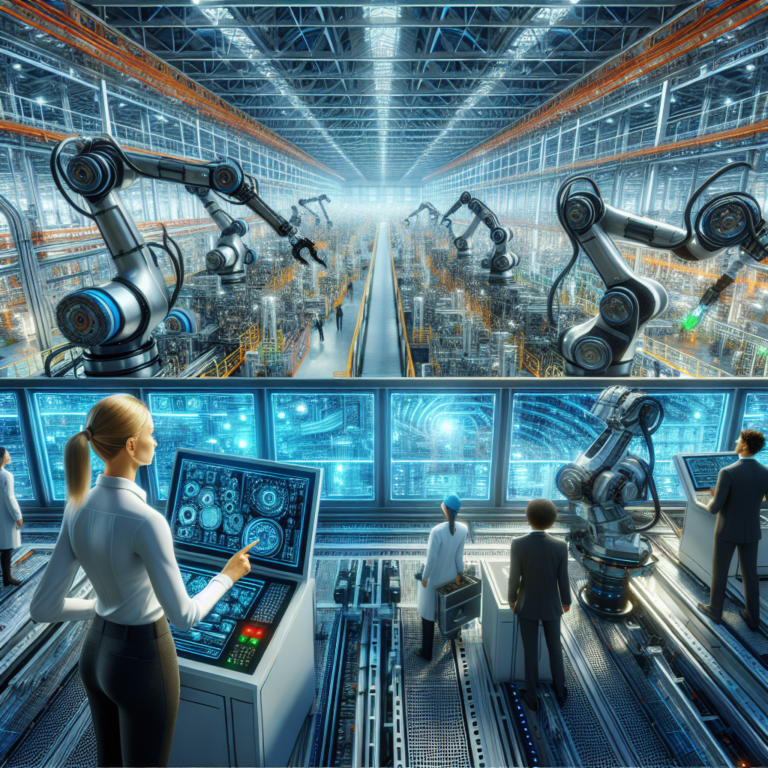
As I dive into the world of automation, one question keeps popping up: Is Robotic Process Automation (RPA) being replaced by AI? This isn’t just a buzzworthy debate among tech enthusiasts—it’s a vital topic for businesses large and small who want to optimize operations, stay competitive, cut costs, and streamline workflows. In this article, we’ll embark on an in-depth exploration of RPA and AI automation, examining what sets them apart, how they intersect, where each excels, and what organizations can expect from automation in the coming years.
Table of Contents
- Understanding RPA
- Understanding AI Automation
- Comparing RPA and AI Automation
- Practical Applications in Modern Business
- The Future of Automation
- Steps for Implementing Automation
- Summary
- FAQs
- Sources
Understanding RPA
Robotic Process Automation (RPA) is a rapidly evolving technology that employs software robots—or “bots”—to carry out structured, rule-based, repetitive business processes. Think of it as a digital assembly line, where tasks such as data entry, payroll processing, copying and pasting values between spreadsheets, or updating databases are completed instantaneously and accurately, without human intervention. Many organizations use RPA to automate back-office routines in HR, finance, procurement, and customer service.
Key Benefits of RPA:
- Speed and Consistency: Software bots work 24/7 and don’t make manual input mistakes, resulting in higher productivity and fewer errors.
- Easy Integration: Most RPA tools don’t require major changes to existing IT systems—they operate on top of them, mimicking the way a human user would interact with software.
- Instant ROI: Because RPA processes are often simple and rule-based, organizations can achieve fast results—sometimes within weeks of deployment.
- Employee Satisfaction: RPA frees employees from mundane, mind-numbing tasks, allowing them to focus on more fulfilling and strategic work.
However, the biggest limitation of RPA is also its strength: it excels in structured, repetitive environments but can’t easily adapt to scenarios that demand judgment, complex reasoning, or learning from context. For example, if there’s an exception to a rule or a new kind of unstructured data input, RPA bots can stall or require manual oversight.
Understanding AI Automation
AI automation harnesses artificial intelligence—machine learning, deep learning, natural language processing, and computer vision—to perform tasks that previously needed human cognitive capabilities. Think of AI as an intelligent co-worker, able to analyze vast datasets, recognize trends and patterns, understand language, make predictions, and learn from new information.
Key Capabilities of AI Automation:
- Adaptability: AI can adjust to new data or changing circumstances, making it ideal for dynamic, unpredictable environments.
- Data Analysis: AI can process unstructured information—emails, spoken feedback, images, and social media posts—and extract actionable insights.
- Decision-Making: AI-powered systems can support decision-making by weighing probabilities and predicting outcomes; for instance, recommending loan approvals or identifying fraudulent transactions.
- Conversational Interfaces: Natural language processing enables chatbots and virtual assistants to understand, interpret, and respond to human language in real time.
The primary challenge of AI is complexity. Deploying successful AI systems typically requires significant investment in data collection, data labeling, training, monitoring models, and addressing “explainability.” However, in the right context, AI can unlock new revenue streams, improve customer experience, and create significant efficiencies that go beyond what RPA alone can achieve.
Comparing RPA and AI Automation
Although RPA and AI are both cornerstones of digital transformation, they serve distinct roles in an organization’s automation ecosystem.
| Criteria | RPA | AI Automation |
|---|---|---|
| Type of Task | Repetitive, rule-based, structured | Complex, unstructured, variable, requiring learning or judgment |
| Adaptability | Low—requires human input to handle exceptions or process changes | High—can learn from new data and adapt to evolving scenarios |
| Data Requirements | Structured data (fixed forms, spreadsheets, databases) | Unstructured or semi-structured data (text, images, audio, video) |
| Integration | Acts at the interface level, minimal changes to legacy IT systems | May require deeper integration or data pipeline development |
| Cost | Lower upfront investment, quick ROI | Higher initial investment, but potentially bigger returns |
| Examples | Payroll processing, order entry, invoice data transfer | Chatbots, fraud detection, demand forecasting, image analysis |
Ultimately, RPA and AI are most powerful when used together—often in a layered or staged approach called intelligent automation. In such solutions, RPA carries out the repetitive parts, while AI processes exceptions, makes decisions, and learns from outcomes to continually refine the process.
Practical Applications in Modern Business
Let’s put these concepts into context by looking at how leading organizations are leveraging both RPA and AI to transform key areas:
1. Finance and Accounting
- RPA: Handles invoice matching, payment processing, and reconciliation between systems—faster and more accurately than manual methods.
- AI: Reviews expense submissions for compliance; forecasts cash flow using predictive analytics; flags anomalous transactions for further review.
2. Customer Service
- RPA: Automates ticket creation, categorization, and routing in help desk scenarios; sends out automated status updates or password resets.
- AI: Chatbots engage with customers via email, web, or voice—handling inquiries 24/7, interpreting customer moods, summarizing problems, and even escalating complex cases to humans along with suggested actions.
3. Human Resources (HR)
- RPA: Streamlines onboarding by auto-filling forms, generating employee IDs, and provisioning system access.
- AI: Screens resumes for fit, matches candidate profiles to job requirements, conducts initial text-based interviews, and predicts employee turnover risk based on historical data.
4. Manufacturing and Supply Chain
- RPA: Processes purchase orders and updates ERP systems, schedules deliveries, and tracks shipments.
- AI: Predicts demand fluctuations, optimizes inventory management based on consumption patterns, and identifies quality control issues via image recognition.
5. Healthcare
- RPA: Automates claim processing, schedules appointments, and updates patient records.
- AI: Assists with diagnoses by analyzing medical images, supports personalized patient care by reviewing large datasets, and provides insights for pharmaceutical research.
In every sector, the fusion of RPA’s reliability and AI’s intelligence is powering new workflows that simply weren’t possible a decade ago.
The Future of Automation
Where are RPA and AI automation headed next? The trajectory is clear: greater integration, smarter systems, and widespread adoption across industries. Here’s what experts and practitioners alike are watching as automation matures:
- Hyperautomation: Recognized by consulting firms like Gartner, hyperautomation describes an ambitious strategy that leverages multiple automation tools (RPA, AI, process mining, low-code platforms) to rapidly identify, vet, and automate every possible business process. Hyperautomation is holistic and ongoing—businesses are never “done.”
- Human-in-the-Loop Systems: AI and automation aren’t eliminating people, but rather, shifting them toward supervisory, creative, and decision-making roles. Humans oversee exceptions, quality control, and bring the empathy and adaptability that machines can’t replicate.
- Citizen Automation: As platforms become more user-friendly, non-developers (“citizen developers”) can build their own bots using drag-and-drop tools, vastly expanding automation’s reach within organizations.
- Continuous Learning: The best automation solutions will integrate continuous feedback loops, learning from outcomes to optimize results—think algorithms that self-tune, AI that re-trains, and RPA that updates workflows automatically based on new business rules.
- Scalability and Cloud Integration: Enterprises will increasingly deploy automation in the cloud, making it easier to scale, automate cross-functional processes, and apply machine learning at a global level.
- Ethics and Governance: As AI-powered automation becomes pervasive, companies must also grapple with issues of bias, accountability, transparency, and privacy—building governance frameworks that ensure technology remains an enabler, not a risk.
According to automation industry publications, many forward-looking organizations are blending RPA and AI into intelligent automation platforms—toolkits that combine workflow automation, natural language tasks, cognitive bots, and analytics to create self-improving, adaptable business processes. These platforms support more nuanced scenarios, such as handling regulatory changes, supporting multilingual communication, and automating decision-heavy processes in real time.
Steps for Implementing Automation
If your organization is considering starting (or expanding) an automation journey, here are some best practices for success:
- Assess Your Processes: Map out tasks ripe for automation. Start with high-volume, repetitive, rule-based processes before layering on AI for more complex needs.
- Engage Stakeholders: Automation impacts multiple departments. Involve all affected groups early to identify requirements, concerns, and success metrics.
- Plan for Change Management: Automation may alter job roles or routines. Communicate clearly, offer reskilling opportunities, and reinforce automation as a way to augment—not replace—human talent.
- Prioritize Security and Compliance: Automate sensitive processes carefully, ensuring bots and AI meet regulatory requirements for data handling and privacy.
- Pilot, Measure, and Iterate: Launch small, well-scoped pilots, measure outcomes, and refine the approach based on feedback and data. Use early wins to build momentum.
By following these guidelines, organizations can accelerate digital transformation, keeping pace with a future where automation is not an option but a competitive imperative.
Summary
Robotic Process Automation and AI automation are both instrumental for business transformation, each excelling in unique arenas. RPA’s strength is in automating rules-based, structured processes quickly and accurately, while AI brings powerful data analysis, adaptability, and decision-making capabilities to bear on complex, unstructured work. Combined, they anchor the next wave of intelligent automation—reshaping industries, redefining job roles, and unlocking new value. As this landscape evolves, organizations that understand and strategically integrate both technologies will realize the biggest gains in efficiency, cost-savings, and innovation.
FAQs
- What is the main difference between RPA and AI?
RPA is designed for automating repetitive, structured tasks, excelling in predictable, rule-based processes. AI, on the other hand, applies cognitive skills such as learning and decision-making—allowing it to handle complex, unstructured, or unpredictable tasks that require human-like reasoning. - Can RPA and AI work together?
Absolutely. Integrating AI into RPA-enabled systems (an approach known as intelligent automation) allows businesses to automate more complex processes. AI can analyze inputs, make decisions, or handle exceptions, while RPA executes routine steps. - What industries benefit most from RPA?
Finance, insurance, healthcare, manufacturing, logistics, utilities, telecom, government, and retail are just a few sectors where RPA delivers fast ROI and major productivity improvements. - Is AI automation more expensive than RPA?
Generally, yes. AI adoption often involves significant initial investment—data infrastructure, expertise, and training models. However, AI can yield a greater return in the long-term by automating value-added tasks, generating insights, and driving revenue. - Is RPA being replaced by AI?
No—RPA is evolving, not disappearing. Instead, its capabilities are amplified by AI, and together they offer an expanded set of automation possibilities. The future is a convergence, not a replacement. - How do I decide whether to use RPA or AI?
Evaluate the process: is it rule-based, frequent, and predictable? Go with RPA. Is it variable, data-rich, or decision-oriented? Consider AI automation or a hybrid approach.