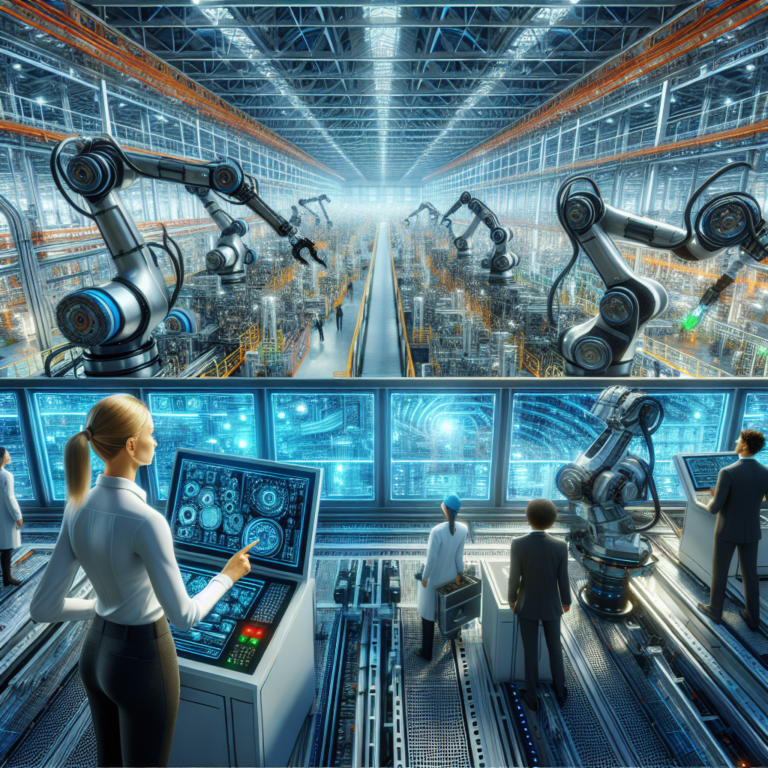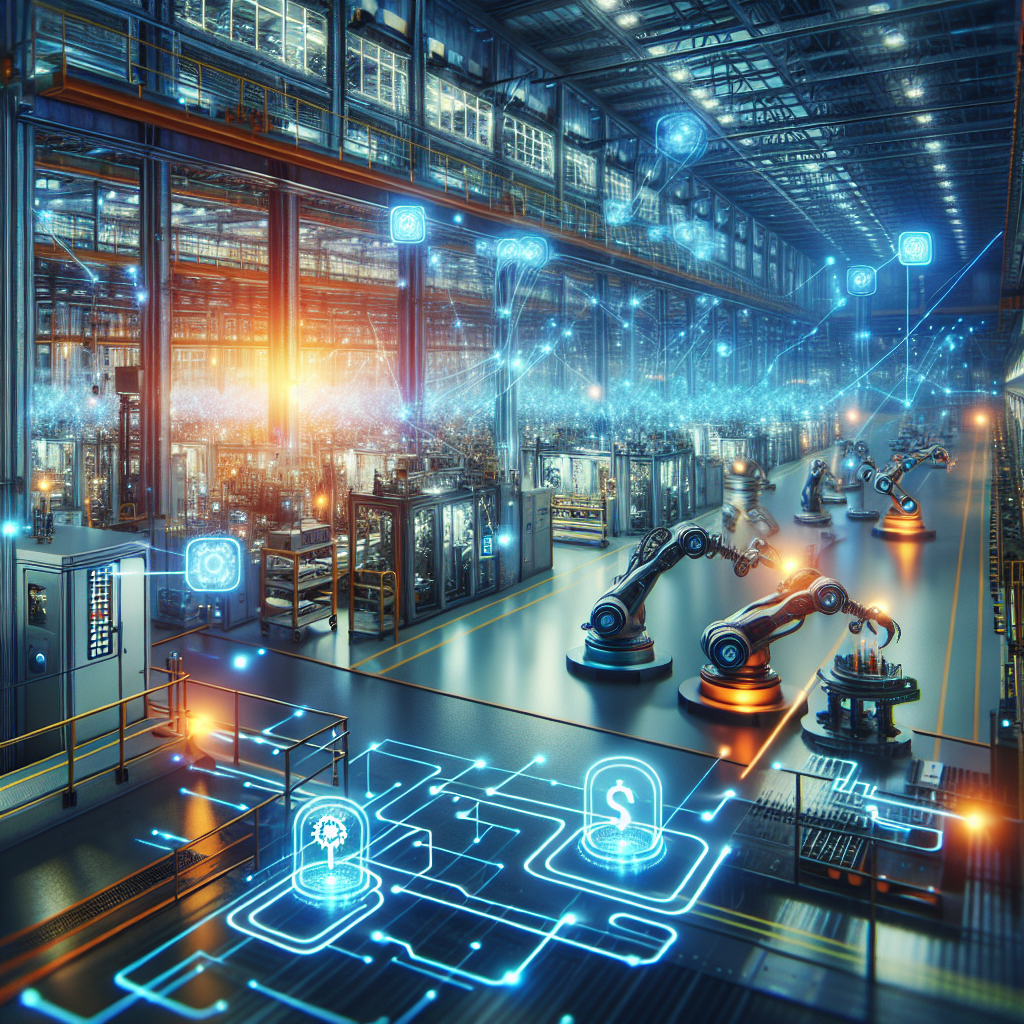
As we step into a new era of technology, the integration of Edge AI in Industrial Automation is transforming how industries operate. I find it fascinating how this technology can enhance efficiency, reduce costs, and improve decision-making in real-time. In this blog, I’ll explore the significance of Edge AI in industrial automation, its wide-ranging applications, and actionable steps for businesses to leverage this groundbreaking advancement effectively.
Table of Contents
- Introduction
- What is Edge AI?
- Importance of Edge AI in Industrial Automation
- Applications of Edge AI in Industry
- Drivers and Challenges in Adopting Edge AI
- Industry Case Studies
- Future Trends in Edge AI for Industrial Automation
- Actionable Steps to Implement Edge AI
- Summary
- FAQs
- Sources
Introduction
The industrial landscape is evolving at an unprecedented pace, with technology guiding the way towards smarter, more interconnected systems. At the heart of this evolution is Edge AI. By facilitating data processing at the very source — on the edge of the network, close to machines, production lines, and sensors — Edge AI minimizes latency, enhances operational efficiency, and allows businesses to make critical decisions faster than ever. This blog will delve into the impact of Edge AI, explore its importance, and reveal how forward-thinking organizations can harness its capabilities for competitive advantage.
What is Edge AI?
To fully appreciate the transformative power of Edge AI, it’s essential to understand exactly what it is. Edge AI refers to the deployment and operation of artificial intelligence algorithms directly on devices at the edge of a network — not in a remote data center or the cloud, but where data is actually generated. These edge devices might include industrial robots, IoT sensors, smart cameras, and programmable logic controllers (PLCs).
Unlike traditional systems that require vast amounts of data to be sent to a central location for processing and analysis, Edge AI enables these operations to happen locally and in real time. According to Automation.com, this shift not only dramatically reduces data transmission (and its associated costs) but also improves the speed and relevance of responses. For time-sensitive applications — such as shutting down equipment at the first sign of malfunction, dynamically adjusting assembly line speeds, or alerting human supervisors to anomalies — having the AI brain at the edge is game-changing.
How Edge AI Works
At its core, Edge AI involves embedding lightweight and optimized AI models into hardware or software systems that are designed to operate with limited computational resources. These models can analyze streaming data, recognize patterns, and make decisions instantaneously. Edge AI can work independently or in coordination with cloud-based systems; for example, it can perform rapid, low-level, high-frequency actions locally and only send relevant insights or archives to the cloud for storage or further analysis.
Importance of Edge AI in Industrial Automation
Why is Edge AI causing such a stir in the industrial sector? The answer lies in its ability to address longstanding challenges in automation, efficiency, and reliability. Here are several key reasons why Edge AI is so valuable:
- Reduced Latency: Decisions can be made instantly, as the need for round-trip communication with a distant server is eliminated. In safety-critical scenarios or fast-moving production processes, every millisecond counts.
- Lower Bandwidth Costs: By filtering, analyzing, and compressing data at the edge, companies can avoid transmitting terabytes of raw data to the cloud, massively reducing bandwidth requirements — and, consequently, operational costs.
- Enhanced Reliability: Edge devices can continue to function autonomously even if connectivity to the central system is temporarily lost. This robustness is crucial for industrial environments where uninterrupted operation is essential.
- Security and Privacy: Sensitive data does not have to leave the factory floor, lessening the risk of cyber threats and compliance issues associated with moving personal or proprietary information offsite.
- Predictive Maintenance: By continuously monitoring equipment health and identifying subtle anomalies, Edge AI enables predictive maintenance — the proactive approach to preventing costly breakdowns and unscheduled downtime.
As TechCrunch highlights, businesses that incorporate Edge AI into their automation strategies can realize significant financial and operational performance gains, placing them ahead of the curve in a competitive, fast-paced market.
Applications of Edge AI in Industry
Edge AI is not confined to a single role. In fact, its applications are as diverse as the industries it touches. Let’s examine some of the most impactful ways Edge AI is being deployed on the factory floor and beyond:
1. Smart Manufacturing
In manufacturing, Edge AI provides real-time analytics of machinery performance, product quality, and environmental conditions. It can monitor and optimize entire production lines, adaptively adjusting speeds, temperatures, and processes for optimal efficiency. For instance, computer vision models running on edge devices can instantly identify defective products, triggering immediate removal or correction.
2. Predictive Maintenance
Through vibration, temperature, acoustic, and other sensor data, Edge AI continuously assesses the condition of machinery. Using pattern recognition and anomaly detection, it identifies signs of wear-or-tear or impending failure days or weeks before a breakdown occurs. This saves both time and money, as costly, unplanned downtime is avoided and maintenance can be scheduled at optimal intervals.
3. Energy Management
Edge AI plays a critical role in optimizing energy usage within factories and industrial complexes. By analyzing power consumption, detecting inefficiencies, and adjusting equipment scheduling in real time, businesses can drastically cut energy costs and reduce their carbon footprint — a priority for sustainability.
4. Autonomous Robotics
Industrial robots and autonomous guided vehicles (AGVs) equipped with Edge AI can navigate complex environments, adapt to changing layouts, avoid obstacles, and collaborate safely alongside human workers. Decentralizing intelligence means these robots operate reliably even if network connectivity drops, ensuring seamless operations.
5. Quality Assurance
Edge AI-powered vision systems inspect parts, materials, and final products for deviations or contamination. By catching errors promptly, these systems maintain consistently high quality standards and minimize costly recalls or rework.
6. Supply Chain and Logistics
Beyond the factory floor, Edge AI revolutionizes warehouse management, fleet tracking, and route planning. It’s used to predict demand fluctuations, optimize stock levels, and dynamically reroute delivery vehicles based on real-time traffic, weather, or geopolitical changes. As Wired notes, these applications don’t just streamline logistics but also contribute to sustainability by minimizing unnecessary travel and idle time.
Drivers and Challenges in Adopting Edge AI
With such a compelling business case, what’s powering the rapid adoption of Edge AI – and what hurdles remain?
Market Drivers
- Intensifying Competition: Industrial organizations now compete on speed, flexibility, and responsiveness. Edge AI provides a path to real-time optimization, which directly improves margins and customer satisfaction.
- Explosion in Sensor Data: IoT device deployments are soaring, producing massive amounts of valuable but underutilized data. Edge AI unleashes the full potential of these data streams.
- Growing Connectivity: With the expansion of high-speed mobile and wired networks, deploying edge devices has become easier and more practical than ever.
- Regulatory Pressures: Regulations around data sovereignty and privacy encourage organizations to keep sensitive data local.
Challenges
- Legacy Equipment: Industrial sites often have decades-old machines not originally designed for digital integration or AI. Retrofitting such equipment with sensors and connectivity is technically and financially challenging.
- Integration Complexity: Ensuring that edge systems communicate reliably with central control systems, ERP, and third-party software demands careful planning and skilled integration.
- Cybersecurity: Each connected device increases the attack surface. Companies must adopt robust practices for securing edge endpoints against tampering, malware, and unauthorized access.
- Talent Gap: Developing and deploying Edge AI solutions requires unique skills that blend machine learning, embedded systems, networking, and industrial engineering — a rare combination in the current labor market.
Industry Case Studies
To better illustrate these concepts, let’s look at real-world examples:
Automotive
Major automotive manufacturers have deployed Edge AI in painting and assembly lines to assess surface quality and instantly flag imperfections. This led to a 30% reduction in defects and measurable cost savings per vehicle.
Food & Beverage
In food processing, edge-based vision systems inspect products for foreign material contamination. By replacing random manual sampling with 100% automated inspection powered by AI, one major producer saw food quality complaints drop by 50% within a year.
Energy / Utilities
Utility companies are equipping transformers and grid hardware with edge-smart sensors that preemptively detect temperature spikes or vibration anomalies — preventing outages and optimizing repair schedules. This proactive approach has contributed to greater grid stability and customer trust.
Future Trends in Edge AI for Industrial Automation
The future of Edge AI in industrial automation is full of promise. Key trends to watch include:
- Federated Learning: Factories will collaborate by sharing model improvements without revealing proprietary or sensitive data, allowing more rapid collective improvement.
- Edge-to-Cloud Synergy: Hybrid architectures will gain popularity, using the edge for rapid decision-making and the cloud for deep learning model training and long-term analytics.
- 5G Integration: As 5G networks become widespread, high-bandwidth and ultra-reliable connections will empower edge devices to share richer insights with central systems and each other.
- Advanced Human-Machine Collaboration: With better computer vision, voice processing, and situational awareness, Edge AI will foster more intuitive and safer interactions between people and machines.
- AI-Powered Cybersecurity: Edge devices will increasingly self-monitor for vulnerabilities, detecting and responding to threats without human intervention.
Actionable Steps to Implement Edge AI
How can forward-looking organizations unlock the power of Edge AI? Here are five key steps:
- Assess Your Needs: Identify and prioritize operational challenges that would benefit most from real-time analytics, such as reducing downtime, improving quality control, or enhancing safety.
- Invest in Infrastructure: Prepare your facilities with appropriate edge-capable hardware, network architecture, and robust endpoint security. Consider upgrading legacy equipment with compatible sensors or gateways.
- Train Your Team: Develop cross-disciplinary skills in your workforce, covering data science, edge deployment, and industrial systems. Partnerships with technology vendors and educational institutions can bridge skill gaps.
- Start Small: Pilot Edge AI in a single facility, production line, or use case. Clearly define performance metrics and business outcomes, and use the pilot as a learning opportunity.
- Monitor and Optimize: Continuously track results, gather feedback, and refine both your AI models and business processes. Iterate rapidly to maximize ROI before scaling up.
It’s important to recognize that Edge AI is a journey, not a one-time project. The most successful organizations foster a culture of continuous innovation, agile adaptation, and workforce empowerment.
Summary
Edge AI is revolutionizing industrial automation by transforming data from a passive asset into an active driver of efficiency, safety, and competitive differentiation. Its ability to process information locally unlocks real-time insights, smarter automation, and more resilient operations across manufacturing, logistics, energy, and beyond. By proactively embracing Edge AI and following practical steps — from needs assessment to workforce training — today’s factories and industrial organizations can position themselves at the forefront of technological advancement.
FAQs
- What is Edge AI? Edge AI refers to the deployment and execution of artificial intelligence models directly on network edge devices (like sensors and programmable logic controllers) for real-time data analysis.
- Why is Edge AI important in industrial automation? It enhances operational efficiency, reduces latency and bandwidth costs, enables predictive maintenance, and improves reliability and security by keeping sensitive data on-site.
- What are some applications of Edge AI? Applications include production line optimization, predictive maintenance, energy management, quality assurance, autonomous robotics, and smarter supply chain logistics.
- How can businesses implement Edge AI? Businesses should assess their needs, invest in infrastructure, train their teams, start with targeted pilot projects, and iteratively monitor and improve performance as they scale up.
- What industries benefit the most from Edge AI? While manufacturing leads adoption, sectors like energy, food and beverage, automotive, utilities, pharmaceuticals, and logistics are rapidly leveraging Edge AI solutions.