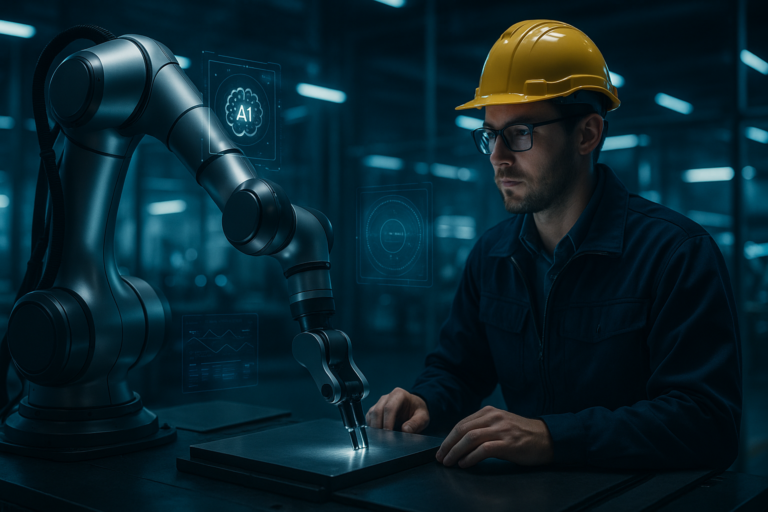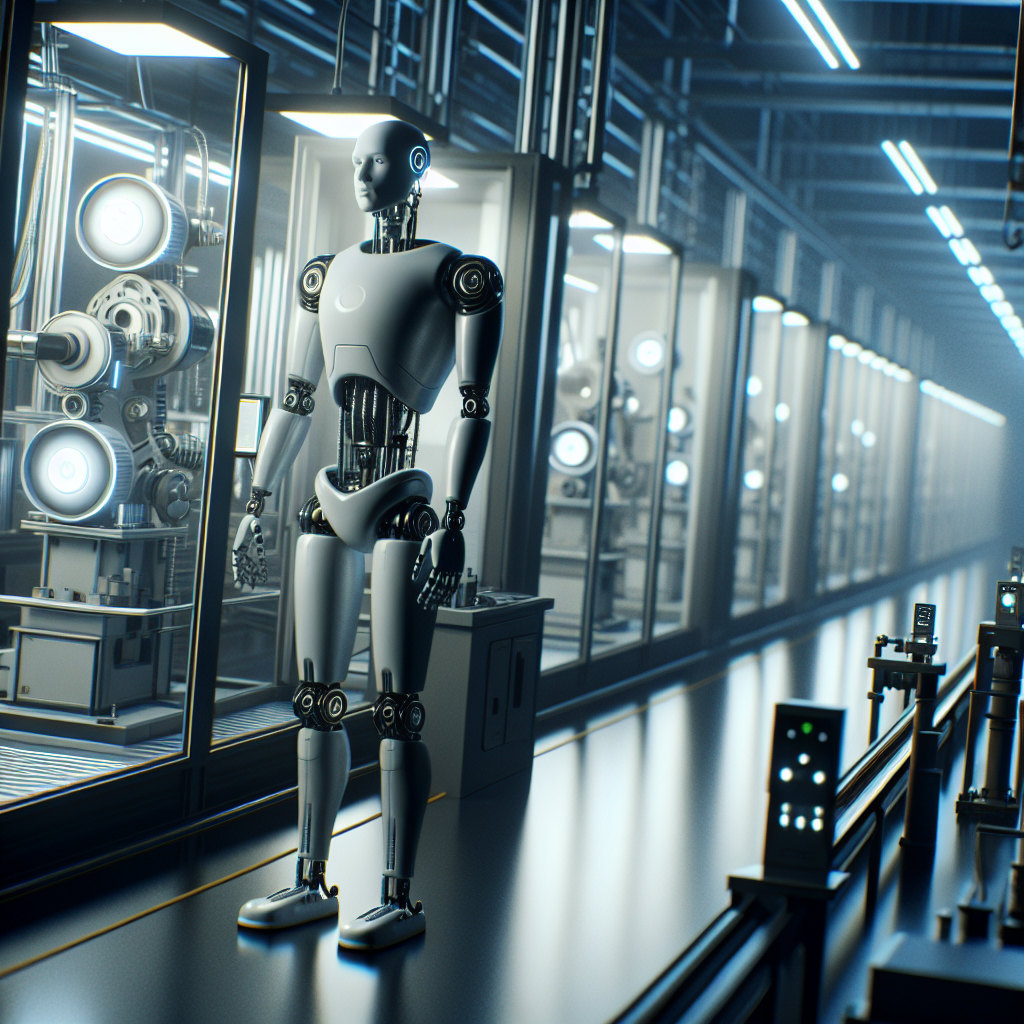
In the ever-evolving landscape of industrial automation, the allure of humanoid robots often captures our collective imagination. We see headlines proclaiming the arrival of robots that walk like us, talk like us, and even make facial expressions. Their appearances on tech conference stages and slick promo videos conjure up visions of a seamless future where machines work side by side with human counterparts. However, as I explore the implications and practicality of these machines in the gritty, high-stakes world of industrial settings, it becomes clear that humanoid robots may not be the ideal solution for most industries—at least not yet.
Table of Contents
- Introduction
- The Case Against Humanoid Robots
- Cost and Complexity
- Safety Concerns
- Efficiency and Productivity
- Real-World Examples
- Future Directions and Limitations
- Balancing Adoption with Pragmatism
- Summary
- FAQs
- Sources
Introduction
Since the dawn of industrial automation, manufacturers have pursued the holy grail: maximizing productivity, efficiency, and safety while minimizing cost. Robots, especially the classic six-axis robotic arms and specialized pick-and-place machines, have already reshaped factories worldwide. In recent years, the attention has shifted toward humanoid robots—machines designed to mimic the full range of human motion and, theoretically, step into a human worker’s shoes, tools, or gloves.
While this concept is appealing, and certainly grabs headlines, I believe it’s critical to analyze whether humanoid robots truly deliver on their promise in industrial settings right now. To guide this exploration, let’s break down not just the drawbacks, but the underlying reasons why industries continue to opt for more pragmatic, purpose-built solutions.
The Case Against Humanoid Robots
Humanoid robots are often portrayed as “the future of work.” The narrative frequently focuses on the versatility of humanoid form: if factories and warehouses are designed for people, why not use machines that fit right in? However, the technology behind these robots is still in its infancy in practical, at-scale industrial deployments. According to a report by Automation.com, many humanoid robots struggle with tasks requiring speed, endurance, or minute precision—traits that are the bread and butter of existing industrial robots.
Moreover, the ability to resemble human motion does not equal the ability to replace workers in complex, repetitive, or hazardous environments. Unlike task-specific machines, humanoids must handle a wider variance in process and product, demanding advanced machine learning, sensor integration, and robotics engineering—resulting in increased cost and potential points of failure.
The complexity of programming and maintaining such robots is another major hurdle. Even when these robots can theoretically perform dozens of different human-like tasks, each new process or tool can require a fresh set of programming, calibration, and ongoing support. For many businesses, this means diverting time, money, and expertise away from core operations and toward managing these high-maintenance machines.
Cost and Complexity
Perhaps the most critical barrier is the sheer cost of implementing humanoid robots. The acquisition cost alone is daunting—with most units running into the hundreds of thousands or even millions of dollars. This is before factoring in costs for custom integration, programming, regular software updates, and on-call technical support. In comparison, traditional industrial robots or cobots (collaborative robots) offer a more attractive return on investment—they are more affordable, easier to integrate, and often supported by decades of engineering know-how.
Downtime is another headache. When a humanoid robot malfunctions (which, even at the current state of the art, happens more often than with established automation hardware), specialized technicians are required to troubleshoot and fix the complex system. A mechanical arm designed only for picking items from bins, by contrast, is not only less likely to fail, but can often be repaired quickly by in-house teams. Frequent downtime erodes the productivity benefits and can disrupt supply chains, making such a gamble hard to justify.
A Reuters study underscores this: when surveyed, a majority of manufacturers indicated reluctance to invest in humanoid robots until they could be financially justified through clear and rapid payback periods. For now, specialized—and less glamorous—machines continue to do the bulk of the heavy lifting in industry.
Safety Concerns
Industrial environments are full of fast-moving equipment, heavy loads, sharp tools, and hazardous substances. Safety is always paramount. Paradoxically, the very flexibility and adaptability that makes humanoid robots conceptually appealing also amplifies risk. A robot that walks, bends, or swings its arms like a human may unexpectedly interact with its surroundings—and, by extension, with human workers in the vicinity.
According to BBC News, there have even been incidents where humanoid robots caused injury due to unpredictable movements, sensor malfunctions, or failed recognition of their environment and human colleagues. These accidents are more likely when robots share close working space with people, making the argument for physical barriers, safety zones, or complex monitoring systems. Traditional robots, meanwhile, are typically caged off in safety zones—minimizing risk by design.
Human-robot collaboration is indeed a worthy goal. However, the unpredictability of humanoid interaction (consider how the robot interprets a human worker’s sudden move or emotion) increases risk. Until robust, failsafe safety protocols exist across the entire ecosystem of software, hardware, and factory workflow, humanoids lag behind their more predictable robotic peers.
Efficiency and Productivity
At the end of the day, factories run on throughput, precision, and consistency. While a humanoid robot’s dexterity may be impressive in isolation, it is simply not optimized for many industrial tasks. Traditional robots are purpose-built for speed, accuracy, and reliability—features that enable modern manufacturing’s famous “lights-out factories,” in which robots work tirelessly in the dark while humans oversee the process remotely.
According to a TechCrunch analysis, businesses using established automation solutions have seen significant productivity gains compared to early experimenters with humanoid robots. Every added degree of freedom—any additional way a robot can move or react—requires additional computation, programming, and oversight. Each added ounce of flexibility can sacrifice efficiency for the sake of adaptability.
Another challenge is the learning curve for industrial teams. Integrating humanoid systems usually demands not only extensive technical training for operators and supervisors but also a redesign of workflows and safety practices. The friction from this learning period can actually reduce productivity for significant spans of time, negating early gains and frustrating industrial engineers.
Real-World Examples
Many high-profile humanoid robot trials have ended quietly or shifted focus. Consider a U.S.-based automotive components manufacturer that invested heavily in humanoid robots to perform complex assembly tasks that required dexterity and a level of on-the-spot adaptability. The company quickly discovered that while the robots could in theory manipulate objects like a human, the downtime for calibration, software errors, and mechanical failure far outweighed the novelty. Production targets slipped and the experiment was shelved in favor of more robust, single-purpose robotic cells.
This is not an isolated case. Around the globe, technology showcase projects often struggle at scale. Japanese manufacturing has long been at the forefront of robotics, yet even here, reports highlight that humanoids are mostly relegated to roles such as greeters or guides in public spaces, not on the factory floor where uptime and reliability are essential. In logistics, companies that experimented with bipedal humanoid robots ultimately chose wheeled, box-like automated guided vehicles (AGVs) instead, citing greater reliability and easier maintainability.
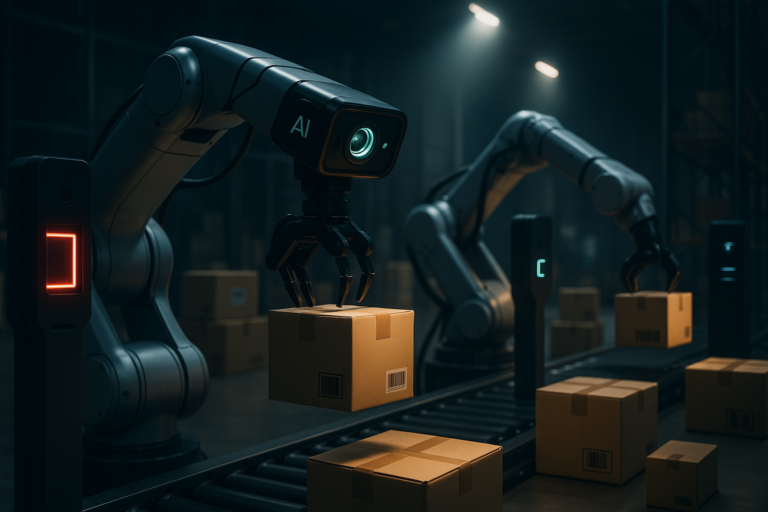
Even within sectors where robots must manipulate varied products—such as logistics, e-commerce, and food production—task-specific robots like robotic arms equipped with vision systems, or mobile robots designed for warehouse navigation, continue to outperform humanoid designs. They are easier to program, repair, and maintain, and their proven track record makes process engineers sleep easier at night.
Future Directions and Limitations
This is not to say that humanoid robots have no place in industry. Their ability to operate tools already designed for human hands may prove valuable in settings that cannot be redesigned for classical robots. For example, highly unstructured environments, retrofit projects, or maintenance roles where flexibility is paramount may one day benefit from advanced humanoid designs.
However, leaps in machine vision, AI context understanding, advanced materials, and real-time safety protocols are required before widespread deployment becomes viable. Humanoid robots will also need to compete with the accelerating progress in machine learning-powered adaptive robots, which can learn a broader range of tasks without assuming human physiology. Until such obstacles are addressed, their cost and complexity will keep them niche—and often overshadowed by more pragmatic automation solutions.
Balancing Adoption with Pragmatism
Business leaders must balance excitement about breakthrough technology with the realities of industrial productivity. While adopting humanoid robots might earn a company press coverage and position it as an innovator, the true test is whether these machines deliver lasting, measurable improvements at scale and cost. For now, the evidence suggests that pragmatic automation—investing in proven technologies, incremental upgrades, and targeted use of AI-driven robotics—remains the superior strategy for most industrial enterprises.
The dream of robots built in our own image stalks the corridors of automation R&D. But for today’s factory, warehouse, or plant, chemistry between machine and business outcome matters more than human-like appearance. Purpose-engineered, scalable, and affordable automation tools will continue to dominate until humanoids can reliably compete not just on flash, but on function.
Summary
While humanoid robots capture the world’s imagination and represent a fascinating step forward in robotics engineering, they may not be the best fit for industrial automation—at least for the current state of technology and business needs. High costs, significant complexity, safety concerns, and lower efficiency compared to established automation hardware make humanoid robots a less attractive option for the vast majority of manufacturers and logisticians. Industries with an eye on the bottom line, safety, and uptime will continue to prefer solutions that deliver tangible, proven benefits. The role of humanoid robots may shift in the future as technology advances, but for now, industry leaders would do well to focus on pragmatic, scalable automation tools that are already reshaping the world’s factories and supply chains.
FAQs
- Are humanoid robots completely useless in industry? Not at all. While they aren’t the most cost-effective or practical solution for most industrial applications today, humanoid robots may find value in highly unstructured environments, maintenance roles, or spaces designed exclusively for human ergonomics. Their future role will depend heavily on technological improvement and cost reduction.
- What are the main advantages of traditional industrial robots? Conventional robots are generally more affordable, reliable, and easier to maintain. They excel in repetitive or hazardous tasks, can work quickly and accurately, and have a robust track record. Their engineering is tailored precisely to the industrial setting, leading to higher uptime and better ROI.
- How can companies ensure safety when using robots? The best practices include implementing clear physical safety zones, installing redundant sensors, regular maintenance, and detailed operator training. For collaborative or co-working scenarios, robots should be equipped with advanced vision, force feedback, and fail-safe systems to recognize and avoid hazardous interactions.
- Could advances in AI make humanoid robots more practical? Absolutely. Better AI, machine vision, and system integration will unlock new capabilities for humanoid robots. But as with all automation, widespread business adoption will depend on proving reliability, safety, and ROI in the demanding real-world conditions of industrial operations.
- Do some companies already benefit from humanoid robots? A few companies and research labs leverage humanoid robots for experimentation, flexible small-batch manufacturing, or high-profile customer-facing roles. However, for large-scale industrial deployment, most have shifted to more proven, task-specific automation platforms.
Sources
- Automation.com
- Reuters
- BBC News
- TechCrunch
- Industry case studies and published reports on automation trends