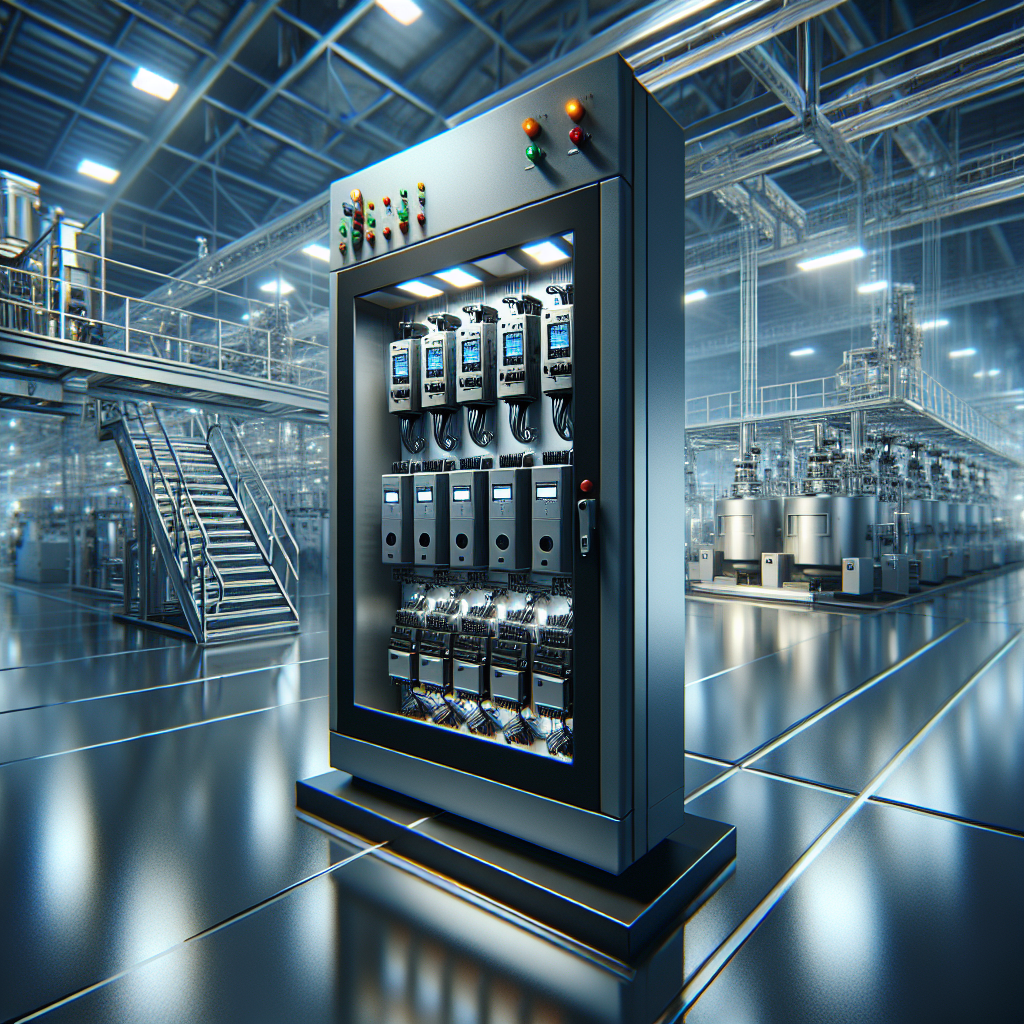
The Enclosed Motor Starter Market Forecast to 2035 underscores a significant trend: as a wave of industrial automation and infrastructure modernization sweeps across the globe, the role of enclosed motor starters is more crucial than ever. In this detailed exploration, I’ll dive into the evolving landscape, examining what’s driving market growth, unpacking industry shifts, outlining actionable next steps, and providing guidance for those looking to position themselves at the forefront of these changes. Whether you’re a manufacturer, integrator, or decision-maker in an industry that relies on electric motors, understanding these trends is vital to long-term success.
Table of Contents
- Introduction
- Market Overview
- Technological Evolution and Design Improvements
- Driving Factors Behind Growth
- Regional Impact and Growth Hotspots
- Market Challenges and Resilience Strategies
- Future Projections
- Actionable Steps for Businesses
- Summary
- FAQs
- Sources
Introduction
Electric motors are the lifeblood of modern industry. From running conveyor belts to powering climate control systems in high-tech factories, these motors require reliable control and protection to operate efficiently and safely. Enclosed motor starters—devices that both manage and safeguard electric motors—have emerged as indispensable in this context. Why has the focus on this market intensified? It’s a convergence of factors: growing automation, global investment in smarter infrastructure, and a demand for safer, more efficient operations. Let’s lay the groundwork for why now is a pivotal moment for the enclosed motor starter market.
Market Overview
The enclosed motor starter market encompasses a range of products used to initiate and secure motor operations in settings where robustness and safety are non-negotiable. These starters shield critical components from dust, moisture, corrosive substances, and accidental contact—conditions prevalent in industrial plants, energy facilities, data centers, and large infrastructure projects. According to a recent Automation.com report, the market is enjoying robust expansion as a direct response to surging demand in manufacturing, energy, utility, and construction. The report identifies both alternating current (AC) and direct current (DC) motor starters as key market segments, with low-voltage applications leading the way due to their ubiquity in industrial machinery.
Key players in the industry are rapidly iterating on product design, incorporating enhanced control logic, IoT readiness for remote monitoring, and compliance with increasingly stringent international safety standards. This push for innovation ensures the market’s resilience and ability to address diverse customer requirements.
Technological Evolution and Design Improvements
The evolution of enclosed motor starters tracks closely with advances in both control electronics and enclosure design. In recent years, manufacturers have:
- Integrated smart sensors and communication modules: These enable remote diagnostics, predictive maintenance, and integration with larger factory automation systems.
- Improved enclosure materials and designs: Enhanced resistance to corrosive chemicals, dust, and water (e.g., IP65 and NEMA 12 ratings) unlock applications in ever-harsher industrial settings.
- Emphasized modularity: Allowing quick swapping of components, effortless scaling, and upgrades as process requirements change.
- Adopted compact footprints: To maximize space efficiency in crowded control panels while keeping cooling and accessibility top of mind.
These technology leaps have elevated user expectations, making ease of installation, smart integration, and minimal maintenance must-haves for new builds and retrofits alike.
Driving Factors Behind Growth
What’s behind the surge in demand? Several converging megatrends:
- Industrial Automation: The relentless march toward higher productivity, lower costs, and reduced downtime has led to an exponential increase in the use of automated machinery—each machine requiring a reliable starter setup.
- Regulatory and Safety Compliance: Regulations like IEC 60947-4 and UL 508A have compelled industries to invest in more sophisticated, enclosed switching solutions that meet updated safety benchmarks.
- Infrastructure Modernization: From “smart” water treatment plants to new urban mobility networks, infrastructure projects around the globe are being upgraded. These require motors—and thus enclosed starters—that can function reliably for decades.
- Energy Efficiency Mandates: Governments and corporations are now prioritizing energy efficiency, prompting widespread replacement of outdated starters with new, highly efficient models featuring energy monitoring and soft-start capabilities.
- Resilience Post-Pandemic: The COVID-19 pandemic revealed the consequences of unplanned downtime; critical facilities are pushing for greater automation and resilient control systems, contributing to strong demand for new installations and upgrades.
For deeper insights into automation’s impact, the TechCrunch analysis offers an excellent overview of how these forces intersect in today’s industrial economy.
Regional Impact and Growth Hotspots
The growth of the enclosed motor starter market isn’t uniform across the globe. Instead, it clusters around regions experiencing the most intense waves of industrialization and infrastructure renewal:
- Asia-Pacific: Dominates market share thanks to massive investments in manufacturing, semiconductors, automotive, and infrastructure—most notably in China, Japan, South Korea, and India. Stringent safety norms and an appetite for advanced automation drive rapid uptake.
- North America: The USA and Canada maintain robust market activity, fueled by ongoing upgrades in legacy industrial campuses and a strong focus on energy-efficient retrofitting within utilities, food processing, and data center sectors.
- Europe: EU climate goals, modernization of transportation, and investment in green energy infrastructure spur continual demand across Germany, France, the UK, and Scandinavia.
- Middle East & Africa: As oil-rich economies diversify and urbanization accelerates, there is notable growth in industrial control and water management, requiring reliable starter systems tailored to harsh environments.
This geographical dynamism is accompanied by both public-sector spending on megaprojects and private investment in plant upgrades, further boosting market expansion.
Market Challenges and Resilience Strategies
No market is without hurdles. The enclosed motor starter sector faces challenges including:
- Supply Chain Disruptions: The recent global component shortages, especially in semiconductors and other electronic parts, have created delays and driven up costs for starter assemblies.
- Increasing Raw Material Costs: Prices for copper, steel, and specialty plastics have remained volatile, forcing manufacturers to rethink sourcing strategies or reengineer products for greater material efficiency.
- Skill Shortages: The need for skilled technicians adept at both traditional motor control and smart device integration is outpacing supply in many regions.
- Complexity in Retrofitting: Modern starters often need to interface with legacy systems, posing compatibility and installation challenges, especially for brownfield upgrades.
To mitigate these risks, leading businesses are strengthening supplier relationships, investing in workforce training, and adopting modular design approaches to boost adaptability and speed up implementation.
Future Projections
Looking forward, the enclosed motor starter market is projected to sustain a steady compound annual growth rate (CAGR) of approximately 5% through 2035, according to detailed figures in this Reuters report. Several factors will underpin this trajectory:
- Continued Global Industrialization: Emerging economies, especially across Asia and Africa, are rapidly ramping up factory output, driving baseline demand for essential motor control and protection infrastructure.
- Connected Industry 4.0 Technologies: The integration of smart sensors and cloud-based monitoring will transform even conventional starter units into nodes in vast, interconnected smart factories.
- Decarbonization Initiatives: The push for greener operations is prompting not just equipment upgrades for energy savings, but the installation of starters capable of supporting variable speed drives and renewable energy inputs.
- Emphasis on Safety and Reliability: As process continuity becomes a boardroom issue, facilities are investing in ruggedized, failsafe starter systems that minimize fire, electrical, or operational hazards.
We can also anticipate an uptick in R&D spending as companies chase new opportunities made possible by advancements in power electronics, wireless communications, and enclosure manufacturing technologies.
Actionable Steps for Businesses
To capture the opportunities in this dynamic market, businesses—whether OEMs, distributors, or end-users—should consider the following strategies:
- Invest in Training: Upskill technicians and engineers to handle new generations of smart motor starters and integrated automation platforms. Consider cross-training personnel to support digital transformation initiatives across plant operations.
- Modernize Equipment: Proactively assess and replace legacy starters that lack advanced energy management, diagnostics, or connectivity. Evaluate return on investment from reduced downtime, maintenance, and energy costs.
- Stay Informed: Monitor evolving regulatory standards such as IEC, NEMA, and regional codes. Subscribe to industry publications, attend webinars, and participate in standards-setting forums to anticipate changes.
- Strengthen Supplier Relationships: Long-term partnerships with trusted component suppliers can buffer price volatility and ensure priority access to critical parts in times of supply chain disruption.
- Prioritize Customization: With diverse industrial and environmental requirements, customization of enclosure materials, control interfaces, and communication options can create market differentiation and enable penetration of niche segments.
- Leverage Trade Shows and Networking: Make use of global exhibitions and local forums to build contacts, survey the competitive landscape, and scout emerging technologies that could shape your future offerings.
A business mindset attuned to innovation, agility, and industry collaboration will be best positioned to navigate market shifts and leverage rising demand.
Summary
The enclosed motor starter market sits at a crossroads of old and new: it’s foundational to traditional industry, yet central to the next wave of smart, safe, and sustainable infrastructure. The drivers of growth—automation, regulation, modernization, energy efficiency, and resilience—are unlikely to diminish. Rather, they will evolve, prompting ongoing improvements in starter design, manufacturing, and application engineering. Businesses that keep pace with these trends, invest in their teams, and cultivate adaptive vendor relationships will thrive as demand rises across sectors and regions.
For stakeholders across the value chain, now is the time to strategize for a future defined by electrification, connectivity, and relentless automation.
FAQs
- What is an enclosed motor starter? An enclosed motor starter is a housed assembly used to control the start, stop, protection, and sometimes speed of electric motors. The enclosure shields delicate starter components from environmental hazards and enhances operator safety.
- Why is the market growing? Factors such as increasing industrial automation, the continuous need to modernize infrastructure, stringent safety regulations, and the push for energy efficiency are fueling market expansion globally.
- Which industries benefit the most? Manufacturing, energy generation and distribution, water treatment, chemical processing, transportation infrastructure, and large-scale commercial facilities represent key demand sectors.
- What trends are shaping future products? Industry 4.0 integration (smart sensors, IIoT connectivity), advanced enclosure materials, modularity for faster maintenance, and energy monitoring diagnostics are shaping product evolution.
- How can businesses future-proof their investments? By adopting tech-forward products, participating in training and standards development, and aligning supply chains for robustness and risk mitigation.