In the dynamic world of industrial automation, advancements are happening at an unprecedented pace. Every year, groundbreaking technologies are transforming the way factories, warehouses, and manufacturing facilities operate. Among the most exciting recent developments is the ambitious collaboration between Posco DX and NC AI. These industry pioneers have teamed up to develop a robust robot foundation model—a cornerstone technology set to redefine how automation powers industrial operations.
But what exactly does this collaboration entail, and what could it mean for the future of manufacturing and industrial efficiency? In this in-depth article, I’ll break down the new robot foundation model, explore why it matters, examine the collaboration’s inner workings, and lay out actionable steps businesses can take to stay ahead in this automation race. Whether you’re a factory owner, a technology enthusiast, or a corporate leader looking for ways to modernize your organization, you’ll find insights here to guide your next moves.
Table of Contents
- What is the Robot Foundation Model?
- The Importance of Industrial Automation
- How the Collaboration Works
- Industry Impact and Use Cases
- Challenges and Considerations
- Future Trends in Industrial Automation
- Actionable Steps for Businesses
- Summary
- FAQs
- Sources
What is the Robot Foundation Model?
At the core of modernization in manufacturing and logistics is the need for systems that are not only reliable but also flexible and intelligent. The robot foundation model, as created by Posco DX and NC AI, stands at this very intersection. But what is it, really?
Simply put, a robot foundation model is a sophisticated, AI-driven framework that forms the base layer for intelligent robotics in industrial settings. Imagine it as an advanced “brain” that can be embedded in robotic devices—granting them the ability to learn from their environment, adapt to new tasks, and collaborate flexibly with people and other machines. It enables a robot to go far beyond pre-programmed, repetitive motions; instead, such robots can analyze unstructured data, respond to changing scenarios, and even refine their performance over time.
Some of the essential features of this type of model include:
- Machine Learning Capabilities: The model allows robots to learn optimal actions from past data or real-time input, rather than operating by rigid, pre-coded instructions.
- Perception and Sensing: Enhanced computer vision, audio recognition, and sensor fusion enable robots to interpret complex physical environments, identify objects or defects, and track products or personnel.
- Natural Language Processing (NLP): More advanced models can actually converse with humans, take spoken/written commands, and provide reporting or reasoning—making human-robot collaboration significantly smoother.
- Continuous Adaptation: The “foundation” in foundation model means it’s built for growth. As new data is gathered, the system can update its strategies and algorithms, fine-tuning its abilities.
- Interoperability: The model can be integrated into various types of robots, from fixed-arm robots on assembly lines to mobile robots navigating warehouses.
With these capabilities, the robot foundation model is poised to take industrial automation to the next frontier—one where robotics aren’t just strong and fast, but also smart and adaptable.
The Importance of Industrial Automation
Why has automation become such a high-stakes focus for enterprises around the globe? The answer is multifaceted, but it boils down to competitive advantage, efficiency, and long-term sustainability.
Efficiency and Productivity
Any manufacturing executive will tell you: time is money. When tasks that once required hours of human labor can be performed swiftly and accurately by machines, the impact on productivity is enormous. According to Automation.com, companies that aggressively implement automation—across assembly, quality control, logistics, and maintenance—see productivity increases averaging 20-30%. In some high-tech sectors, gains can go even higher.
Consistency and Quality
Machines don’t get tired or distracted, and advanced robots don’t just perform tasks faster—they perform them with higher precision. This reduces error rates, minimizes scrap and rework, and ensures a more uniform end product.
Safety
Automating dangerous, repetitive, or hazardous tasks keeps human workers out of harm’s way. With AI-powered robots, facilities can operate in conditions or environments that would be unsafe for people, such as high-heat smelting, chemical processing, or heavy materials handling.
Cost Reduction
While upfront investment can be significant, automated systems rapidly recoup their costs. Lower labor costs, reduced waste, minimized downtime, and greater throughput all contribute to a stronger bottom line.
Agility and Scalability
Finally, AI-driven automation lets companies respond swiftly to new market demands. Changing the production mix no longer means months of retraining workers or retooling machinery—smart robots can adapt to new functions or product lines with simple software updates.
In short, industrial automation isn’t just about doing things faster—it’s about doing them smarter, safer, and with a future-ready mindset. The robot foundation model being built by Posco DX and NC AI stands right at the forefront of this transformation.
How the Collaboration Works
Collaboration between industry specialists and AI innovators is crucial for success in this field. Here’s how Posco DX and NC AI are setting a new standard:
Bringing Together Two Worlds
Posco DX boasts decades of experience in industrial processes, smart manufacturing, and the unique challenges of heavy industry. Their expertise lies not only in building robust manufacturing lines but also in integrating IT and operational technology (OT) across massive industrial facilities. In recent years, Posco DX has led digital transformation efforts in steel production, logistics, and smart factories.
NC AI, in contrast, is a leader in advanced artificial intelligence—pushing the boundaries of deep learning, large language models, and AI for robotics. Their research focuses on real-time contextual learning, human-robot interaction, and scalable AI deployment for real-world tasks.
By merging Posco DX’s industrial know-how with NC AI’s intelligence technologies, they’re developing a foundation model that’s not only brilliant in theory but also built for the rugged, unpredictable, and sometimes chaotic environment of the factory floor. This approach reflects a core truth: great technology must be both powerful and practical to have true industry impact.
Technical Synergy
The robot foundation model brings together several key technologies:
- Cross-domain AI: The system processes data from cameras, LIDAR, environmental sensors, and enterprise databases simultaneously. This multi-modal AI ensures situational awareness, quality inspection, logistics monitoring, and anomaly detection—all centrally managed.
- Adaptation Engines: Using reinforcement learning and continual learning algorithms, robots don’t just perform fixed tasks; they adapt procedures based on real-time performance or shifting requirements. For example, a mobile robot in a warehouse re-routes itself if a pathway becomes blocked.
- Human-Machine Interface: Through voice commands, touchscreens, or even gesture recognition, human operators communicate fluidly with robots—assigning tasks, reviewing reports, or requesting adjustments on the fly.
- Cyber-Physical Security: With increased automation comes the risk of digital attacks. This partnership incorporates advanced cybersecurity protocols, ensuring safe and reliable robot operation in mission-critical environments.
The collaboration is a living demonstration of how cross-disciplinary teams—IT and AI, software and operations—can come together to solve the industry’s biggest challenges.
Industry Impact and Use Cases
What does all this technical innovation mean on the ground? Here are a few scenarios where the robot foundation model will prove transformational:
Automated Assembly Lines
With a flexible robot “brain,” assembly robots aren’t limited to one product or one step in the process. They can retool themselves for different products, shift seamlessly between tasks, and even flag quality issues for human review. This allows plants to run variable production lines and reduce downtime between product changes.
Warehouse Automation
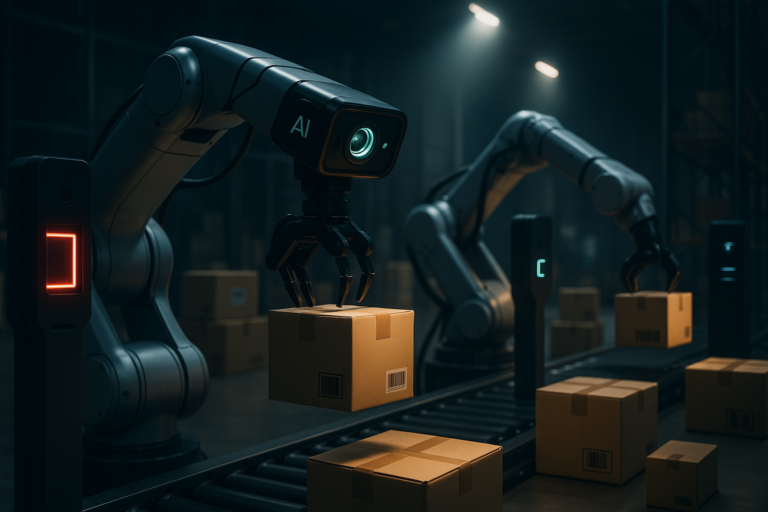
AI-powered mobile robots navigate storage areas, pick inventory, restock shelves, and transport goods—avoiding obstacles, re-planning routes, and collaborating with human workers in real-time. This dramatically boosts efficiency in fulfillment centers, especially with the huge demands of e-commerce.
Predictive Maintenance
With sensor fusion and real-time diagnostics, robots can detect wear, misalignment, or overheating before a failure occurs. They can even perform basic self-repair or alert maintenance teams preemptively, slashing costly unplanned downtime.
Quality Inspection
Advanced computer vision models embedded in robots enable non-stop, highly accurate quality inspections on every item moving through a manufacturing line. They can spot microscopic defects, flag inconsistencies, and record visual data for quality reports or regulatory compliance.
Collaborative Robotics (Cobots)
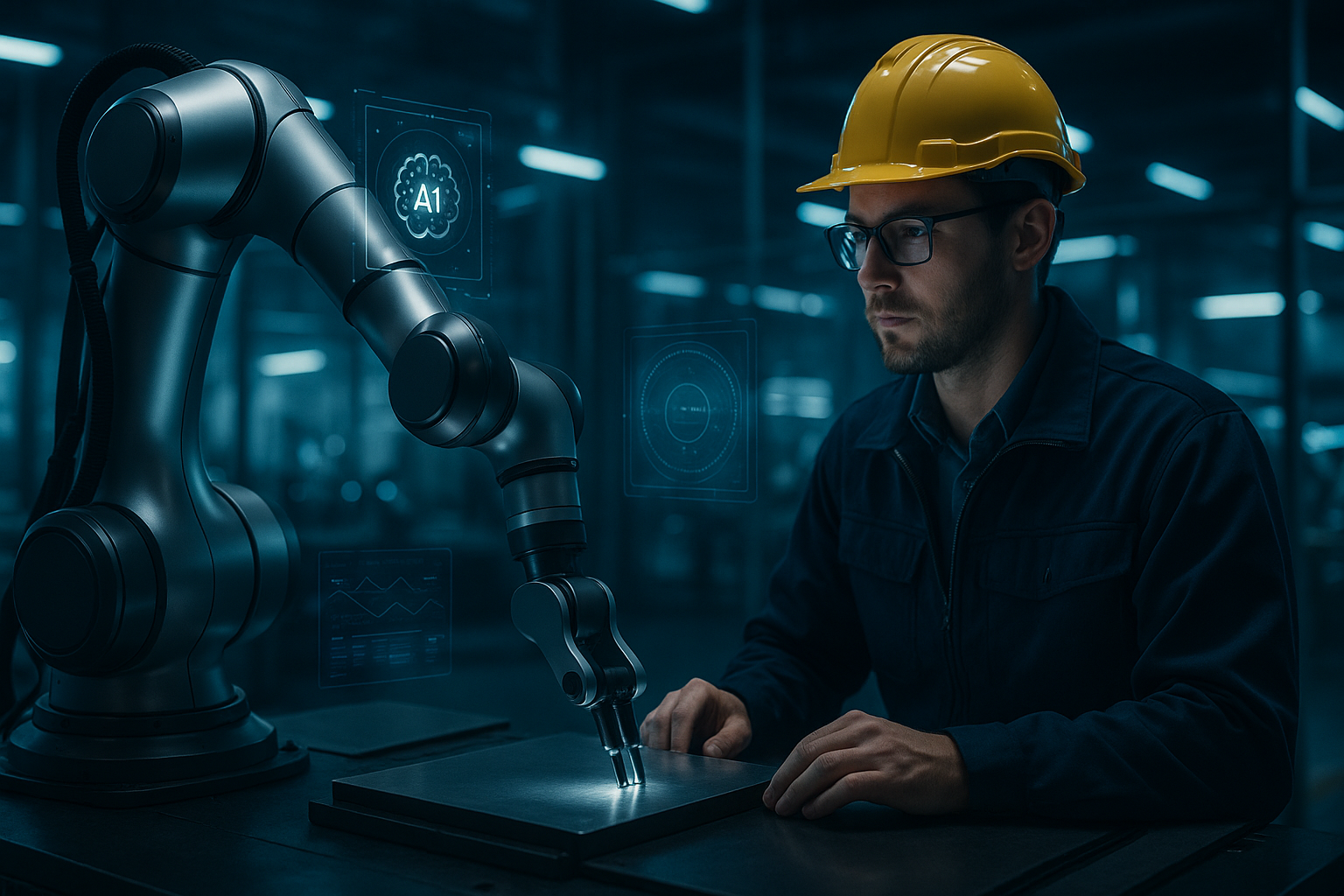
Modern “cobots” work side-by-side with people, handling strenuous or repetitive jobs while humans tackle the complex or nuanced parts of production. Foundation models let cobots quickly adjust to new contexts and interact more safely and efficiently with their human colleagues.
These examples merely scratch the surface—the versatility of the model supports hundreds of potential use cases across automotive, electronics, food processing, pharmaceuticals, and heavy industry.
Challenges and Considerations
No technological revolution is without hurdles. For industrial automation powered by advanced AI to succeed, certain challenges must be addressed:
- Integration Complexity: Factories often rely on legacy machinery and diverse equipment. Integrating new foundation models with older systems is a technical and change-management puzzle.
- Workforce Transition: Employees must be retrained or upskilled to work alongside advanced robotics, requiring both investment and change in workplace culture.
- Data Security: Industrial systems are becoming targets for cyber attacks. Data privacy, network security, and fail-safes are now as critical as machinery itself.
- Initial Investment: The costs to deploy advanced automation—hardware, software, training—can be daunting. However, the payback period is often shorter than anticipated, especially when productivity gains are substantial.
- Ethical Considerations: As automation replaces some roles and changes others, companies must consider the broader impact on employment and be proactive in responsible workforce planning.
Despite these challenges, the forward momentum is clear: those who invest carefully in automation today are most likely to thrive tomorrow.
Future Trends in Industrial Automation
Looking ahead, several trends will shape how foundation models like that of Posco DX and NC AI evolve and spread:
- Edge AI: Processing data locally on the robot (not always sending it to the cloud) will become more common, enabling faster response times and greater independence from external networks.
- Self-Learning Systems: Robots will increasingly teach themselves new skills using unsupervised or reinforcement learning, further reducing the need for manual intervention.
- Human-Robot Collaboration: Advances in safety, perception, and communication will make mixed teams of people and robots increasingly productive and commonplace.
- Industry-Specific Foundation Models: As data is accumulated across different sectors, AI models will be customized for the unique demands of each industry—from steel to semiconductors to food processing.
- Greater Interconnectivity: With the rise of the Industrial Internet of Things (IIoT), robots will form tightly integrated systems that share data, coordinate activities, and optimize entire production ecosystems.
This is just the beginning. The combination of industrial savvy and AI brilliance in this new foundation model points toward a future where automation isn’t simply a cost-cutter—it becomes the main engine for innovation, safety, and enterprise growth.
Actionable Steps for Businesses
If you’re a business looking to implement automation or kickstart your digitization journey, consider these practical steps:
- Assess Your Needs: Map out all current processes. Identify repetitive, time-consuming, or hazardous tasks as the first candidates for automation.
- Research Technologies: Look into the latest automation and robotics solutions, including foundation models. Sites like TechCrunch regularly feature insights on industrial AI breakthroughs.
- Evaluate Partners: Choose solution providers with proven experience in both your industry and next-generation AI deployments.
- Invest in Training: Upskilling your workforce ensures smoother transitions and unlocks more value from your automated systems. Offer training to both current employees and new hires.
- Start Small: Pilot projects are your friend. Automate a single line or department to validate ROI and gather feedback. Adjust plans before a full rollout.
- Embrace Change Management: Communicate openly with your team about why changes are happening, how jobs will evolve, and what support is available.
The right combination of technology, people, and planning ensures every business can thrive in an increasingly automated and intelligent world.
Summary
The collaboration between Posco DX and NC AI to build an advanced robot foundation model marks a pivotal moment for industrial automation. This is more than an incremental update; it’s a blueprint for the next era in smart manufacturing, logistics, and operations. By harnessing the power of AI to create adaptable, collaborative robotics, industries can dramatically boost productivity, quality, and safety—while also future-proofing their operations.
For businesses large and small, adopting these cutting-edge models will prove essential for staying competitive. But technology alone isn’t enough—the real winners will be those who combine innovative tools with strategic planning, skill development, and a human-centered approach to change. The future of industrial automation, it seems, belongs to the bold.
FAQs
- What is the robot foundation model?
It’s an advanced AI framework that underpins robotics in industrial environments—granting robots adaptive, learning, and cooperative capabilities well beyond standard automation. - Why is industrial automation important?
It drives greater efficiency, reduces costs, improves safety, and positions companies for long-term competitiveness through smarter operations. - How do businesses get started with automation?
By assessing needs, researching technology, piloting solutions, investing in training, and working with experienced partners, companies can incrementally modernize and automate their processes. - Are there risks?
Yes. Integration complexity, cybersecurity, workforce adjustment, and initial investment are real considerations. However, the benefits often far exceed the challenges with careful planning.