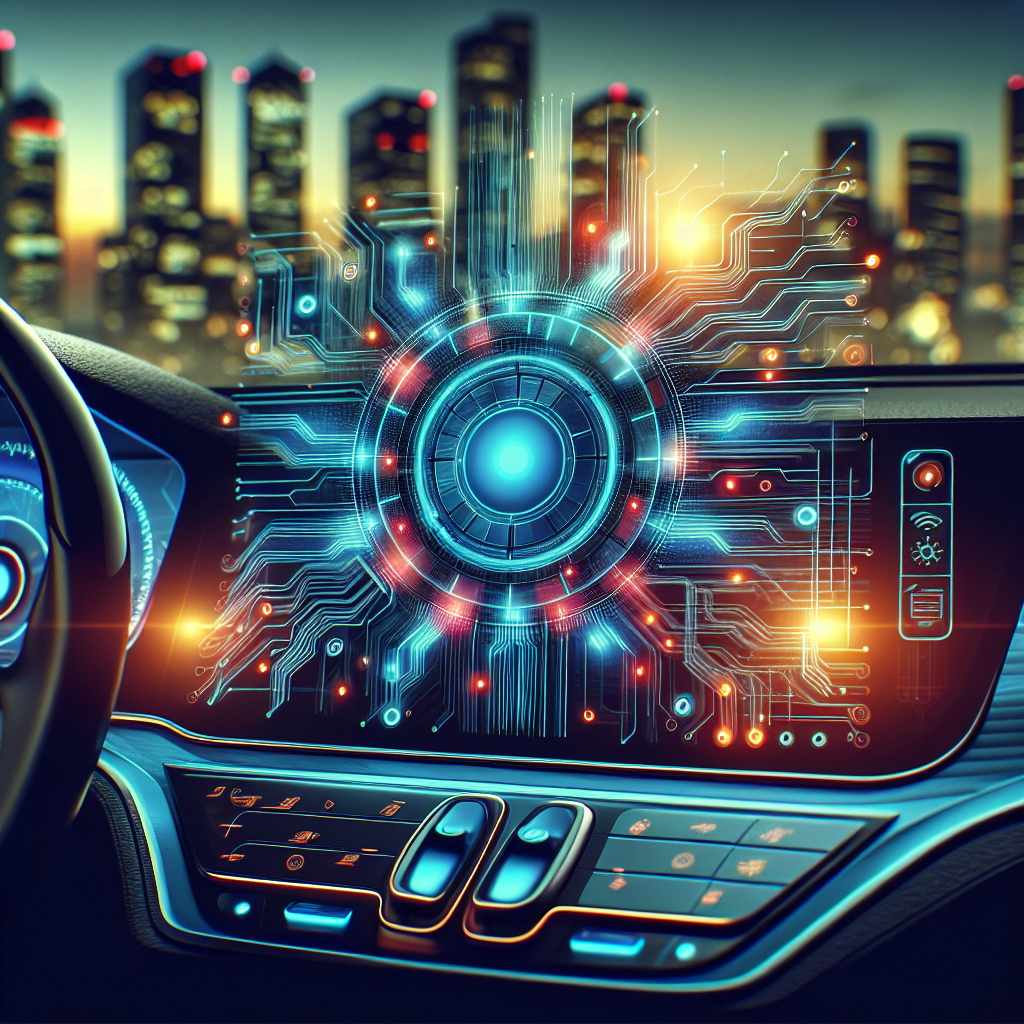
As technology continues to evolve at a blistering pace, the automotive industry finds itself at the frontier of innovation. The recent announcement by Horizon about its successful completion of a strategic trifecta — merging chips, an operating system, and advanced smart driving capabilities — is poised to be a game-changer. This bold move showcases Horizon’s ambition to become the leading foundational platform for vehicle intelligent agents in the future. But what does this mean for drivers, carmakers, and the broader transportation ecosystem? Strap in as we explore what’s at stake and why this development matters.
Table of Contents
- Introduction
- Horizon’s Strategy Explained
- Breaking Down the Technology Triad
- Importance of Integration
- Broader Industry Impacts
- Actionable Steps for Stakeholders
- Challenges and Considerations
- The Road Ahead
- Summary
- FAQs
- Sources
Introduction
From the rise of electric vehicles to self-driving technology, the auto industry is riding a wave of transformation. Yet, the integration of intelligence — the seamless blend of sensors, processors, AI-driven software, and sophisticated data management — is poised to be its biggest revolution yet. In this context, Horizon’s latest announcement (originally covered by Gasgoo) gains enormous significance. Through the integration of custom-built chips, a harmonized operating system, and proprietary smart driving algorithms, Horizon is setting out to create a full-stack platform for the next generation of intelligent vehicles.
This development isn’t just about improving driver convenience or making gadgets smarter. It promises safer roads, more efficient transportation, and a new paradigm for human–machine interaction within cars. It marks a shift from discrete, siloed vehicle features to cohesive, interoperable platforms where hardware and software are engineered natively to work in concert. As vehicles grow more capable and responsive, the kinds of experiences — and ethical issues — drivers and manufacturers must prepare for are expanding, too.
Horizon’s Strategy Explained
So, what makes Horizon’s three-pronged approach unique? At its core is the notion of vertical integration — not only developing powerful chips (the hardware), but pairing them with a homegrown operating system (the middleware), and interweaving both with state-of-the-art smart driving functions (the applications layer). Let’s examine each pillar:
- Chips: Horizon’s proprietary chips are purpose-built for the demanding, resource-constrained environment of vehicles. With growing demand for local data processing, rapid sensor fusion, and real-time AI inference, these chips aren’t just faster — they’re smarter and more efficient, as they’re tuned for automotive-grade workloads.
- Operating System (OS): Unlike the generic embedded operating systems of the past, Horizon’s OS is customized for intelligent vehicular environments, bringing together complex processing, low-latency communication, and flexible interfaces for rapid application deployment and updates.
- Smart Driving Capabilities: The crown jewel, these capabilities encompass advanced driver-assistance systems (ADAS), sensor fusion, perception, decision-making, path planning, and more — all leveraging on-chip AI acceleration and the robust middleware underneath.
This approach lets Horizon optimize every layer for synergy and performance. By controlling the stack from silicon to software to applications, Horizon can deliver unprecedented efficiency and rapidly roll out improvements or features across its platform. Perhaps most importantly, it provides automakers with a single, unified framework for deploying intelligent agents across vehicle models — reducing complexity, accelerating development cycles, and paving the way for customizable, brand-specific user experiences.
Breaking Down the Technology Triad
The fusion of chips, operating system, and smart driving technology represents the holy grail for modern automotive intelligence. But how do these interact in practice?
- Hardware–Software Co-Design: Rather than adapting generic hardware to automotive needs, Horizon co-designs chips and software, maximizing throughput where it matters most — from camera sensor fusion to real-time lane detection and collision avoidance.
- Scalable Architecture: Whether for a budget city car or a flagship SUV, Horizon provides a scalable architecture. Carmakers can deploy its solutions across model lines, selectively enabling advanced features (like highway autopilot or self-parking) as options.
- Faster Time-to-Market: With a unified platform, developers can create, test, and roll out applications and safety updates faster — crucial in a marketplace where agility and regulatory compliance often determine winners and losers.
This triad is particularly relevant today as vehicles become “edge devices” — computing hubs that must process terabytes of data per day in real time, without reliably fast or persistent cloud access. Local AI capability is paramount, and seamless system integration is the only way to deliver the speed, security, and stability required.
Importance of Integration
What separates next-generation automotive leaders from legacy competitors is not just technical advancement — it’s integration. When the hardware, operating system, and higher-order AI features are developed independently, cracks emerge. Data latency, compatibility glitches, cyber vulnerabilities, and bloated update cycles can plague automakers, erode consumer trust, and invite regulatory headaches.
By contrast, an integrated approach means:
- Seamless Functionality: Features like adaptive cruise control, lane keeping, pedestrian detection, and over-the-air (OTA) updates are natively woven into the system, working harmoniously instead of as add-on modules.
- Enhanced Safety: Data from radar, lidar, and camera sensors is unified, improving detection accuracy and responsiveness. Error-handling, fail-safes, and cybersecurity defences can be coordinated system-wide rather than patched in later.
- Superior User Experience: The unified platform enables highly responsive infotainment, voice assistants, and personalized smart agents that learn driver preferences over time.
- Accelerated Innovation: With a holistic architecture, new applications and features can be rolled out across large fleets quickly, while real-world driver behavioral data feeds back into the improvement cycle.
Perhaps one of the most critical benefits is enhanced cybersecurity. As vehicles become increasingly reliant on software, they are also more exposed to hacking and data theft. A tightly integrated system is inherently more secure because potential attack surfaces are minimized, and threats can be identified and managed at each layer, from silicon to cloud connectivity. As TechCrunch highlighted in their comprehensive review of automotive cybersecurity trends, robust integrated security protocols are no longer optional — they are an imperative in today’s autonomous vehicle landscape.
Broader Industry Impacts
The implications of Horizon’s move go beyond technical excellence. Industry analysts, including those at Automation.com, believe that the global market for ADAS and autonomous driving will surge in the coming decade, driven by regulatory pressure and consumer demand for safer, more personalized vehicles. McKinsey projects that smart vehicle-related sales could exceed hundreds of billions of dollars annually by the early 2030s.
Horizon’s approach, then, signals a change in business models across the auto sector:
- Shifting Power Dynamics: The automakers that embrace native, end-to-end intelligent platforms can differentiate quickly — both in safety and in driver experience.
- Software-Defined Vehicles (SDVs): Cars are evolving from hardware-driven products to software-centric platforms, where value accrues through subscription services, OTA updates, and new digital experiences — all underpinned by intelligent agents and predictive AI.
- Ecosystem Partnerships: As the lines blur between technology and auto companies, collaboration and open development between chipmakers, OS developers, car manufacturers, and AI startups will accelerate innovation and market entry.
Actionable Steps for Stakeholders
In light of Horizon’s vision, automotive industry stakeholders — from OEMs to tier-1 suppliers, investors, and developers — can take several tangible actions to stay ahead:
- Stay Informed: The vehicle intelligence landscape is changing rapidly. Commit to continuous learning. Follow technology trends in publications such as Wired and Reuters to monitor global developments and anticipate disruptions.
- Invest in R&D: Allocate greater resources toward research in AI algorithms, sensor fusion techniques, and secure embedded systems. Encourage innovation sprints and cross-department collaboration within your organization.
- Enhance Cybersecurity: Make cybersecurity a foundational pillar of your product design, not an afterthought. Update protocols regularly and work with partners who can demonstrate robust security credentials.
- Prioritize Interoperability: As both vehicles and infrastructure become smarter, ensure your solutions can integrate with external platforms, from V2X (vehicle-to-everything) protocols to smart city grids.
- Collaborate Broadly: Forge partnerships with technology firms, AI research labs, academic institutions, and even competitors where shared investment can drive faster, safer innovation for the public good.
- Test in Real-World Conditions: While simulators and digital twins are helpful, nothing substitutes for field deployment. Gather, analyze, and act on real-world driver data to make incremental, reliable upgrades.
- Educate Customers: Communicate transparently to consumers about what your vehicle’s intelligent systems can (and cannot) do. Manage expectations and build long-term trust through safety and clarity.
Challenges and Considerations
While opportunities abound, the road to fully intelligent, autonomous vehicles is not without obstacles:
- Regulatory Complexity: As vehicle intelligence grows, so does regulatory scrutiny. Manufacturers must navigate a labyrinth of privacy laws, safety certifications, liability regimes, and cross-border compliance.
- Cost Pressures: Developing integrated stacks is expensive. Maintaining profitability while upskilling staff and upgrading production lines will challenge smaller manufacturers and startups.
- Talent Shortages: The industry faces a global shortage of engineers skilled in AI, embedded systems, computer vision, and cybersecurity. Upskilling and attracting top talent will be key to long-term success.
- Public Trust and Adaptation: Engineering brilliance isn’t enough; consumers — and regulators — must accept and trust these technological advances. Transparent communication and pilot deployments can help bridge this gap.
- Ethical Dilemmas: As intelligent agents make more driving decisions, questions of ethics, liability, and human oversight will intensify. Stakeholders must develop clear frameworks for data usage, emergency protocols, and algorithmic transparency.
The Road Ahead
With its integration of chips, operating system, and smart driving capabilities, Horizon is not merely releasing another product; it is offering a blueprint for the intelligent vehicle platforms of tomorrow. As vehicles become rolling computers with onboard AI copilots, driverless features, and personalized digital assistants, the following trends will likely define the next decade:
- Edge AI Takes Center Stage: Vehicles will process more data on-device, reducing dependence on external networks and boosting privacy.
- Faster, Iterative Feature Rollouts: OTA updates and platformized architectures will enable automakers to keep vehicles current, safe, and continuously improving.
- Expanded Partnerships: The lines between automakers, chip designers, cloud providers, and AI developers will continue to blur. Competition will revolve around ecosystem strength rather than standalone features.
- Heightened Focus on Safety and Security: As systems become more complex, robust validation, ethical oversight, and cybersecurity will be embedded into every phase of development.
- New Value Propositions: Automakers will offer tailored subscription services, digital experiences, and personalized vehicle agents — fundamentally redefining how value is delivered and monetized.
For consumers, this future promises more responsive, safer, and engaging vehicles — turning daily commutes into seamless, personalized experiences. For developers, manufacturers, and policymakers, it presents both boundless opportunity and the responsibility to shape a connected and secure mobility future.
Summary
Horizon’s comprehensive integration of chips, an operating system, and smart driving capabilities represents a paradigm shift in automotive intelligence. No longer are these areas treated as disconnected components; they are optimized, secure, and nimble through holistic design, setting a standard for what future cars, trucks, and transit systems may become. In an era where vehicle intelligence can make the difference between life and death, safety and risk, or delight and frustration, such integration isn’t just convenient — it’s essential.
For stakeholders, the path forward demands vigilance, collaboration, investment, and bold vision. By embracing Horizon’s strategic playbook while anticipating and addressing the technical, ethical, and regulatory complexities ahead, the industry can build vehicles — and driving experiences — worthy of the 21st century.
FAQs
- What is Horizon’s main goal?
Horizon aims to become the foundational platform for vehicle intelligent agents by tightly integrating chip design, operating system development, and smart driving applications holistically. - Why is integration important in automotive technology?
Integration ensures optimal performance, robust cybersecurity, superior safety, and an improved user experience by allowing all system layers to work in concert rather than as isolated modules. - How can companies enhance cybersecurity in intelligent vehicles?
By prioritizing cybersecurity from hardware up through the application layer, updating systems regularly, employing layered defense strategies, and maintaining a robust incident response protocol. - How does this change affect everyday drivers?
Drivers benefit from safer, more responsive vehicles with up-to-date features, smarter assistants, and personalized digital experiences — with security and privacy built-in. - Who should watch this space?
Automakers, suppliers, technology firms, investors, policymakers, and even everyday consumers should track developments as the automotive sector reinvents itself around intelligent, secure, and integrated platforms.