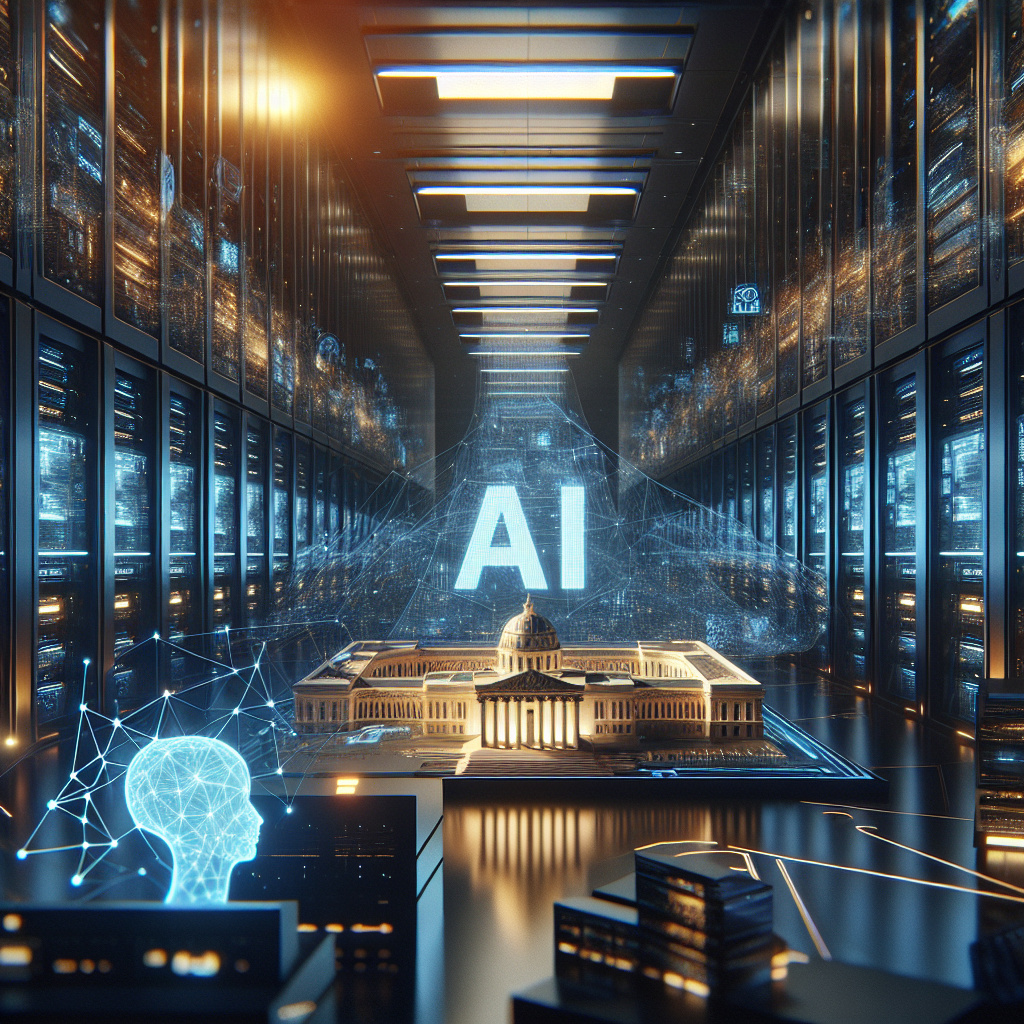
In a significant move for the future of technology, AMD and the French Government have announced joint plans to supercharge AI innovation across l’Hexagone. This strategic collaboration aims to foster world-class research and cultivate an open, robust ecosystem for artificial intelligence rooted in France—one that will have global impact. For those of us passionate about the rapid evolution of AI and its unprecedented possibilities, this partnership is nothing short of thrilling.
Table of Contents
- Introduction
- The Significance of AI Innovation
- How AI Is Redefining Global Landscapes
- AMD and France’s Vision
- Deep Dive: The Collaboration Details
- Open Ecosystems and Their Importance
- Consequences and Opportunities for Europe
- Actionable Steps for Individuals and Businesses
- Summary
- FAQs
- Sources
Introduction
Artificial intelligence stands as one of the most significant technological accelerators of the 21st century. It is transforming how we live, work, and interact with the world. As AI’s influence grows, nation-states as well as global tech leaders are racing to cement their place at the vanguard of this revolution. The fresh partnership between AMD—a renowned semiconductor giant—and the French government encapsulates this momentum, promising not just to seed innovation but to grow a holistic, inclusive, and sustainable AI ecosystem that lifts both French and global communities.
The Significance of AI Innovation
AI innovation is at the crossroads of economic transformation, scientific progress, and societal evolution. Why the fuss? Let’s break down why AI’s trajectory matters, not only in abstract economic terms but also in the fabric of daily life and opportunity:
- Economic Growth: AI-driven automation and intelligent systems boost productivity and efficiency. Research from Reuters underscores that AI may inject an astonishing $15.7 trillion into the global economy by 2030, representing both new opportunity and massive disruption.
- Societal Gains: Advances in AI improve healthcare outcomes through precision diagnostics, optimize transportation with smart routing, and enhance sustainability through intelligent resource management.
- Workforce Transformation: While AI automates repetitive or dangerous tasks, it also creates specialized roles in data science, ethics, engineering, and policy—leading to the birth of entire new industries.
- Scientific Breakthroughs: From decoding the human genome to climate prediction, AI is a multiplying force for academic discovery.
Understanding this massive potential is crucial when assessing France and AMD’s bold collaborative move.
How AI Is Redefining Global Landscapes
The growing influence of AI is not uniform across the world. Certain geographies are emerging as innovation nexuses—think Silicon Valley for the US, Shenzhen for China, and now, with deliberate investment and policy, France aims to stake its place as Europe’s AI powerhouse.
Why is this transformation important? AI is not just a technical domain. It is rewriting geopolitics, redefining what competitive advantage looks like, and shifting the center of gravity away from traditional industrial powers. Countries investing heavily in foundational AI research and open ecosystems are those most likely to shape global standards, regulations, and ethics. The AMD-France alliance is a calculated step to ensure that Europe is not just a user of AI but also a principal creator—and that AI development serves broad, democratic interests.
AMD and France’s Vision
At the heart of this partnership is a vision of co-creation and inclusivity. AMD brings decades of pedigree in high-performance computing, GPUs, and custom silicon—foundational technologies powering leading-edge AI research. The French government, meanwhile, delivers institutional support, funding, and policy frameworks to accelerate responsible innovation across academia, startups, and established enterprises.
Key pillars of this vision include:
- Open AI Ecosystems: Rather than proprietary silos owned by a handful of tech behemoths, France and AMD want to foster an accessible marketplace of ideas, code, and datasets. Such an approach democratizes AI capabilities and ensures transparency, fairness, and accountability.
- Research Superclusters: Establishing research and development centers across France that unite interdisciplinary talent from computer science, mathematics, social sciences, arts, and policy.
- Industry-Academia Partnerships: Building bridges between universities, startups, government agencies, and industry titans. This cross-pollination is proven to accelerate the translation of laboratory breakthroughs into real-world solutions.
- Workforce Development: Equipping citizens with cutting-edge skills and fostering a culture of life-long learning, so that the benefits of AI reach all corners of society—not just the privileged or highly educated.
For those of us who believe progress should be open, equitable, and geared toward collective good, these ideas are both inspiring and necessary.
Deep Dive: The Collaboration Details
While visionary statements are important, let’s examine the specifics of what AMD and France are setting in motion:
- Investments in Computation and Infrastructure: AMD will support France with access to next-generation processors, accelerated computing resources, and scalable GPU clusters necessary for deep learning, generative models, and advanced simulation.
- Center of Excellence for AI: Plans are underway to establish French centers of excellence that house not only computational might but also expert practitioners, collaborative labs, and open-source projects.
- Funding and Grants: The French government is committing grants, tax incentives, and public-private funds to attract both home-grown and international AI startups. This financial backbone is paired with mentorship and business acceleration support.
- Regulatory Sandboxes: France aims to provide a safer testing ground for AI products, from autonomous vehicles to language models, balancing innovation with proactive governance.
- Open Source Initiatives: Shared code, repositories, and datasets will empower a wider pool of developers, researchers, and entrepreneurs. This open-source ethos helps to avoid vendor lock-in and accelerates community-driven improvement.
- Education at All Levels: The partnership is committed to developing AI curricula for primary, secondary, and post-secondary education, along with funding for scholarships and cutting-edge university programs.
Each of these initiatives is designed to reinforce the others, building a cycle of innovation, talent attraction, and impact.
Open Ecosystems and Their Importance
One of the most powerful aspects of the France-AMD collaboration is its commitment to an open AI ecosystem. Here’s why this is critical:
- Interoperability: Open platforms make it easier for research findings, new algorithms, and AI tools to be reused, recombined, and enhanced by a broader community.
- Transparency: Openness fosters trust—researchers can review and improve models, citizens can understand how AI decisions are made, and institutional bias or error can be uncovered and corrected.
- Agility: Startups and small businesses can leapfrog traditional barriers by using open tools and infrastructure that previously were only available to large corporations.
- Collective Innovation: Collaboration across borders, cultures, and disciplines naturally leads to more creative solutions to society’s most challenging problems.
- Ethics and Accountability: Open-source AI allows for greater scrutiny and encourages alignment with human values and globally accepted standards.
For a country like France—keen on preserving digital sovereignty while promoting democratic access—an open model is both a pragmatic and principled choice.
Consequences and Opportunities for Europe
Europe has long been wary of becoming a mere consumer of overseas technology, especially in such a geopolitically sensitive field as AI. The alliance between AMD and France has the power to shift the balance, creating French and, by extension, European alternatives to American and Chinese AI giants.
Potential regional impacts include:
- Boosting the European AI Talent Pool: More R&D centers, better job opportunities, and global visibility attract top minds from both within and outside Europe.
- Enhancing Digital Sovereignty: France and the EU gain more control over their data, privacy standards, and ethical frameworks, rather than relying on imported black-box solutions.
- Realizing EU’s AI Strategy: These efforts dovetail with the European Commission’s vision for trustworthy AI, stimulating cross-border collaborations and competitive advantage.
- New Export Markets: As French AI startups mature, they can export advanced solutions—especially to regions in Africa and the Middle East, where France has historical ties.
- Societal Inclusion: With the public sector invested, there’s greater incentive to use AI to solve pressing challenges in healthcare, education, transport, and climate within Europe itself.
The upshot? The future of AI innovation in Europe just became brighter, and global competition just got more interesting.
Actionable Steps for Individuals and Businesses
So, how can those outside the policymaking or engineering rooms contribute? Here are clear, pragmatic ways to plug into this AI renaissance—whether you’re a student, entrepreneur, or business leader:
- Stay Informed: Consistently follow trusted sources like arXiv for pre-print research and OpenAI for breakthroughs in applied AI. Subscribe to industry newsletters and governmental program updates to keep a pulse on local opportunities.
- Engage in Learning: Explore online courses via Coursera, Udacity, and the numerous free resources provided by academic and nonprofit organizations. Many offer certifications and project-based curricula, suitable for both beginners and experienced professionals.
- Network and Collaborate: Attend AI-centric meetups, hackathons, and conferences—virtually or in-person. Sites like MeetUp, EventBrite, and university alumni networks are excellent starting points to find events across France and the EU.
- Support Local Initiatives: Volunteer with or mentor at local AI incubators, coding bootcamps, or NGOs focusing on technology for social good. These organizations often welcome enthusiasts who can help bridge industry and community needs.
- Adopt and Contribute to Open Source: Explore open-source AI projects on platforms like GitHub, contribute code or documentation, and use these tools to fuel your own innovation.
- Engage Policymakers: Participate in public consultations on ethical AI, digital governance, and education. Many governments actively seek citizen input—influence how AI shapes your legal and social landscape!
- Foster Interdisciplinary Skills: AI is most powerful when intersecting with law, healthcare, art, or language. Explore how your background can be enhanced with AI literacy—or how you can help bring AI into new fields.
Ultimately, AI innovation thrives on broad participation. The more diverse voices and skill sets engaged, the more holistic and inclusive its benefits become.
Summary
The partnership between AMD and the French government is a landmark event on the AI innovation map. More than a business deal, it is a forward-thinking commitment to openness, equity, research excellence, and economic strength—both for France and for global society. With meaningful investments in infrastructure, talent, and open source, this collaboration paves the way for a future in which AI is shaped by a wide community, not just a lucky few. Whether you’re a technologist, policymaker, or an interested citizen, there are myriad ways to participate, learn, and help steer these changes in a direction that benefits us all.
FAQs
- What is the main goal of the AMD and French government partnership?
The main goal is to strengthen AI innovation, research, and build an open, dynamic AI ecosystem in France that has global relevance. - How can I get involved in AI innovation?
Stay updated on research, pursue learning with online courses, network within professional communities, and contribute to local and open-source AI initiatives. - Why is AI innovation important?
AI innovation can drive economic growth, foster job creation, improve social services, and address challenges in health, education, and sustainability. - How does open AI benefit society?
Open AI promotes transparency, allows for broad collaboration, and ensures collective benefit—not just profit for a few companies. - What impact could this partnership have outside France?
As a regional leader, France’s success can inspire similar efforts throughout Europe, influencing global standards, policies, and the future direction of AI.
Sources
- AMD Press Announcements
- Reuters on AI Economy
- arXiv
- OpenAI
- Coursera
- Udacity